
Mud Flaps: A Deep Dive Into Protection, Design, and Real-World Use
Mud Flaps: A Deep Dive
What Mud Flaps Are
Definition and Core Function
Mud flaps are protective components mounted behind a vehicle’s wheels, typically extending downward from the lower edge of the body or bumper. Their primary role is to intercept mud, water, gravel, sand, and road debris that tires naturally throw outward and upward as they rotate. By catching this material early, mud flaps help limit where debris travels and what surfaces it impacts.
Unlike many purely cosmetic accessories, mud flaps are functional by design. They work continuously while the vehicle is in motion, responding directly to tire movement, road texture, and driving conditions. This makes them one of the simplest yet most consistently active protective elements on a vehicle.
TL;DR: Key Takeaways
- Mud flaps manage debris, water, and road spray by intercepting material thrown by rotating tires before it reaches body panels or other vehicles.
- They differ from splash guards in size, coverage, and intent, with mud flaps offering broader protection in wet, dusty, or gravel-heavy conditions.
- Design and material choices matter, influencing durability, flexibility, noise levels, and how well mud flaps perform over time.
- OEM-style mud flaps prioritize fit and appearance, while aftermarket options typically emphasize coverage and adaptability for harsher driving environments.
- The right mud flaps depend on how and where you drive, not just vehicle type, making thoughtful selection key to long-term protection.
Quick Verdict: Mud flaps are a low-effort, long-term upgrade that protects vehicles by managing debris where tire damage begins.
How Mud Flaps Differ From Similar Components
Mud flaps are often confused with splash guards, but the two serve different purposes:
- Mud flaps are typically:
- Larger and longer
- Positioned lower behind the wheel
- Designed for broader debris control and durability
- Splash guards are usually:
- Smaller and more contoured
- Mounted closer to the wheel opening
- Focused on reducing light spray and cosmetic paint wear
While both reduce road spray, mud flaps emphasize coverage and impact protection, making them better suited for vehicles that encounter loose surfaces, wet roads, or frequent debris exposure.
A Brief History of Mud Flaps
Early Use in Trucks and Utility Vehicles
The earliest mud flaps appeared alongside the first trucks and utility vehicles traveling on unpaved roads. These early designs were simple, often made from thick rubber sheets bolted directly behind the wheels. Their purpose was practical and immediate:
- Keep mud and stones off cargo and trailers
- Reduce spray onto following vehicles
- Protect exposed mechanical components
Function mattered far more than appearance, especially in work-focused environments.
Expansion Into Passenger Vehicles
As passenger cars became more common and road infrastructure improved, mud flaps evolved. Sedans and family vehicles adopted smaller, more discreet versions, offering protection without visually overpowering the vehicle. Meanwhile, trucks and commercial vehicles retained larger, heavier-duty designs that prioritized longevity and coverage.
During this period, mud flaps became more standardized, with improvements in materials and mounting methods that allowed for easier installation and better fitment.
Modern Evolution and Design Integration
Today, mud flaps reflect a balance between utility, durability, and design integration. Modern versions are often:
- Vehicle-specific in shape and mounting
- Made from advanced polymers or reinforced rubber
- Designed to follow factory body lines
Rather than being purely utilitarian add-ons, mud flaps are now engineered components that align with modern expectations for fit, finish, and performance.
Why Mud Flaps Still Matter Today
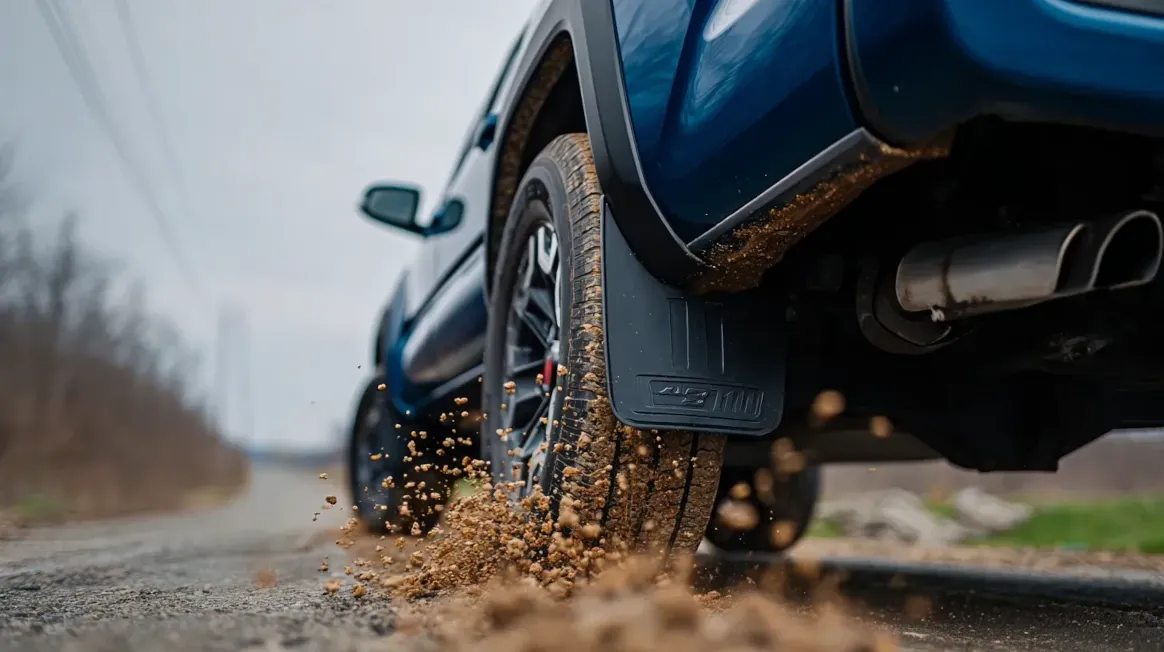
Mud flaps have endured because the problem they address has not disappeared. Tires still throw debris, roads are still wet or uneven, and vehicles still benefit from protection at their most exposed points. Understanding what mud flaps are and how they evolved helps explain why they remain relevant across vehicle types and driving environments. From here, the focus naturally shifts to what mud flaps actually do once the vehicle is in motion, and why their role extends beyond simple dirt control.
The Core Purpose of Mud Flaps
Managing Debris, Water, and Road Spray
How Tire Motion Creates Debris Spray
As a vehicle moves, its tires act like rotating paddles. Water, mud, gravel, sand, and fine road debris are picked up by the tread and accelerated outward as the wheel spins. Without intervention, this material is projected in multiple directions, striking lower body panels, the undercarriage, and often the vehicles traveling behind. The faster the wheel turns or the looser the road surface, the more aggressive this spray becomes.
Mud flaps are positioned precisely where this spray originates. Mounted just behind the wheel, they interrupt the debris stream at its source. Instead of allowing material to arc freely through the air, the mud flap absorbs the impact and redirects it downward toward the road surface.
Controlling Water and Fine Spray
Water presents a unique challenge because it atomizes into fine mist at speed. This mist can coat paint, mirrors, windows, and lights, reducing visibility and accelerating surface contamination. Mud flaps reduce this effect by:
- Breaking up water spray before it disperses
- Limiting upward and outward projection from the tire
- Reducing buildup along rocker panels and doors
While they do not eliminate spray entirely, mud flaps significantly reduce the volume and reach of water leaving the wheel area, especially in sustained wet driving.
Managing Solid Road Debris
Gravel, sand, and small stones are more damaging than water alone. When thrown at speed, they can chip paint, scar plastic trim, and erode protective coatings. Mud flaps act as a physical barrier, absorbing repeated impacts that would otherwise strike vulnerable surfaces. Over time, this interception plays a meaningful role in preserving exterior condition.
Protecting the Vehicle Itself
Shielding Body Panels and Paint
The lower sections of a vehicle take the brunt of tire-thrown debris. Rocker panels, lower doors, quarter panels, and rear bumpers are particularly exposed. Mud flaps reduce direct contact between debris and paint, helping to:
- Minimize paint chips and abrasions
- Slow long-term wear from repeated impacts
- Preserve exterior appearance over time
This protection is especially valuable on vehicles driven frequently in wet, dusty, or gravel-heavy environments.
Reducing Undercarriage Exposure
Beyond visible surfaces, the undercarriage is constantly exposed to debris and moisture. Mud flaps help limit the amount of material reaching suspension components, brake lines, and other exposed hardware. By deflecting debris early, they reduce accumulation and repeated impact in areas that are difficult to clean or inspect regularly.
Supporting Long-Term Vehicle Condition
While mud flaps are simple components, their effect compounds over time. Every deflected stone, every redirected splash, and every reduced impact contributes incrementally to preserving the vehicle’s condition. This makes them less about dramatic, immediate benefits and more about consistent, everyday protection.
Understanding this core purpose clarifies why mud flaps appear across such a wide range of vehicles and driving conditions. Their role is not limited to extreme environments or heavy-duty use. Instead, it is rooted in managing the unavoidable byproducts of tire movement. From here, it becomes important to examine the different types of mud flaps available, and how their designs reflect the specific demands placed on them.
Common Types of Mud Flaps
Understanding the Main Categories
Why Mud Flaps Are Not One-Size-Fits-All
Although mud flaps may appear simple at a glance, they come in several distinct forms, each designed to serve different vehicles, driving conditions, and expectations. Differences in body shape, wheel placement, ride height, and tire size all influence how a mud flap needs to function. As a result, manufacturers have developed multiple categories that balance coverage, fitment, durability, and appearance.
Understanding these categories helps clarify why some mud flaps blend seamlessly into a vehicle’s design while others look more utilitarian, and why certain designs perform better depending on how and where a vehicle is driven.
Vehicle-Specific (OEM-Style) Mud Flaps
Designed to Match the Vehicle
Vehicle-specific mud flaps, often referred to as OEM-style designs, are engineered to fit a particular make, model, and sometimes even trim level. These flaps follow factory body lines, mounting points, and wheel arch contours, allowing them to integrate naturally with the vehicle’s exterior.
Key characteristics include:
- Precise shaping to match fender and bumper geometry
- Use of existing mounting locations
- Consistent alignment with factory clearances
Because they are designed around the vehicle rather than adapted to it, OEM-style mud flaps typically offer a cleaner appearance and predictable performance.
Balanced Protection and Appearance
OEM-style mud flaps tend to strike a balance between effective debris control and visual subtlety. They are often slightly shorter and contoured, prioritizing everyday protection without appearing oversized. For drivers who want functional protection without changing the overall look of their vehicle, this approach is often preferred.
Generic Aftermarket Mud Flaps
Universal Fit and Broader Coverage
Generic aftermarket mud flaps are designed to fit a wide range of vehicles rather than one specific model. They are often flat or minimally contoured and rely on adjustable mounting or trimming during installation.
Common traits include:
- Larger surface area for increased debris interception
- Flexible fitment across multiple vehicle types
- A more utilitarian or rugged appearance
These designs are frequently chosen for trucks, off-road vehicles, and work applications where maximum coverage matters more than visual integration.
Trade-Offs in Fit and Finish
While generic mud flaps can provide excellent debris control, they may not align as cleanly with body panels or wheel arches. Installation often requires more adjustment, and the finished look depends heavily on proper mounting. For some drivers, this trade-off is acceptable in exchange for durability and coverage.
Front vs. Rear Mud Flaps
Different Roles at Each End of the Vehicle
Mud flaps serve different purposes depending on their position. Front mud flaps primarily protect rocker panels, lower doors, and rearward-facing body surfaces from debris thrown by the front tires. Rear mud flaps, on the other hand, focus on controlling spray and debris that would otherwise strike the rear bumper, tailgate, or vehicles behind.
Coverage and Design Differences
Rear mud flaps are often larger or extend lower than front flaps because rear tires tend to throw debris more directly backward. Front flaps may be more compact to preserve steering clearance and aesthetics while still reducing forward spray.
Recognizing these differences in type and placement makes it easier to understand how material choice and construction further influence performance. With design categories established, the next step is to examine what mud flaps are made from, and how those materials affect flexibility, durability, and long-term use.
Materials Used in Mud Flap Construction
Why Material Choice Matters
The Demands Placed on Mud Flaps
Mud flaps operate in one of the harshest zones on a vehicle. They are exposed to constant impacts from debris, repeated flexing from airflow and tire turbulence, and ongoing contact with moisture, dirt, and temperature changes. Because of this, the material used in their construction plays a central role in how well they perform and how long they last.
A mud flap’s material determines more than just strength. It influences how the flap reacts to impact, how it behaves at speed, how much noise it generates, and how it holds up over years of use. The most common materials used today reflect different priorities, from maximum flexibility to long-term durability.
Rubber and Rubber-Blend Mud Flaps
Traditional Rubber Construction
Rubber mud flaps represent the earliest and most familiar design. Made from natural or synthetic rubber compounds, these flaps are valued for their ability to flex and absorb impact without cracking or breaking. When struck by stones or debris, rubber tends to deflect rather than transfer force directly to mounting points.
Key characteristics of rubber mud flaps include:
- High flexibility under repeated impact
- Strong resistance to tearing
- Ability to maintain shape after bending
This makes them particularly well suited for trucks, commercial vehicles, and applications where debris contact is frequent and unavoidable.
Modern Rubber Blends
To improve consistency and longevity, many modern mud flaps use rubber blends rather than pure rubber. These blends combine rubber with reinforcing compounds that enhance resistance to wear, UV exposure, and temperature extremes. The result is a flap that retains flexibility while offering improved dimensional stability and longer service life.
Rubber-blend designs are commonly found in both heavy-duty and OEM-style applications, bridging the gap between traditional durability and refined fitment.
How Material Affects Performance
Durability and Impact Resistance
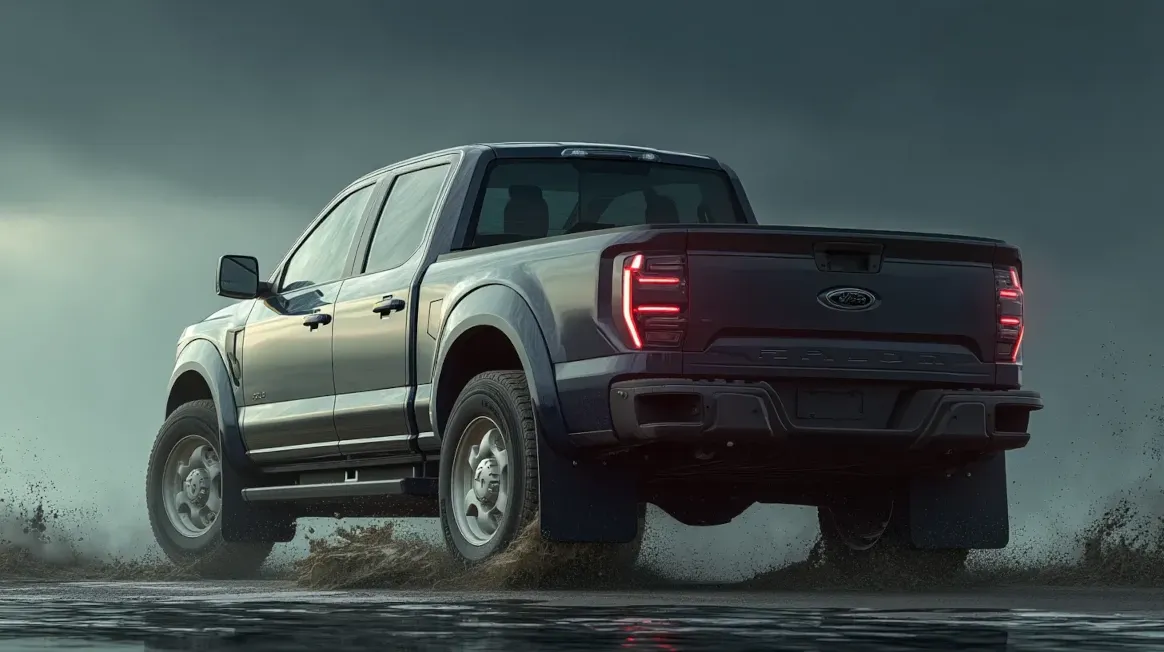
Durability is often the first consideration when evaluating mud flap materials. Softer materials absorb impacts well but may show surface wear over time. Stiffer materials resist abrasion but may transmit more force to mounting hardware. Rubber and rubber-blend materials tend to strike a balance by:
- Absorbing repeated stone impacts
- Reducing stress at mounting points
- Resisting cracking under flex
This balance helps prevent premature failure in real-world driving.
Flexibility and Environmental Response
Flexibility determines how a mud flap behaves at speed and in varying conditions. A flap that is too rigid may flutter, crack, or deform, while one that is too soft may fold or drag. Rubber-based materials naturally adjust to airflow and temperature changes, maintaining consistent behavior in both hot and cold conditions.
Noise and Vibration Control
Material choice also influences noise. Rigid flaps can produce tapping or drumming sounds when struck by debris or buffeted by airflow. Rubber and rubber-blend mud flaps dampen these vibrations, reducing audible noise and contributing to a quieter driving experience.
Understanding how materials affect performance sets the stage for a more practical question: how these materials interact with different vehicle designs and mounting locations. With material fundamentals established, the next focus is on vehicle applications and fitment considerations, where construction choices meet real-world installation and use.
Mud Flaps vs. Splash Guards
Understanding the Distinction
Why the Terms Are Often Confused
Mud flaps and splash guards occupy the same general area of a vehicle and serve overlapping purposes, which is why the terms are frequently used interchangeably. Both are mounted near the wheel openings and both aim to reduce the effects of tire-thrown debris. However, their design intent, scale, and performance differ in meaningful ways. Understanding these differences helps clarify why one option may be better suited to a particular vehicle or driving environment than the other.
At a glance, the distinction often comes down to size and presence. Mud flaps are more noticeable, extending lower behind the wheel, while splash guards tend to blend into the wheel arch with a subtler profile. That visual difference reflects deeper functional priorities.
Visual and Functional Differences
Overall Size and Shape
Mud flaps are generally larger and flatter, hanging lower behind the tire to intercept debris early in its trajectory. Their extended length increases the surface area available to catch mud, water, and stones before they can spread.
Splash guards, by contrast, are more compact and contoured. They follow the shape of the wheel opening and are designed to appear integrated into the bodywork. This makes them less visually prominent but also limits how much debris they can intercept.
Design Intent
Functionally, mud flaps are designed with maximum debris control in mind. Their shape and placement prioritize coverage over aesthetics, especially on trucks, SUVs, and vehicles used in rough conditions. Splash guards are designed to provide supplemental protection, primarily against light spray and cosmetic wear.
This difference in intent means that splash guards often focus on preserving appearance, while mud flaps focus on managing the physical effects of tire rotation.
Coverage Area and Debris Control Effectiveness
How Coverage Impacts Performance
Coverage area is one of the most significant differences between the two. Mud flaps extend lower and often wider than splash guards, allowing them to intercept debris across a broader range of trajectories. This is particularly important when dealing with:
- Gravel and loose stones
- Thick mud or slush
- High-speed water spray
Splash guards, with their limited size, primarily reduce debris that stays close to the wheel opening. They are effective at minimizing streaking and light splatter on lower body panels but offer less protection against heavier or faster-moving debris.
Real-World Effectiveness
In everyday driving, splash guards can be sufficient for vehicles that remain on paved roads and encounter mostly light spray. Mud flaps become more effective as conditions worsen. On wet highways, unpaved roads, or construction zones, the additional length and rigidity of mud flaps provide noticeably better control over where debris travels.
Mud flaps also reduce how much material reaches vehicles behind, which is especially relevant for larger vehicles with higher ride heights and wider tires.
Choosing Between the Two
Selecting between mud flaps and splash guards is less about which is “better” and more about which aligns with how a vehicle is used. Visual preferences, driving conditions, and desired protection levels all play a role. Understanding the trade-offs between coverage and subtlety allows drivers to make informed decisions rather than relying on terminology alone.
With the functional differences clarified, the discussion naturally moves toward how driving conditions and environments influence performance, and why certain setups perform better in specific situations.
Aesthetic and Design Considerations
Balancing Function and Appearance
Why Design Matters for Mud Flaps
Although mud flaps are fundamentally functional components, their visual impact on a vehicle cannot be ignored. Positioned low and close to the wheels, they sit in a highly visible area that directly affects how a vehicle looks from the side and rear. For many owners, the decision to add mud flaps involves balancing protection and performance with styling and cohesion.
Modern mud flap designs reflect this balance. Manufacturers now offer options that range from subtle and nearly invisible to bold and intentionally noticeable, allowing drivers to align function with personal preference.
Low-Profile vs. Extended Designs
Low-Profile Mud Flaps
Low-profile mud flaps are designed to provide protection while minimizing visual intrusion. These flaps are typically shorter and closely contoured to the wheel opening, following factory body lines. They are often chosen for:
- Passenger cars and crossovers
- Drivers prioritizing a clean, factory-like appearance
- Vehicles primarily used on paved roads
Visually, low-profile designs tend to disappear into the vehicle’s silhouette. Functionally, they still reduce light spray and debris but do so with a smaller coverage area. This makes them well suited for everyday driving where extreme conditions are rare.
Extended Mud Flaps
Extended designs prioritize coverage and visibility. These flaps hang lower and sometimes wider, making their presence obvious. They are common on trucks, off-road vehicles, and work applications where performance outweighs subtlety.
Extended mud flaps offer:
- Greater interception of debris and water
- Improved protection for trailing body panels
- A rugged, purpose-built appearance
For some vehicles, the extended look reinforces capability and durability, becoming a visual cue that the vehicle is designed for demanding use.
OEM-Matched Finishes vs. Branded or Custom Looks
OEM-Matched and Factory-Style Finishes
OEM-style mud flaps are designed to blend seamlessly with the vehicle’s original appearance. They often use matte black or textured finishes that match factory trim and body moldings. Logos, if present, are minimal or omitted entirely.
This approach appeals to drivers who want added protection without altering the vehicle’s design language. OEM-matched mud flaps look intentional and integrated, as if they were installed at the factory rather than added later.
Branded and Custom Aesthetics
At the opposite end of the spectrum are branded and custom mud flaps. These designs often feature visible logos, contrasting colors, or bold shapes. For some drivers, especially in truck and enthusiast communities, mud flaps become an expression of identity rather than just a protective accessory.
Custom designs may include:
- High-contrast branding
- Gloss or color-matched finishes
- Unique shapes or extended proportions
While these choices draw attention, they also signal a deliberate embrace of utility or personalization.
Design as a Functional Choice
Aesthetic decisions often intersect with functional ones. Larger, more visible designs typically offer greater coverage, while subtle designs trade some protection for visual restraint. Understanding these trade-offs helps clarify how design choices influence real-world performance.
With appearance considerations addressed, the next step is to examine how installation and long-term maintenance affect both function and aesthetics, and why proper setup is just as important as design selection.
Final Thoughts: Mud Flaps
Mud flaps may appear simple, but as this article has shown, they serve a purpose that reaches far beyond surface-level protection. From managing debris and road spray to preserving paint, body panels, and undercarriage components, mud flaps quietly address the unavoidable consequences of tire movement. Their evolution from basic rubber sheets to vehicle-specific, design-conscious components reflects how enduring their role has been across changing vehicles, materials, and driving environments. Whether considering construction materials, coverage differences, visual design, or fitment options, the common thread is intentional protection applied at the most exposed point of the vehicle.
The most important takeaway is that mud flaps are most effective when chosen with context in mind. Driving habits, environment, and priorities all influence whether a low-profile OEM-style flap or a more robust aftermarket design makes sense. When matched correctly, mud flaps become less of an accessory and more of a long-term safeguard, working quietly every mile to reduce wear that would otherwise accumulate unnoticed. Thoughtful selection and proper installation ensure that this small component delivers consistent value, reinforcing that even the most understated parts can play a meaningful role in preserving a vehicle’s condition over time.

About World Parts Direct
World Parts Direct is your go-to source for genuine OEM parts for GM and MOPAR vehicles. We make it easy to order factory-original parts online — shipped fast, accurately, and backed by real human support.
Every item we sell comes brand new in the manufacturer’s original packaging. Whether you’re handling routine maintenance, collision repair, or a full restoration, our parts professionals provide VIN-verified fitment support to ensure you get exactly what you need.
Serving drivers and repair shops worldwide, we proudly support brands like Chevrolet, GMC, Cadillac, Buick, Dodge, Chrysler, Jeep, and Ram. Shop confidently at WorldPartsDirect.com.