
Antifreeze and Coolant Deep Dive for Everyday Drivers
Antifreeze and Coolant Deep Dive for Everyday Drivers
How to choose, test, add, flush, and maintain your coolant so your engine stays healthy all winter and all year
TL;DR
Antifreeze, also called engine coolant, prevents freezing in winter, raises the boiling point in summer, and protects engine metals from corrosion. Use the exact coolant chemistry your vehicle calls for and never assume color equals type. Top off only with the correct premix or the correct concentrate mixed with distilled water. For winter, confirm freeze protection with a coolant tester and target a 50 percent antifreeze and 50 percent distilled water mix for most climates.
In very cold regions, use up to 60 percent antifreeze. If the coolant is old, contaminated, or the wrong chemistry, do a drain and fill or a full flush and bleed the system to remove air. Dispose of used coolant responsibly because most coolants are toxic to pets and wildlife.
Why coolant matters
Engines turn fuel into heat. The cooling system moves that heat from the cylinders and heads to the radiator where it is released to the air. The liquid that moves the heat is coolant, which is a blend of antifreeze and water with corrosion inhibitors. Coolant must do five jobs well.
- Prevent freezing in cold weather so passages do not crack.
- Raise the boiling point so the fluid does not vaporize under load or on hot days.
- Protect aluminum, iron, solder, and magnesium from corrosion.
- Lubricate the water pump seal so it does not fail early.
- Resist deposit formation that can clog small passages in the heater core and radiator.
If coolant fails at any one of these, you can see warning lights, steam, poor heater performance, or in the worst case a damaged head gasket or warped cylinder heads.
Coolant chemistry types explained
There are four broad families of coolant chemistry used in modern light vehicles. The names refer to the corrosion inhibitor package and base chemistry, not the color in the bottle.
-
IAT - Inorganic Additive Technology
This is the older green style used widely through the 1990s. It typically uses silicates and phosphates to protect metals. It works well but the inhibitors deplete faster, so change intervals are short, commonly around 2 years or 30,000 miles. Many classic and older domestic vehicles originally used IAT. -
OAT - Organic Acid Technology
Uses organic acids to protect aluminum and other metals. These coolants usually have long service intervals, like 5 years or 150,000 miles when installed in a clean system. Several automakers use OAT in different formulas. One well known example is the orange style specified by many GM vehicles built since the mid 1990s. Always follow the exact specification in your owner manual or service literature. -
HOAT - Hybrid Organic Acid Technology
Blends organic acids with small amounts of silicates or phosphates to balance fast acting protection and long life. Many late model domestic and import vehicles specify various HOAT formulas. The exact additive package varies by brand and generation. -
P OAT or PHOAT
Some automakers use phosphate enhanced OAT blends. The details are specific to the brand and model year. Again, the color on the label is not a reliable guide because multiple chemistries can share the same shade in the bottle.
GM versus Mopar coolant differences
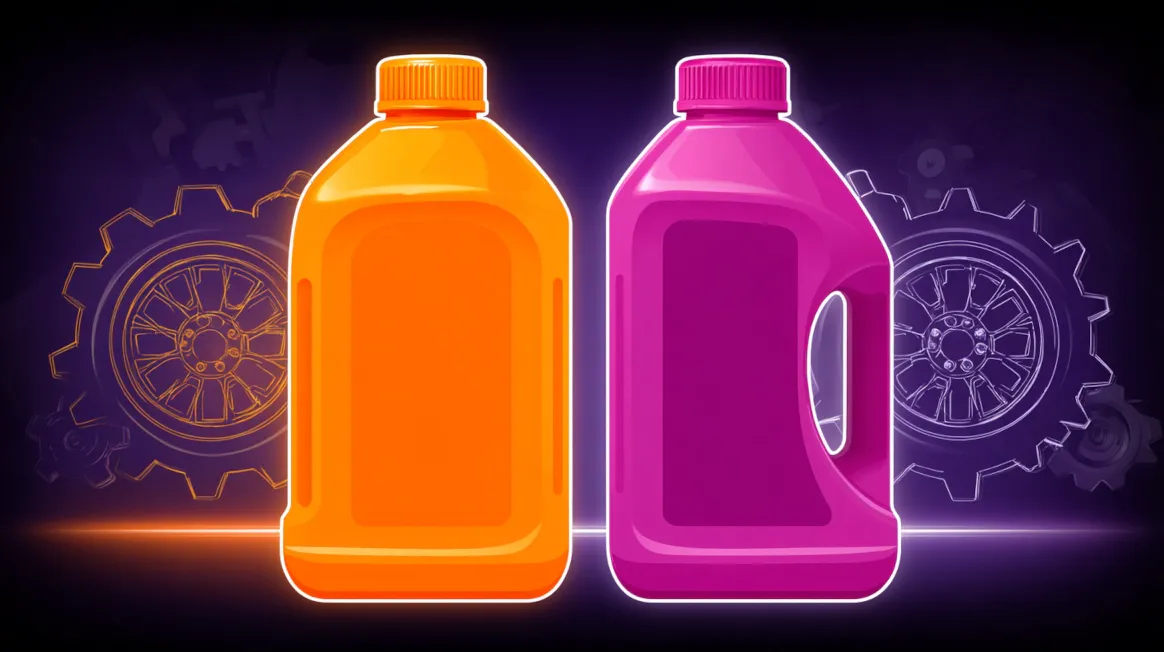
General Motors vehicles commonly use an orange OAT coolant often referred to as Dex-Cool. Although most brands dye it orange, the color itself is not the specification. You must choose a coolant that explicitly meets the GM OAT requirements listed in your owner manual.
Mopar vehicles typically use pink or purple OAT formulas that contain a different inhibitor package than GM OAT coolants. Even though both are OAT, they are not interchangeable. Mixing these chemistries can cause deposits, reduced corrosion protection, and accelerated water pump wear.
If the coolant type in your system is unknown, perform a drain or flush before switching formulas to avoid cross-chemistry contamination.
Key point
Always match the specification, not the color. Two orange coolants can be incompatible. Two yellow coolants can be different technologies. Read the owner manual, the underhood label if present, or a trusted parts catalog that decodes your VIN.Color myths and why they cause problems
Many drivers were taught that green means one thing and orange means another. That used to be a decent shortcut. Today, it is wrong often enough to be risky. Brands choose dyes for identification and marketing, not chemistry alone. If you mix incompatible formulas, inhibitors can drop out of solution and form deposits or sludge. That can reduce corrosion protection and plug heaters or radiators. Color is a clue, not a rule. Specification is the rule.
How to choose the right antifreeze for your vehicle
- Check the owner manual for the coolant specification. Look for phrases like “Use coolant meeting ASTM D3306” or a proprietary spec the automaker lists.
- Check the underhood label or cap. Some vehicles list coolant type near the radiator support.
- Use a VIN matched parts catalog from a reputable OEM parts retailer to choose the exact formula.
- When in doubt pick a coolant labeled as compatible with your exact make, model, year, and engine. Universal coolants exist, but you should verify compatibility with your specific vehicle before using them.
- Match premix vs concentrate. Premix is ready to pour. Concentrate must be mixed with distilled water to the correct ratio before filling the system.
Do not mix types unless the manufacturer states they are compatible. If the existing coolant type is unknown and you plan to switch to a different chemistry, drain thoroughly or do a full flush. Start with a clean slate.
How to check your coolant level correctly
Most vehicles use a translucent plastic reservoir with molded level marks. These are often labeled COLD MIN and COLD MAX, meaning the fluid level should fall between these lines when the engine is completely cold.
To check accurately:
- Park on level ground and allow the engine to cool fully.
- View the reservoir from the side to locate the level markings clearly.
- Confirm the coolant is between the COLD MIN and COLD MAX marks.
- If below COLD MIN, add the correct coolant type specified for your vehicle.
- If above COLD MAX, remove a small amount with a suction tool to prevent pressure issues during warm up.
Keeping the level within the marked range prevents overheating, poor heater performance, and pressure-related damage.
Why coolant level that is too low or too high is dangerous
Low coolant reduces the system’s ability to move heat out of critical engine areas. This can cause overheating, poor heater output at idle, localized boiling inside the cylinder head, and air pockets that lead to pump cavitation.
Coolant that is too high creates pressure problems as the engine warms. As the fluid expands, the excess volume can force coolant out of the cap, crack the reservoir, or stress radiator tanks and hoses. Proper level ensures stable pressure and reliable temperature control.
Water quality and why it matters
Tap water ranges from soft to very hard depending on minerals in your area. Minerals can react with inhibitors and can form scale in hot areas like the cylinder head. That is why the best practice is to mix concentrate with distilled water. The small cost of distilled water helps protect the system and the water pump seal.
Premix versus concentrate coolant
Coolant is sold either as a ready-to-use premix or as a full-strength concentrate. Premix contains a 50/50 blend of antifreeze and distilled water, making it convenient and ideal for topping off because it preserves the system’s existing ratio.
Concentrate must be mixed with distilled water before use. Never add concentrate directly to the reservoir because undiluted antifreeze does not provide proper heat transfer and can circulate unevenly. Concentrate is useful during full services where you can tailor the final mix for your climate.
If water remains in the system after a flush, adjust the amount of concentrate added to ensure the final blend meets your freeze protection target.
Mix ratios for winter and summer
Coolant works best as a blend of antifreeze and water. Water carries heat very well. Antifreeze adds freeze protection, boil protection, and corrosion inhibitors. For passenger vehicles, these are proven targets.
-
50 percent antifreeze and 50 percent distilled water
Good all around protection for most climates. Typical freeze protection to about minus 34 F and boiling protection above 265 F in a pressurized system. -
60 percent antifreeze and 40 percent distilled water
For very cold regions. Typical freeze protection to about minus 62 F. Do not go richer than 70 percent antifreeze. Beyond that, freeze protection and heat transfer both get worse. -
Premix convenience
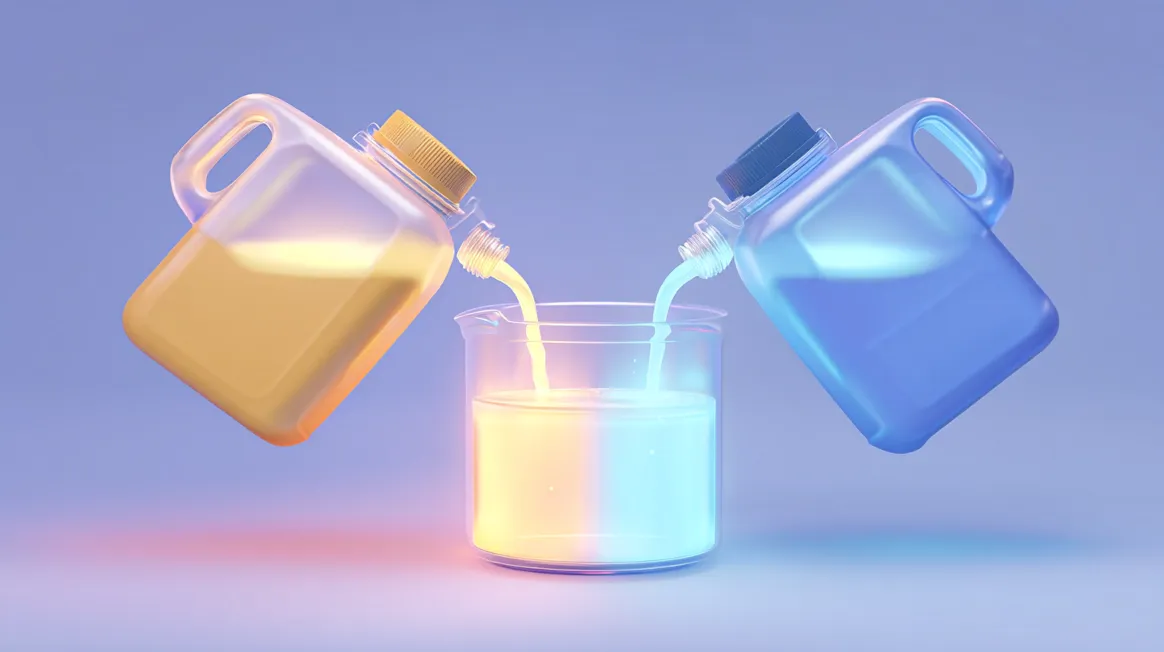
Many coolants are sold pre mixed at 50 50 and labeled “do not add water”. This is convenient and removes measuring error. Keep in mind that topping off a system that already contains concentrate may dilute the final ratio. Try to match what is already in the vehicle.
Avoid straight water and avoid straight concentrate. Straight water lacks inhibitors and can freeze. Straight concentrate does not cool as well as a proper mix and can gel at low temperatures.
Choosing coolant based on your climate
Your climate should guide the freeze protection level you target. Most modern vehicles in temperate or warm regions operate safely on a 50/50 premix that protects to about minus 34 F. Drivers in very cold northern regions may require stronger protection and should confirm the rating listed on the coolant jug.
Check the actual freeze protection number rather than relying on phrases like “all weather.” Some formulas are designed for deeper freeze protection. If you regularly experience extreme cold, test the coolant in early winter and adjust to a 60/40 mix if your manual allows it.
Choosing the correct protection range prevents freeze-expansion damage in the block, heater core, and radiator.
How to test your current freeze protection
You can check freeze protection with a simple hydrometer tester for traditional ethylene glycol coolants or a refractometer that works with multiple coolant types. Refractometers give more precise readings across modern formulas.
- With the engine completely cool, open the reservoir or radiator cap slowly.
- Use the tester to pull a sample.
- Read the scale and note the freeze point.
- Target at least minus 34 F for general winter use. In very cold zones, set up to minus 50 F or beyond if your manual suggests it.
- If the reading is weak, add the correct type of coolant to bring the mix into range, or plan a drain and fill if the coolant is old or contaminated.
If the coolant is brown, cloudy, rusty, oily, or full of particles, do not try to nurse it along. Replace it.
Top off vs drain and fill vs full flush
- Top off is adding a small amount of the correct coolant to reach the proper level when the system is otherwise healthy and clean.
- Drain and fill replaces most of the old coolant by opening the radiator and sometimes the engine block drains, then refilling with fresh mix. This is good maintenance when the coolant is old but the system is clean.
- Full flush circulates clean water or a manufacturer approved flush solution through the system until the fluid runs clear, followed by a complete refill with the correct coolant. Use a full flush when you have heavy contamination, unknown chemistry, or after a major repair.
Pick the least aggressive method that achieves a healthy system. On newer vehicles, a drain and fill at the recommended interval is usually enough.
When you should consider a coolant system flush
A coolant flush is appropriate when the existing chemistry is unknown, when visible contamination is present, when freeze protection is out of range, or when switching from one coolant technology to another. A flush ensures the new coolant begins in a clean environment, which is especially important for long-life OAT and HOAT coolants used in modern GM and Mopar vehicles.
Routine maintenance usually only requires a drain and fill. Reserve a full flush for systems with contamination, sludge, incorrect coolant, or after major repairs that introduce debris or air.
Step by step: how to safely top off coolant
Follow these steps on a cold engine only. Hot systems are pressurized and can spray scalding fluid.
- Park on level ground, set the parking brake, and let the engine cool fully.
- Locate the translucent coolant reservoir. It will have “COLD MIN” and “COLD MAX” markings.
- If the level is below COLD MIN, prepare the correct coolant. Use premix or mix concentrate with distilled water to the ratio your manual calls for.
- Slowly remove the reservoir cap. If you only have a radiator and an overflow bottle, consult your manual. Many modern vehicles are filled through the pressurized reservoir.
- Add coolant until the level is at the COLD MAX mark. Do not overfill.
- Reinstall the cap tightly.
- Start the engine with the heater on. Let it idle until warm and confirm there are no leaks.
- Recheck the level the next morning when cold. Top off if needed to reach COLD MAX.
If you must add coolant frequently, you have a leak or a deeper issue that needs diagnosis.
Step by step: how to do a drain and fill at home
Always consult your service manual for your vehicle specific steps. The process below is a safe general outline.
- Cool the engine completely. Place a drain pan under the radiator.
- Open the radiator drain or remove the lower radiator hose. Direct the flow into the pan. Some vehicles also have engine block drains that release trapped coolant.
- Dispose of old coolant safely. Keep it away from pets.
- Close drains and reconnect hoses with new clamps if needed.
- Prepare fresh mix using the correct coolant and distilled water. Aim for 50 50 unless your climate calls for 60 40.
- Fill slowly through the proper fill point. Many vehicles fill through the pressurized reservoir rather than the radiator.
- Bleed air. Some engines have a bleed screw on the thermostat housing or near the upper radiator hose. Open it slightly while filling until a bubble free stream appears, then close it. If there is no bleed screw, fill slowly and use the steps below to purge air.
- Warm the engine with the cabin heater on hot and the fan on low. Watch the temperature gauge. As the thermostat opens, the level may drop. Add coolant as needed.
- Squeeze the upper radiator hose with gloves to help burp air pockets.
- Cap the system and let it cool completely. Recheck the level and top off to the COLD MAX mark.
If you suspect air is still trapped, park with the nose slightly uphill and repeat the warm up with the heater on. Some vehicles are very sensitive to trapped air and require a vacuum fill tool for best results.
Step by step: how to do a full flush
A full flush is helpful when the old coolant is unknown, when you find sludge, or after repairs that introduce contamination.
- Drain the system as described above.
- Fill with distilled water or a manufacturer approved flush solution. Do not use harsh chemicals unless your vehicle maker allows them.
- Run the engine with the heater on until the thermostat opens and the radiator fans cycle. Shut down and let cool.
- Drain again. Repeat the water fill and warm cycle until what drains is clear.
- Perform a final drain. If you cannot open block drains, you will always retain some water. Plan the final fill strength accordingly. For example, add enough concentrate for the entire system capacity, then top up with distilled water to reach the correct final ratio.
- Bleed air and warm the engine as described in the previous section.
- Verify freeze protection with a tester and adjust if needed.
Bleeding and burping explained
Air compresses and insulates. If air pockets remain after service, the water pump can cavitate, the heater can blow cold at idle, and the temperature gauge can spike. Help the system purge air by following these tips.
- Use the bleed screw if provided.
- Park with the nose slightly uphill during warm up.
- Keep the heater on hot.
- Squeeze the upper hose gently with gloves to move trapped bubbles.
- Allow several full heat cycles and recheck the level after each cool down.
If you still have persistent air, some shops use a vacuum fill tool that draws all air out of the system and pulls in the exact amount of coolant. This is common on systems with complex routing.
Recognizing problems early
Coolant issues often announce themselves before a breakdown. Watch for these signs.
- Sweet smell around the engine after shutdown.
- White, pink, or orange crust near hose joints, the water pump, or the radiator tank seam.
- Heater goes cold at idle but warms when driving.
- Temperature gauge runs higher than normal or spikes suddenly.
- Low coolant level warning on the dash.
- Visible drips under the car, often near the front or slightly right or left depending on where the water pump weep hole is located.
- Oil that looks milky or foamy on the dipstick. That can indicate a larger issue that needs immediate attention.
Early intervention can be as simple as replacing a hose clamp or a radiator cap. Do not ignore the clues.
Common mistakes to avoid
- Mixing different coolant chemistries because the colors looked the same.
- Using tap water with heavy minerals to mix concentrate.
- Running straight water in summer or for long periods.
- Filling a hot engine and opening a pressurized cap without letting it cool.
- Neglecting to bleed air.
- Reusing old clamps or swollen hoses after a service.
- Forgetting to turn on the heater during bleed and verification.
- Over tightening plastic drain cocks. They can crack and leak later.
Service intervals and when to change coolant
Follow the schedule in your owner manual. As a general reference, many modern OAT or HOAT long life coolants are replaced at 5 years or 150,000 miles under normal conditions. Older IAT green coolants and some specialty coolants need replacement about every 2 years or 30,000 miles. Severe use, frequent towing, extreme temperature swings, or contamination can shorten these intervals. If you purchased the vehicle used and do not know what is in the system, test it and consider a drain and fill or a flush to start fresh.
Ethylene glycol vs propylene glycol
Most automotive coolants use ethylene glycol as the base. It offers excellent freeze and boil protection but is highly toxic if swallowed. Propylene glycol based coolants exist and are less toxic, though not harmless. Some fleets prefer propylene glycol for safety around animals and food facilities. You cannot assume interchangeability. Match what your vehicle calls for and confirm any changes with the manufacturer or a trusted parts catalog.
Safety first
Coolant smells sweet to pets and wildlife. That is a serious hazard. Use these safety rules every time you handle antifreeze.
- Keep all containers sealed and out of reach of children and animals.
- Wipe up spills immediately. A few spoonfuls can be lethal to a small pet.
- Wear gloves and eye protection. Coolant can irritate skin and eyes.
- Never open a hot pressurized cap. Let the engine cool fully.
- Use a funnel for clean pours.
- Store new and used coolant in properly labeled containers.
If ingestion is suspected, call poison control and seek emergency care immediately.
Disposal and recycling
Do not pour coolant down the drain or on the ground. Most communities treat used coolant as household hazardous waste. Many auto parts stores and repair shops accept used coolant for recycling. Check your local rules and drop off locations. Keep used coolant in a sealed, labeled container and transport it upright. Never mix used coolant with oil or other fluids because that can make recycling more difficult.
Winter readiness checklist for your cooling system
Before the first deep cold snap arrives, run this quick checklist.
- Test freeze protection with a hydrometer or refractometer.
- Verify your mix is at least 50 50 antifreeze and distilled water.
- Inspect the radiator cap. Replace if the rubber is cracked or if it no longer holds pressure.
- Inspect hoses for soft spots, bulges, cracks, or oil contamination. Replace questionable hoses.
- Check the serpentine belt that drives the water pump. Glazing or cracks are a warning sign.
- Inspect the water pump for weep or crust near the vent hole.
- Confirm the heater produces steady warm air at idle.
- Check for leaks and white crust at joints and plastic tank seams.
- Make sure the cooling fans engage. You should hear or feel them cycle as the engine warms.
- Top off the windshield washer fluid with a winter formula separate from the coolant. They are not the same product.
Finish with a short test drive, then recheck the coolant level after the engine cools fully.
Overheating in winter is still possible
Winter does not prevent overheating. A stuck thermostat, a slipping belt, a failing water pump, or an air pocket can cause temperature spikes even when the outside air is cold. If the gauge climbs quickly or a warning light appears, turn the heater on full hot and pull over as soon as it is safe. Let the engine cool. Do not open the cap while hot. If you frequently overheat or lose heat at idle, there may be air in the system or the pump may be failing.
Heater performance and coolant health
A heater that goes cool at stop lights often points to low coolant level or an air pocket in the heater core. Make sure the level is correct, then bleed the system. A radiator cap that does not hold pressure can also cause boiling in the heater core at low speeds, which feels like sporadic heat. Replace weak caps and recheck performance.
When a professional should help
Modern cooling systems are more compact and can be sensitive to trapped air. If your vehicle has a complex bleed procedure, an electric water pump, or a service bulletin that specifies vacuum filling, consider a professional service. They have tools that can save time, ensure the correct final mix, and prevent damage from dry running an electric pump.
Frequently asked questions
Can I mix different brands if they claim universal compatibility
Only if the bottle explicitly says it meets your vehicle’s specification and the chemistry is compatible. When in doubt, do not mix. A drain and fill is safer.
Is 70 percent antifreeze better for very cold weather
No. Freeze protection improves up to about 60 to 67 percent depending on the product, then it gets worse. Heat transfer also falls with higher antifreeze concentration. Target 50 50 for most use and 60 40 for very cold regions.
Can I use tap water in a pinch
In an emergency, yes. For permanent fills, use distilled water to avoid scale and mineral deposits.
Do I need a special tester for modern coolants
A refractometer works on most types and is more accurate than a float type hydrometer. Follow the tool instructions and calibrate if required.
What is the right interval for my vehicle
Follow the owner manual. If unknown, modern OAT and HOAT coolants commonly recommend 5 years or 150,000 miles. Older IAT coolants are closer to 2 years or 30,000 miles.
Can I switch from one chemistry to another
Usually yes, but only after a thorough drain and preferably a flush so you are not mixing inhibitor packages. Confirm that the new coolant meets your vehicle specification.
Is propylene glycol safer
It is less toxic but still not safe to drink. Never leave spills or open containers where animals can access them. Verify compatibility before switching.
Practical example: setting mix ratio after a flush when some water remains
It is common to flush with distilled water and not be able to drain every last bit. You can still hit the right final ratio by doing the math.
- Look up the cooling system capacity in your manual. Example capacity is 10 quarts.
- Estimate the amount of water left after the final drain. Suppose 2 quarts remain.
- Decide your target ratio. Example is 50 50, so you want 5 quarts of antifreeze in the system.
- Add 5 quarts of concentrate first.
- Top up with distilled water until full.
- After bleed and cool down, test. You should be very close to a true 50 50 final mix.
This method avoids guesswork and keeps you within safe winter protection without over concentrating.
Parts you may need for a cooling service
- Correct coolant premix or concentrate and distilled water.
- New radiator cap if yours is weak or original.
- Upper and lower radiator hoses if they are swollen or cracked.
- Hose clamps, preferably constant tension style where specified.
- Thermostat and gasket if it is old or sticking.
- Water pump if there is weep, noise, or wobble.
- New drain plug seal if your radiator uses one.
- Spill free funnel or vacuum fill tool for air sensitive systems.
- Refractometer or hydrometer to verify freeze protection.
- Shop towels, gloves, eye protection, and a large drain pan with a lid.
Doing the job once with fresh parts and clean technique pays off with years of reliable heat and stable operating temperature.
How to read your coolant reservoir and cap
Reservoir markings vary. Some bottles show COLD MIN and COLD MAX. Others have arrows or letters. The cap often lists the pressure rating in pounds per square inch, commonly 13 to 16 psi on many passenger vehicles and higher on some performance models. A higher cap pressure raises the boiling point, but you should never substitute a different pressure rating without consulting the manual. The system is designed for a specific pressure. Replace caps that show cracked rubber, weak springs, or that no longer hold pressure during a pressure test.
Diagnosing leaks quickly
External leaks leave residue where coolant dries. White, pink, orange, or blue crust marks the spot. Use a cooling system pressure tester on a cold engine to pressurize the system to cap rating and watch for drips. For hard to find leaks, a UV dye compatible with your coolant can help. Add dye, drive briefly, then scan with a UV light in a dark garage. Look closely around the water pump weep hole, the radiator plastic tank seams, the heater hose quick connects, and the heater core area. Sometimes a sweet smell inside the cabin with greasy film on the windshield points to a heater core leak.
Special notes for vehicles that sat unused
Coolant that sits for long periods can lose protection and absorb CO2 from air if the system is not sealed, which can lower pH and increase corrosion risk. Before putting a stored vehicle back into daily service, inspect hoses, belts, clamps, and the radiator cap. Test the freeze point and pH if you have the tools. If anything looks questionable, perform a drain and fill so you can trust the system through winter.
Step by step summary for quick reference
- Identify the correct coolant by specification, not color.
- Target a 50 50 mix for most climates and up to 60 40 for deep cold.
- Test freeze protection before winter.
- Top off only with the correct chemistry in premix or in concentrate mixed with distilled water.
- If the coolant is old, unknown, or contaminated, perform a drain and fill or a full flush.
- Bleed air, run the heater, and recheck after cool down.
- Replace weak caps, swollen hoses, and noisy pumps.
- Dispose of used coolant properly.
- Re test after a few drive cycles to confirm stability.
Short glossary
- Antifreeze. The chemical concentrate that, when mixed with water, creates coolant. Most are ethylene glycol based.
- Coolant. The final mixture of antifreeze and water that circulates through the engine and radiator.
- IAT OAT HOAT. Families of corrosion inhibitor technology used in modern coolants.
- Thermostat. A temperature controlled valve that opens and closes to regulate coolant flow and engine temperature.
- Radiator cap. A pressure relief cap that seals the system and controls pressure.
- Heater core. A small radiator in the cabin that transfers heat to the air for interior heating.
- Cavitation. Formation and collapse of vapor bubbles that can erode metal surfaces. It can occur when the pump runs on aerated coolant or at low pressure.
- Hydrometer. A float based tester for ethylene glycol concentration.
- Refractometer. An optical tester that measures how light bends to determine concentration more precisely.
Summary
Maintaining your cooling system is one of the simplest ways to protect your engine through winter and summer. The right antifreeze mix guards against freezing, overheating, and corrosion, while proper bleeding keeps heat consistent and prevents air pockets. Always match coolant chemistry to your specific vehicle, test freeze protection before cold weather, and replace old or contaminated coolant rather than topping it off indefinitely.
Routine checks of hoses, caps, levels, and heater performance help catch issues early, and a clean cooling system supports stable engine temperature, stronger heater output, and long-term reliability. Whether you handle maintenance yourself or work with a shop, following the correct coolant type, mix ratio, and service interval ensures your vehicle stays safe, efficient, and ready for the season ahead.

About World Parts Direct
World Parts Direct is your go-to source for genuine OEM parts for GM and MOPAR vehicles. We make it easy to order factory-original parts online — shipped fast, accurately, and backed by real human support.
Every item we sell comes brand new in the manufacturer’s original packaging. Whether you’re handling routine maintenance, collision repair, or a full restoration, our parts professionals provide VIN-verified fitment support to ensure you get exactly what you need.
Serving drivers and repair shops worldwide, we proudly support brands like Chevrolet, GMC, Cadillac, Buick, Dodge, Chrysler, Jeep, and Ram. Shop confidently at WorldPartsDirect.com.