
Car Dashboard Symbols Explained: What Your Vehicle Is Actually Telling You
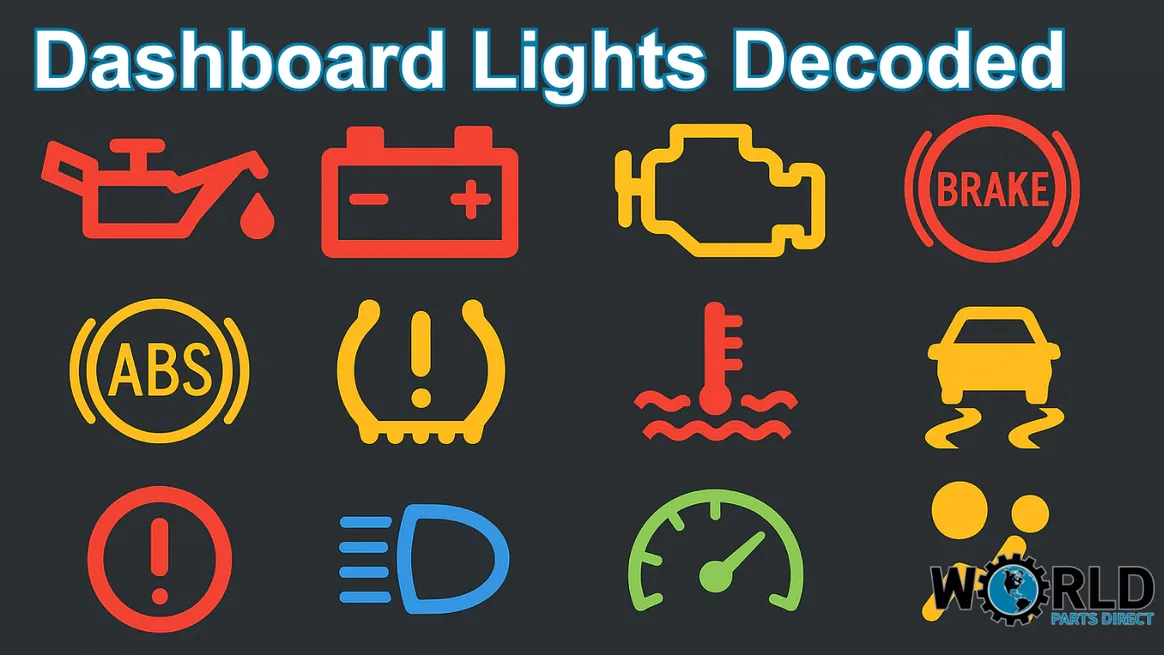
Car Dashboard Symbols Explained: What Your Vehicle Is Actually Telling You
TL;DR — Executive Hook
Dashboard lights are a risk-priority system, not just icons. Red, amber, and green encode how fast damage is occurring.
Flashing lights mean active mechanical harm, not just stored errors.
Your car is a network of computers using sensors, control modules, and fault logic to decide what to show you.
Dashboard Lights Are a Risk System, Not a Warning List
Dashboard symbols are not decorative icons. They are the visible output of a fault-management system that ranks mechanical danger in real time. Modern vehicles contain multiple control computers including the Powertrain Control Module (PCM), Body Control Module (BCM), brake controllers, and driver-assist modules, all communicating over the CAN Bus (Controller Area Network).
When a sensor reports data outside its normal range, the module decides three things:
how severe the fault is, how persistent it is, and whether it can cause damage if ignored. Only then does the instrument cluster decide whether to display a green indicator, an amber warning, or a red emergency light.
Counter-intuitive insight:
A vehicle can drive smoothly while internal damage is already happening. Oil pressure and overheating failures do not always create noise before destroying bearings or warping cylinder heads.
How the Color Hierarchy Encodes Urgency
Dashboard colors follow a mechanical severity model, not a design choice.
Red means damage is happening now
Amber means a system is operating outside its safe limits
Green or blue means a system is active or engaged
Flashing lights override color. A flashing amber Check Engine is more dangerous than a steady red warning because the control module is detecting ongoing destructive conditions, usually misfires overheating the catalytic converter.
Pro Tip:
If any light is flashing, reduce speed immediately and prepare to stop. Flashing always means harm is in progress.
Why All the Lights Turn On When You Start the Car
That brief light show at startup is not for looks. It is the cluster running a CAN Bus self-test and verifying that every warning lamp can illuminate.
Each control module reports its status. If a module fails or a sensor reports an out-of-range reading, the warning stays lit after startup. At that moment, a Diagnostic Trouble Code (DTC) has already been stored.
If a light stays on, it means the car failed a test before you even put it in gear.
Which Systems Matter Most When a Light Appears
Not all dashboard warnings carry the same risk. Vehicles prioritize faults by how quickly they can cause damage or loss of control.
Powertrain systems like oil pressure, cooling, and charging can destroy engines.
Brake hydraulics can remove stopping ability.
ABS, traction control, and stability control reduce safety but still allow the vehicle to stop.
Body and feature lights only affect convenience.
Understanding this hierarchy is how professionals decide whether to keep driving or shut down immediately.
Red Warning Lights That Mean Stop Now
These are the lights that indicate active mechanical or safety failure.
1) Oil Pressure Warning
Low oil pressure means metal engine parts are no longer separated by lubrication.
What to do:
Shut the engine off immediately
Check oil level after the engine stops
If the light returns, tow the vehicle
2) Engine Temperature Warning
Overheating warps cylinder heads and destroys head gaskets.
What to do:
Turn off A/C
Pull over
Allow engine to cool before checking coolant
3) Brake System Warning
This may indicate low fluid or hydraulic failure.
What to do:
Stop driving
Tow if the pedal feels soft or travel increases
Amber Warnings That Can Create Secondary Damage
Amber lights mean a system is outside its safe operating range but not yet catastrophic.
The Check Engine Light is the most misunderstood.
Steady means a fault is stored
Flashing means active misfire that can destroy the catalytic converter
The battery light does not mean the battery is weak. It means the alternator or charging system has failed, and the engine will stall once voltage drops.
Transmission warnings appear when fluid temperature, pressure, or slip exceeds limits. Heat destroys clutch packs and causes delayed shifting.
Chassis and Tire Warning Lights
These affect how safely the vehicle handles, stops, and maintains traction.
1) Tire Pressure (TPMS)
Steady means low air. Flashing means a sensor failure.
2) ABS
Anti-lock braking is disabled, but base brakes still function.
3) Traction and Stability Control
Flashing means the system is actively controlling wheel slip.
Steady means a fault, usually from a wheel-speed sensor.
One failed wheel sensor can disable ABS, traction, and stability simultaneously.
Transmission and Drivetrain Warning Symbols
1) GM Transmission Warnings
Usually a gear with an exclamation point. Indicates overheating, pressure loss, or sensor fault. May trigger limp-home mode.
2) Mopar Transmission Warnings
Typically a thermometer inside a gear. Indicates high fluid temperature. The PCM reduces torque to prevent fluid breakdown.
Ignoring repeated heat warnings permanently damages transmission fluid and clutch packs.
Diesel and EV-Specific Warning Lights
1) Diesel Systems
Glow Plug: wait before starting
DPF: soot load high, needs regeneration
DEF: emissions compliance system that can trigger no-restart mode
2) EV Systems
Charging and regen indicators
Battery temperature and high-voltage alerts
Any orange-cable or high-voltage warning requires professional service.
How to Diagnose and Clear Dashboard Lights
An OBD-II scanner reads DTCs stored by control modules. These codes show what failed, how often, and whether the fault is still active.
Some lights clear when OBD-II readiness monitors pass again, such as after tightening a gas cap or correcting tire pressure. Others require repair.
Clearing codes without fixing the problem only hides the warning temporarily.
FAQ
Why is a flashing light worse than a steady one?
Because it means damage is actively occurring.
Can I drive with a Check Engine light on?
Yes if steady. No if flashing.
Why did my warning light turn off by itself?
The system saw normal conditions again and cleared the fault.
Is ABS failure dangerous?
Base brakes still work, but stopping distance increases on slippery roads.
Why does cold weather trigger TPMS?
Air pressure drops as temperature falls.

About World Parts Direct
World Parts Direct is your go-to source for genuine OEM parts for GM and MOPAR vehicles. We make it easy to order factory-original parts online — shipped fast, accurately, and backed by real human support.
Every item we sell comes brand new in the manufacturer’s original packaging. Whether you’re handling routine maintenance, collision repair, or a full restoration, our parts professionals provide VIN-verified fitment support to ensure you get exactly what you need.
Serving drivers and repair shops worldwide, we proudly support brands like Chevrolet, GMC, Cadillac, Buick, Dodge, Chrysler, Jeep, and Ram. Shop confidently at WorldPartsDirect.com.