
Chevrolet Silverado EV vs Ram 1500 REV: Complete 2025 Electric Truck Comparison Guide
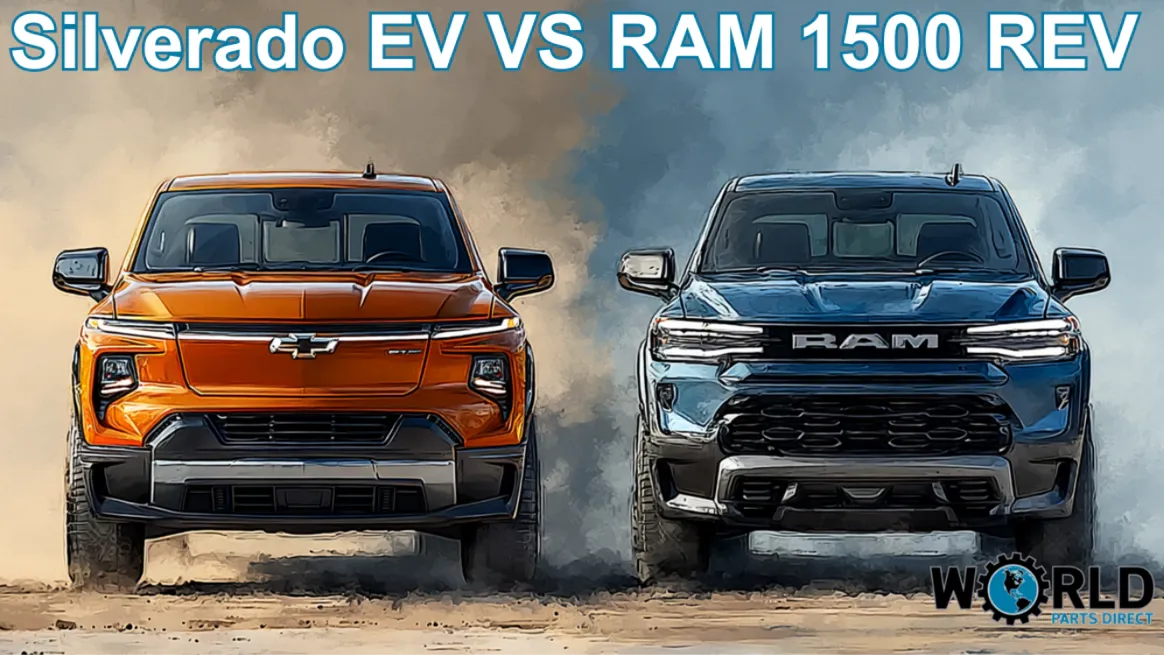
Chevrolet Silverado EV vs Ram 1500 REV
The electric pickup space has reached a turning point, and shoppers want clear, grounded answers.
This guide compares the Chevrolet Silverado EV and the Ram 1500 REV in plain language, using current data and real buyer concerns. If you’re weighing capability, range, charging, and ownership costs, this walk-through keeps things practical and rooted in what’s available now.
The core takeaway: Chevrolet Silverado EV vs Ram 1500 REV comes down to availability and proven performance today versus planned capability later.
As of 2025, Silverado EV is on sale with long-range setups and 10,000 pounds of rated towing. Ram 1500 REV’s battery-only model is delayed, with earlier specs like 500 miles of range and 14,000 pounds tow still pending production.
Why This Comparison Matters For EV Truck Shoppers
Full-size trucks have a unique job. They need to haul, tow, and survive daily use while still feeling comfortable on the commute. Electric versions add one more ask. They must deliver dependable range and fast charging without turning everyday tasks into a math problem.
When cross-shopping Chevrolet Silverado EV vs Ram 1500 REV, the most helpful lens is time. What can you buy now, and what is still on the horizon.
As of 2025, Silverado EV is shipping to customers in multiple trims, with real-world highway and mixed-route range tests from independent outlets that help set expectations. Ram’s battery-only REV took a pause, with development halted and its market timing pushed back while Stellantis reorders its approach in North America.
That split matters. If you need an EV truck soon, Silverado EV gives you something tangible to test-drive and price. If you’re comfortable waiting, Ram’s previously announced specs still paint an ambitious future truck.
Consumer priorities keep circling the same points. Range you don’t have to babysit. Towing ratings that hold up beyond the brochure. Cabin tech that feels simple rather than fussy. And charging that works on road trips without a scavenger hunt. The sections below take each piece head-on so you can decide which path fits how you actually use a truck.
Vehicle Overviews
Chevrolet Silverado EV Highlights
Silverado EV rides on GM’s Ultium architecture and comes in several trims aimed at work fleets and retail buyers. Key draws include long-range battery configurations documented by third-party tests, strong DC fast charging rates on higher-capacity packs, and a tow rating up to 10,000 pounds on most retail configurations as of 2025.
Owners also benefit from GM’s dealer and service footprint along with access initiatives that connect Chevy drivers to public charging across North America.
Range results stand out. Mixed-route and highway tests have shown Silverado EV surpassing EPA estimates under certain conditions, which helps reduce anxiety for drivers planning regular intercity trips or hauling on weekends.
Cabin tech leans modern but familiar, with Google Built-In on many trims and available hands-free driver assistance on certain models. Practical touches, like the Multi-Flex Midgate, expand usable bed length without awkward workarounds.
Put simply, Chevrolet aimed to make the Silverado EV feel like a truck first and an EV second. The ride is quiet, power is instant, and there’s no learning curve to basic tasks like hitching a trailer or loading the bed. Long-distance owners report that the efficient highway cruising character is a real advantage when drives stretch into the hundreds of miles.
Ram 1500 REV Highlights
Ram 1500 REV’s story has two parts. First, the originally unveiled spec sheet promised a dual-motor layout, targeted output of 654 horsepower, battery options up to 229 kWh, and an eyebrow-raising 500-mile target range. The brand also touted 350 kW fast charging and a tow rating up to 14,000 pounds, raising the bar for capability claims in the segment.
Second, market reality intervened. Stellantis halted development of the battery-only Ram 1500 REV and pushed timing, citing near-term demand softness for full-size BEVs and customer concerns around towing and range in North America.
A hybrid Ramcharger arrived sooner to cover shoppers who want electrified convenience without full BEV tradeoffs. The pure electric REV is now slated later than first promised, and final production specs may differ from early targets.
For shoppers, the practical takeaway is clarity about timing. If you want a Ram full-size truck with plug-in capability soon, the Ramcharger covers a broad set of use cases. If the battery-only REV retains its ambitious specs when production resumes, it could land as a heavy hitter for range and tow ratings. Until then, expect changes as the program adapts to feedback and a shifting market.
Chevrolet Silverado EV vs Ram 1500 REV At A Glance
Core Specs Shoppers Compare First
| Item | Chevrolet Silverado EV | Ram 1500 REV |
|---|---|---|
| On-sale status | Retail deliveries in 2024–2025, multiple trims shipping | Battery-only model delayed. Development halted and timing reset |
| Estimated range | Retail configurations up to the mid 400s. Independent tests up to 472–539 miles under specific conditions | Earlier targets up to 500 miles with 229 kWh battery. Pending production confirmation |
| DC fast charging | High-power charging on upper trims. Reported peak rates up to 300–350 kW depending on configuration | Targeted 350 kW peak. Pending production timing |
| Tow rating | Up to 10,000 lbs on retail trims as of 2025 | Targeted up to 14,000 lbs. Pending production timing |
| Service and support | GM dealer network and EV service programs. Broad coverage in the US | Ram support strong for ICE and hybrid. BEV service pending timing |
| Charging network access | Chevrolet initiatives tied to hundreds of thousands of chargers across North America | Network plans align with industry standards. Final details pending BEV timing |
Strengths and Tradeoffs at a Glance
- Silverado EV: Proven deliveries, documented range performance, and familiar GM support. Tow capacity and cabin tech sit in the sweet spot for everyday use and weekend hauling.
- Ram 1500 REV: Big targets for range and tow became a talking point, but timing pushed real-world validation out. If those specs hold, the truck could suit heavy towing and long rural drives once production returns.
- Charging: Both aim for high-power DC charging that makes road trips viable. Silverado EV has the advantage of being on the road today with known behavior.
- Ownership: Dealer support and parts availability shape downtime. GM’s footprint helps current owners. Ram’s BEV support plan will matter once the truck ships.
Which Truck Fits Which Buyer
Daily driver who tows light to medium loads and wants simple road trips. Silverado EV fits that pattern today with strong charging and range behavior already documented by independent testing.
Long-distance hauler who wants maximum tow headroom and a big battery for infrequent charging stops. Ram 1500 REV’s announced specs match that use case, but buyers should plan around the delayed BEV timing and follow updates for any production changes.
Shoppers who prefer to buy soon. Silverado EV gives a clear path to test-drive, order, and take delivery now. Ram REV requires patience and a watchful eye on Stellantis news, dealer updates, and final spec confirmation.

Power Performance and Driving Dynamics
Powertrain Layouts and Horsepower
Silverado EV uses dual motors for all-wheel traction on retail trims. Output varies by configuration, with higher trims reporting figures that place acceleration and passing power in the same league as strong gas V8s. Instant torque helps with short on-ramps and quick merges, which is noticeable when the bed is loaded or the trailer is hitched.
Ram 1500 REV’s earlier targets listed dual motors and 654 horsepower with 620 pound-feet of torque, pairing big power with a battery sized for long highway stints. Since timing is delayed, those numbers should be viewed as guidance rather than guarantees until the production BEV is finalized.
Both trucks emphasize traction, stability, and usable grunt over spec-sheet theatrics. People care less about a headline zero to sixty and more about steady pull up a grade with cargo in the bed. Silverado EV’s driveline feels tuned for smooth response rather than an on-off surge. Ram’s plan pointed at similar behavior based on its ICE truck ride-and-handling reputation.
Acceleration Handling and Ride Quality
Electric trucks feel quiet in a way that still surprises passengers. In Silverado EV, wind and tire noise are muted, and throttle inputs are clean without hunting for gears. Around town, the truck’s weight actually helps with planted, solid ride. On the highway, it tracks straight with little correction, which reduces fatigue on longer drives.
Ride tuning matters more than raw output. A truck that glides over broken pavement and stays composed on uneven shoulders feels “right” in daily use. Early impressions and Ram’s stated goals for REV pointed to comfort-first tuning, matching the brand’s reputation for plush cabins and controlled suspension behavior in its ICE trucks. Final results will be clearer once production returns and independent drives begin.
Handling confidence builds from predictable controls. Silverado EV’s steering is direct without being twitchy. Regenerative braking blends in naturally on refined trims, so the pedal still feels like a normal truck brake rather than a science project. That helps anyone hopping out of a gas truck and into an EV without a steep learning curve.
Work Site Power Features and Onboard Outlets
Workday flexibility is a big deal. Silverado EV includes accessory power that can run tools, lights, and small appliances. Paired with bidirectional capabilities on certain setups, owners can keep a job moving or host a tailgate without dragging a generator. Output varies by trim and plug location, so check your configuration if you rely on this daily.
Ram’s plan included bed and frunk power panels with multiple kilowatts available, along with vehicle-to-home and vehicle-to-vehicle capabilities. That approach aligns with how tradespeople use trucks at remote sites and how families use pickups for camping or outages. Exact output and compatibility will be confirmed when the BEV program resumes.
Simple test: If you regularly power tools or gear, look up your most used devices and match wattage needs to the truck’s outlet ratings. Owners who do this once avoid surprises later. Silverado EV gives hard numbers now. Ram REV will need updated charts once production is set.
Range Charging and Road Trip Planning
DC Fast Charging Speeds and Networks
Time matters when you’re parked on a charger with a trailer waiting. Silverado EV supports high-power DC fast charging on upper configurations, with peak rates reported up to the 300 to 350 kW range depending on battery selection and conditions. That yields meaningful miles per minute when the state of charge is low and you need to get moving again.
Chevrolet has also emphasized public charging access for its EVs, with initiatives that tap into hundreds of thousands of chargers across North America. The usefulness is simple. More stations means fewer detours and less waiting, especially on busy corridors and around popular recreation areas.
Ram 1500 REV targeted 350 kW charging with an 800-volt architecture similar to other modern EV trucks. The headline goal was quick top-ups and less time juggling charging stops on long drives. Network details will be clearer once production timelines settle and partners are finalized.
Home Charging Setup and Costs
Home charging turns an EV truck from “possible” to “easy.” The most flexible setup uses a 240-volt Level 2 charger at 11.5 kW or higher, often installed in a garage. Many Silverado EV trims offer robust onboard chargers that pair well with residential hardware, and local electricians can handle this in an afternoon for typical homes.
- Confirm panel capacity. Check your home’s service panel and breaker availability. This sets whether you can run 11.5 kW or up to 19.2 kW comfortably.
- Pick charger and location. Choose a Level 2 unit with a cable length that reaches your parking spot without stretching.
- Schedule installation. Get a quote. Ask for load management if your panel is near its limit.
- Set charging habits. Program overnight charging during lower-rate windows if your utility offers time-of-use pricing.
Cost depends on local rates and hardware. Many households see total installation in the low four figures including permits, wire, and labor. If you rent or lack panel capacity, a lower-power Level 2 unit or reliable access to workplace charging can still make ownership smooth.
Ram REV owners will follow the same playbook once BEV timing returns, and specs suggest similar charger pairings given the planned 800-volt approach.
Cold Weather and Towing Range Effects
Every truck owner who tows has felt the drop in fuel economy with a big trailer. EV trucks behave similarly, and the key is planning. Cold temperatures and higher sustained speeds reduce range. Towing adds aerodynamic drag and weight, which compounds the effect. Silverado EV’s independent results give a useful baseline for planning buffer miles on long hauls.
Practical tips help. Start trips at a higher state of charge and charge deeper than you would without a trailer. Choose chargers slightly off the main interstate when busy hubs are full. Consider leaving a wider buffer percentage for the final leg to avoid cutting it close near your destination.
Ram’s earlier battery targets suggest strong long-haul potential with the larger pack, which would help in winter and towing scenarios once production specs are set.
A small anecdote illustrates the point. Many owners describe rolling quiet at dawn with a fishing boat in tow. The cabin stays warm without a loud fan, and the only sound is the faint hum of tires. With a sensible charging stop planned before sunrise, the day starts calm rather than rushed. That’s the EV advantage. You pick the timing and skip the fuel station shuffle.
Towing Payload and Bed Utility
Towing Ratings and Trailering Tech
Silverado EV’s 10,000-pound tow figure covers boats, campers, and work trailers for most buyers as of 2025. The truck’s torque-rich response makes pulling feel easy up to moderate grades, and the chassis keeps the trailer steady without constant corrections. On trims with advanced camera and hitch guidance, lane changes and backing maneuvers feel more confident.
Ram 1500 REV’s targeted 14,000 pounds signaled serious intent for heavy hauling. Early materials mentioned comprehensive trailering support and robust cooling.
Once production returns, expect details around hitch assist, trailer profiles, and sway management to follow, matching or exceeding what owners expect from Ram’s ICE tow packages.
Real-world tow behavior matters more than brochure claims. A stable truck with predictable braking and clear sightlines makes long towing days safer and less tiring. Silverado EV already checks those boxes. Ram’s plan aimed for the same end state, and many shoppers will wait to see how the BEV tuning compares when test drives begin.
Payload Ratings and Bed Features
Payload sits comfortably in the everyday range on Silverado EV retail trims, so furniture, lumber, landscaping loads, and coolers fit without fuss. Bed liners and tie-down points are straightforward, and the floor height makes loading less of a climb. The truck feels born to carry awkward items without the sense that you might strain something by pushing too hard.
Ram’s announced payload target of 2,700 pounds would have topped segment expectations for a BEV if delivered. Combined with a large frunk and bed power panels, that setup would have turned the truck into a flexible rolling workspace. Specs remain subject to change when timing is finalized.
One design detail often overlooked is tailgate behavior in tight spaces. Silverado EV’s Multi-Flex system gives more options for partial opening or load stops, so you can balance access with protection when backing near walls or hedges. Ram’s storage features like RamBox make daily life tidy by giving dedicated cubbies for straps, gloves, and small tools.
Cargo Solutions Midgate Tailgate and Frunk
Silverado EV’s Multi-Flex Midgate extends usable bed length into the cabin, turning a five-foot bed into a long-haul plank carrier without an awkward flag. Coupled with a configurable tailgate and pass-through options, this solves common problems for homeowners and small contractors who move materials on weekends and evenings.
Ram 1500 REV’s cargo story leaned on a generous powered frunk and the RamBox bed storage system. The frunk adds clean, weatherproof room for tools or groceries, and RamBox keeps dirty or sharp gear organized. For buyers who dislike mixing cargo types, that layout frees the main bed for bulk loads while the frunk and side boxes handle sensitive or wet items.
In simple terms, Silverado EV favors flexible length through the cabin, while Ram’s plan favors dedicated compartments. Both approaches make sense. Choose the one that matches how you actually carry things. If your life includes long lumber and ladders, midgate flexibility is gold. If you haul mixed gear that needs separation, frunk plus bed boxes keeps everything clean and easy to reach.
Interior Technology Comfort and Driver Assistance
Infotainment Screens and Connectivity
Silverado EV’s interface blends a large center screen with familiar app layouts. Google Built-In on many trims keeps maps and voice control straightforward, and smartphone mirroring handles the rest.
Screen size varies by configuration, but clarity and responsiveness matter more day to day. Chevy’s UI avoids buried menus for common tasks like camera views and trailering checks.
Ram’s Uconnect 5 system remains one of the most user-friendly interfaces in the truck world. Earlier REV previews mentioned a 12.3-inch driver display and a passenger screen option, bringing co-pilot duties into the cabin for navigation and entertainment.
Wireless Apple CarPlay and Android Auto keep every family member’s phone connected without a spaghetti of cables.
Connectivity is less about bragging rights and more about making daily life smoother. A truck that remembers seat, tow, and camera settings and gets you to your destination without menu hunting simply feels better to live with. Both brands understand that, and the differences often come down to personal preference on look and feel.
Seats Space and Storage in the Cabin
Cabin comfort starts with seat shape and quiet ride. Silverado EV delivers both. Cushions support without feeling stiff, and heat or ventilation settings respond quickly on higher trims. Under-seat storage options and a tidy center console keep small gear organized, which pays off when moving between job sites or school drop-offs.
Ram cabins have a reputation for a calm, upscale feel. REV’s early design direction kept that theme, with thoughtful materials and clever cubbies.
Families appreciate wide door openings and flat floors that make it easy to swing in child seats or load groceries without awkward angles. Expect the production BEV to keep the classic Ram cabin strengths once timing resumes.
People notice small touches. Soft-close storage lids, easy-reach cup holders, and clear rear seat latch points make daily use smoother. These aren’t the things that sell a truck, but they are the things that make owners happy year after year.
Driver Assistance and Hands Free Features
On Silverado EV, available hands-free features on equipped trims deliver steady lane keeping and clear prompts. Long interstate runs feel less taxing, and the system’s behavior is predictable, which matters when guiding several thousand pounds of truck and gear. Cameras and sensors handle parking lots without drama, with clean visual layouts that reduce guesswork.
Ram’s announced suite included modern assistance features with an emphasis on lane centering, adaptive cruise, and trailering aids. Given Ram’s ICE trucks already score well on camera angles and tow guidance, expect the production BEV to bundle similar tools when timing returns. Hands-free systems often depend on mapped corridors, so buyers should check coverage when choosing options.
Hands-free tech is not magic. It’s a helpful co-pilot that takes the edge off long drives. Silverado EV shows how it works today. Ram REV’s plan targeted the same outcome, and buyers will compare feel and consistency once both trucks are testable side by side.

Ownership Costs Reliability
Maintenance Schedules and Service Access
Electric trucks reduce routine tasks. No oil changes. Fewer filters. Regenerative braking can extend pad life, and driveline simplicity cuts trips to the shop. Silverado EV benefits from GM’s established EV service programs, with dealer coverage that makes scheduling easier across the US.
Ram’s BEV service plans will matter once the truck ships. The brand already knows how to support full-size trucks at scale. The question is parts availability and technician training for high-voltage systems, which Stellantis can address as timing firms up for the BEV program. Hybrid Ramcharger coverage is the near-term bridge for owners who want electrified capability now.
Daily costs hinge on electricity rates and driving patterns. Owners who charge at home overnight often see consistent monthly savings compared with gas spend on similar mileage.
Long road trips shift costs toward public charging, where pricing varies by location and power level. Silverado EV owners already have real bills to benchmark. Ram REV owners will model estimates off planned battery sizes and public rate charts.
Availability Trims and EV Inventory in the US
Current Trims Pricing and Options
Silverado EV has shipped in multiple trims since 2024, spanning work-focused setups and retail versions with luxury features. Battery size and onboard charging capability vary, with upper trims advertising higher DC fast charging rates and more robust Level 2 compatibility for home units.
Retail tow ratings commonly sit at 10,000 pounds as of 2025, with cabin tech and convenience features rising as you step up the ladder.
Ram 1500 REV’s earlier lineup included Tradesman, Big Horn, Laramie, Limited, and Tungsten in early materials, covering value to luxury. Pricing and final configurations will be updated closer to new timing, and battery options may change from the original 168 and 229 kWh plan depending on market direction.
Shoppers should request detailed spec sheets at ordering time. Silverado EV dealers can outline battery, tow, and charging differences with clear timelines today. Ram dealers will share the latest BEV info as Stellantis updates program status and trims.
Dealer Availability and EV Inventory Tips
- Call ahead for demo trucks. Test the charger door, cable reach, and camera views in person. Small details matter daily.
- Ask about Level 2 home charger bundles. Some dealers coordinate installers and utility rebates to simplify setup.
- Request tow package specifics. Hitch class, integrated brake controller, and camera support vary by trim.
- Confirm DC fast charge behavior. Ask for peak rate, taper points, and expected minutes from 10 to 80 percent on your trim.
Inventory shifts quickly. Silverado EV units cycle through lots as fleets and retail buyers place orders. For Ram’s BEV, expect fewer firm dates until production resumes. If your timeline is tight, keep a flexible spec wish list and avoid fixating on one configuration.
Brand Impact Market Trends and Future Outlook
Chevrolet and Ram Brand Strategies in BEV Trucks
Chevrolet’s strategy hinges on building EVs that behave like the trucks people already trust. The Ultium platform gives a common foundation for battery size and charging speed, and the brand’s sales growth in EV categories shows traction with mainstream buyers in the US. Silverado EV sits at the heart of that approach with a capability-first pitch backed by actual deliveries and tests.
Ram’s strategy evolved in response to North American demand signals. By moving a hybrid earlier and pausing the BEV to reassess towing, range, and ownership concerns, Stellantis aims to align trucks with what buyers say they want right now.
If the battery-only REV returns with adjusted specs that match those concerns head-on, the brand could regain momentum among truck-first shoppers who need long-haul confidence.
The competitive playbook is clear. Build an EV truck that feels like a truck, removes charging anxiety, and keeps service simple. Brands that hit those notes consistently will win trust outside early adopters.
Sales Trends and Segment Share in the US
Electric truck sales are still forming a steady pattern. Chevrolet’s EV momentum, including trucks, moved the brand higher on US EV sales rankings by mid 2025, backed by expanded production and broader dealer support. Silverado EV delivery counts grew through 2025 relative to early months, suggesting healthy interest among fleet and retail buyers.
The wider full-size BEV segment saw mixed demand. Stellantis cited slower uptake and towing-range concerns in North America as one reason to reorder Ram’s BEV timing. That decision underscores how much real-world use, like hauling in winter and long rural drives, shapes adoption for full-size trucks.
As charging corridors expand and more long-range trucks hit the highway, adoption tends to follow. People want proof in everyday use. Documented range, predictable charge behavior, and reliable service build confidence that moves beyond early-adopter waves.
What to Watch in the Next Model Years
- Battery updates. Watch for chemistry tweaks that lengthen winter range and reduce charge times at low states of charge.
- Tow-focused software. Expect smarter trailer profiles that adjust charging prompts and range estimates on the fly.
- Hands-free coverage. More mapped corridors will make long-haul assistance less regional and more nationwide.
- Dealer service growth. More EV-certified bays and parts inventory will cut downtime for high-mileage owners.
Silverado EV already benefits from an active update cadence and expanding service support in the US. Ram’s BEV program will likely return with sharpened specs and a clearer tow-plus-range message aimed squarely at truck-first buyers who need predictable performance year round.
FAQs
Which Is Better, Ram 1500 or Chevy Silverado 1500?
For traditional gas 1500s, ratings often favor Ram for cabin comfort and Silverado for work-focused usability. Predicted reliability scores have leaned toward Ram in some recent years, while resale outcomes vary by trim and region. These trends reflect ICE models, not EVs. Compare your use case, dealer support nearby, and tow needs before choosing.
Is the Silverado EV Selling Well?
Chevrolet’s EV sales rose through 2025, with the brand reaching the number two position for EV sales in the US by mid year and Silverado EV deliveries increasing quarter over quarter from early counts. Fleet and retail interest appears steady, helped by long-range tests and broad dealer access for service.
Are Rams More Reliable Than Silverados?
Predicted reliability has at times favored Ram 1500 over Chevrolet Silverado 1500 in recent ICE model years, but the gap shifts by trim and update cycle. EV reliability will be shaped by battery management and service access, which are still developing for Ram’s BEV timing. Check current data at purchase time.
Is the Silverado EV Any Good?
Yes. Independent tests have shown strong highway and mixed-route range, steady DC fast charging behavior on upper configurations, and everyday drivability that feels like a well tuned full-size truck. Owners cite quiet ride quality and practical cargo solutions like the midgate as standout features.
Conclusion
Choosing between Chevrolet Silverado EV vs Ram 1500 REV hinges on timing and trust. Silverado EV is here now with documented range, fast charging, and a tow rating that meets most real-world needs. Ram 1500 REV’s early targets promised major capability, but the battery-only model’s delayed timing shifts buyers toward patience and close attention to program updates.
The practical path is simple. If you need an EV truck soon and want known behavior on long trips and towing days, test-drive Silverado EV and price trims that match your tow and charge priorities. If you can wait and want the biggest battery and tow ceiling Ram has signaled, track Stellantis announcements, talk with local dealers, and plan home charging now so you’re ready when orders reopen.

About World Parts Direct
World Parts Direct is your go-to source for genuine OEM parts for GM and MOPAR vehicles. We make it easy to order factory-original parts online — shipped fast, accurately, and backed by real human support.
Every item we sell comes brand new in the manufacturer’s original packaging. Whether you’re handling routine maintenance, collision repair, or a full restoration, our parts professionals provide VIN-verified fitment support to ensure you get exactly what you need.
Serving drivers and repair shops worldwide, we proudly support brands like Chevrolet, GMC, Cadillac, Buick, Dodge, Chrysler, Jeep, and Ram. Shop confidently at WorldPartsDirect.com.