
Why Ram Built the Fox Factory × Mopar 650-HP Ram 1500
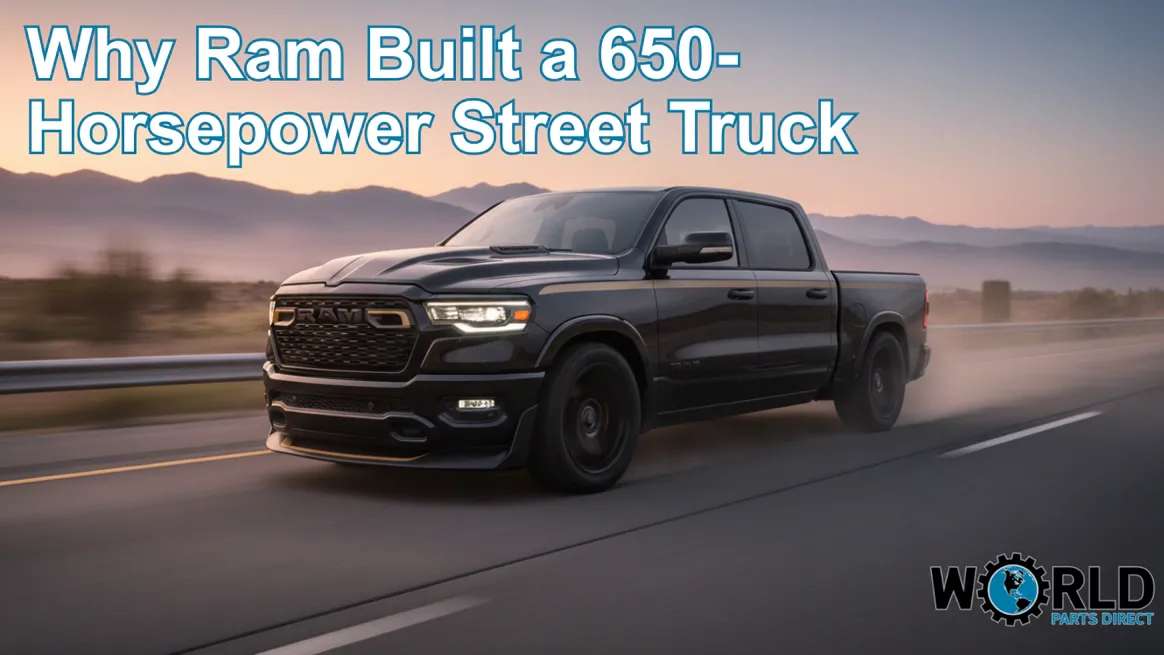
Ram’s Fox Factory × Mopar 650-Horsepower Ram 1500 Was a Market Test, Not a Concept
TL;DR
- The Fox Factory × Mopar 650-horsepower Ram 1500 functioned as a controlled demand-validation vehicle.
- Ram used limited production and Mopar branding to evaluate buyer intent, pricing tolerance, and horsepower demand.
- The truck intentionally avoided SRT branding to reduce emissions, warranty, and lifecycle risk.
- Sell-through behavior supports continued demand for a factory street-performance Ram pickup.
- A future SRT or Hellcat-powered Ram 1500 depends on regulatory timing and profitability modeling.
Introduction
The Fox Factory × Mopar Ram 1500 appeared quietly, sold quickly, and exited production without public announcement. That absence of spectacle was intentional.
Unlike traditional concept vehicles or performance launches, this truck was created to generate measurable data rather than media attention.
It provided the Stellantis performance leadership team with real-world insight into whether a modern street-performance pickup remains economically viable.
Why This Truck Exists at All
The Fox × Mopar Ram exists because Ram lacked verified demand data for a modern street-performance pickup.
Following the discontinuation of the Ram TRX and the long-retired Ram SRT-10, Stellantis no longer had current buyer behavior metrics for high-horsepower street trucks.
Horsepower alone no longer guarantees profitability. Emissions compliance costs, certification expenses, and shrinking V8 timelines require every performance program to justify itself financially.
- Buyer willingness to pay six-figure pricing
- Demand outside off-road performance segments
- Horsepower thresholds below Hellcat escalation points
- Viability without volume manufacturing
The Fox Factory × Mopar Collaboration Explained
Fox Factory provided OEM-grade suspension calibration and motorsports credibility.
Mopar Performance served as Stellantis’ controlled experimentation channel for specialty builds.
This structure allowed Ram to develop a legitimate performance truck without triggering the regulatory obligations associated with an official SRT designation.
Why Avoid Full SRT Certification
- EPA and CARB emissions certification exposure
- Long-term powertrain warranty modeling
- Multi-year production continuity requirements
- Fleet emissions averaging penalties
Mopar branding preserved flexibility while still enabling a factory-authorized vehicle.
The 650-Horsepower Powertrain Strategy
The 650-horsepower rating occupies a deliberate position in Ram’s performance hierarchy.
It sits below the 702-horsepower Hellcat threshold while remaining significantly more powerful than naturally aspirated competitors.
Although Ram did not label the engine as a Hellcat variant, the architecture aligns closely with the 6.2-liter supercharged HEMI platform.
- Lower thermal load compared to Hellcat tuning
- Reduced emissions compliance risk
- Improved drivetrain longevity
- Predictable torque delivery for street use
The powertrain was paired with the ZF eight-speed automatic transmission and calibrated for sustained pavement operation rather than launch abuse.
Chassis Suspension and Street Intent
The Fox × Mopar Ram was engineered for pavement performance.
Fox Factory suspension tuning reduced travel, increased damping stiffness, and lowered ride height to improve weight transfer control.
Wide performance tires and upgraded braking systems support high-speed stability and repeated heat cycles.
Why Ram Did Not Call This an SRT Truck
SRT branding represents a permanent corporate commitment.
Applying that badge would require long-term emissions certification, warranty support, and multi-year production obligations.
By avoiding SRT designation, Ram isolated market testing from long-term liability.
The Truck as a Market Test
This vehicle was introduced without national advertising or future production promises.
That approach allowed Ram to observe buyer behavior without hype distortion.
- Allocation sell-through speed
- Dealer markup tolerance
- Regional buyer concentration
- Conversion versus TRX inventory
Competitive Context
The success of the Ford F-150 Raptor R demonstrated that premium V8 trucks remain commercially viable.
General Motors exited the street-performance segment entirely, leaving Ram positioned to reclaim the muscle-truck category.
What the Data Likely Showed
- Rapid sell-through of limited allocations
- Strong tolerance for dealer markups
- High demand in Texas, California, and Florida
- Repeat buyers from Hellcat and SRT ownership groups
The absence of buyer resistance was as meaningful as the presence of demand.
Implications for a Future SRT or Hellcat Ram
If a future street-performance Ram returns, it will likely feature:
- Limited production volumes
- Premium pricing
- Street-focused suspension geometry
- Short lifecycle timing
Performance trucks are increasingly halo products rather than volume sellers.
Summary
The Fox Factory × Mopar 650-horsepower Ram 1500 was introduced quietly and with limited scope, which reflects its purpose. Rather than serving as a new performance model, it functioned as a controlled way for Ram to measure demand in the street-performance truck segment.
By limiting production and avoiding national advertising, Ram was able to observe real buyer behavior without speculation or future promises influencing demand. Allocation sell-through speed, dealer pricing tolerance, and regional concentration offered clear indicators of how the market responded.
The vehicle’s configuration supports that intent. Power output remained below Hellcat escalation thresholds, suspension tuning favored pavement stability over off-road capability, and Mopar branding avoided the long-term obligations that accompany an SRT designation.
Together, those signals suggest that interest in a street-oriented performance Ram has not disappeared. Any future SRT or Hellcat-powered Ram 1500 would likely appear as a limited-volume halo product, shaped by emissions compliance, warranty exposure, and profitability requirements rather than nostalgia alone.
FAQ
Why did Ram build the Fox × Mopar Ram 1500?
To validate real buyer demand without committing to full SRT certification.
Is this a Hellcat Ram?
The engine shares architecture with Hellcat platforms but was intentionally not branded as such.
How is it different from the Ram TRX?
The TRX prioritizes off-road performance. The Fox × Mopar Ram focuses on street dynamics.
Will an SRT Ram return?
Only if emissions compliance and profitability align with proven demand.

About World Parts Direct
World Parts Direct is your go-to source for genuine OEM parts for GM and MOPAR vehicles. We make it easy to order factory-original parts online — shipped fast, accurately, and backed by real human support.
Every item we sell comes brand new in the manufacturer’s original packaging. Whether you’re handling routine maintenance, collision repair, or a full restoration, our parts professionals provide VIN-verified fitment support to ensure you get exactly what you need.
Serving drivers and repair shops worldwide, we proudly support brands like Chevrolet, GMC, Cadillac, Buick, Dodge, Chrysler, Jeep, and Ram. Shop confidently at WorldPartsDirect.com.