
The 2015–2025 Car Market Reset: How EVs, Hybrids, and SUVs Rewired American Performance

Car industry changes last decade
TL;DR — U.S. car market, 2015→2025
- Powertrains: EVs and hybrids surged; manuals and big V8s thinned to niche/halo roles.
- Segments: SUVs and trucks became the center of gravity; sedans/coupes shifted upmarket or exited.
- Tech: Safety and performance went software-first—ADAS mainstream, over-the-air updates routine.
- Economics + policy: Profit margins (trucks/SUVs) and emissions rules steered portfolios toward electrification and credit strategies.
- Brand anchors: GM leaned on Ultium (platform + software cadence) and hybrid halo performance; Mopar sunset HEMI icons and reframed muscle with Daytona EVs.
- Hybrid reality: Electric assist now doubles as efficiency and speed—smoother launches, stronger midrange, calmer cabins.
- Affordability & exits: Many sub-$35k enthusiast coupes disappeared as chips, compliance costs, and demand favored crossovers. The used market now carries manual/V8 nostalgia—often with a “collector tax.”
- Charging & TCO: Public networks expanded and home charging simplifies life; fewer oil/transmission services plus incentives often tilt total cost of ownership in EVs’ favor (planning still required for winter, towing, and road trips).
- Consumer experience: EVs/hybrids flatten the 0–60 hierarchy (instant torque) but trade some theater for quiet speed; driver assists reduce fatigue when used correctly.
- Net effect: Showrooms now speak electrons, software, and scale. Performance didn’t die—it changed dialects. SUVs and trucks bankroll the transition; compliance and platform thinking set the pace for the next decade.
Car Industry Changes Last Decade In The U.S.
What changed between 2015 and 2025
- Showroom shape:
2015: performance coupes still held cultural sway.
2025: trucks/SUVs in most driveways; EVs/hybrids win share and headlines. - Compression of trends:
Batteries: cheaper, denser, better.
Software: moved into the driver’s seat (literally—controls, calibration, UX). - Policy pressure → product:
Regulators tightened targets.
Automakers responded with tech upgrades and credits to comply.
Longer take (keep the texture):
The performance experience changed, too. In 2015, a manual V8 was the gold standard for speed and feel. In 2025, instant electric torque and tight stability logic define “fast.” Enthusiasts lost a few icons along the way, but gained cars that are quicker, safer, and connected. The cultural trade is real. The visceral charm of a three-pedal launch is now rare, while over-the-air updates and radar sensors are commonplace.
- Why the mix shifted:
Margins: trucks/SUVs carry the profit.
Preferences: space, ride height, perceived safety.
Post-2020 constraints: build what sells best; allocate chips and capacity to high-margin trims.
Tailwinds: incentives and credits steered R&D money into electrification.
How the market reset shaped priorities
- 2020–2023 supply crunch → rewired pricing and plans:
Higher MSRPs; thinner inventory; “take what’s available” shopping. - Brand strategy hardened:
Double down on high-margin segments.
Electrification = compliance lever and business model. - Compliance reality (EPA era):
Rules met through tech deployment plus credit banking/purchases.
Longer take (context stays intact):
From there, priorities clarified. Build SUVs that carry advanced driver assistance and connected dashboards. Roll out EVs and hybrids where credits and demand overlap. Keep performance as a halo, but reframe it through electrons or hybridization. That’s the backdrop for GM’s Ultium push and Mopar’s move from supercharged V8s to Daytona-branded EV muscle.
At-a-Glance: 2015 vs 2025
| Theme | 2015 Baseline | 2025 Reality | GM Anchor | Mopar Anchor |
|---|---|---|---|---|
| Powertrains | V8s/manuals common in performance trims | EVs/hybrids set the tone; manuals rare | Ultium EVs; hybrid Corvette | Charger/Challenger V8 sunset; Daytona EV |
| Affordability | More sub-$35k performance coupes/sedans | Higher MSRPs; niche performance upmarket | Performance EV variants and crossovers | Legacy HEMI exits; electrified muscle focus |
| Segment Mix | SUVs rising; sedans still significant | SUVs/trucks dominate sales mix | Crossovers on Ultium; trucks fund EV pivot | Ram trucks/SUVs anchor margins |
| Regulation | CO₂ targets tightening | Credits, hybrids, BEVs central to compliance | Credit strategy and EV scale-up | Transition toward electrified performance |
| Tech & Safety | ADAS optional on many trims | ADAS mainstream; OTAs expected | Super Cruise/Ultra Cruise roadmap | Performance-tuned aids; EV sound/feel curation |
The Rise Of Electric Vehicles In The U.S.
Tesla and the Ultium push reshape expectations
- From niche → normal:
Tesla proved EVs can be quick and daily-drivable; legacy brands flipped the switch. - GM’s Ultium play (flex-first):
One battery/motor platform spanning crossovers to performance trims; fewer bespoke parts, faster model rollouts. - Buyer expectations, reset:
~250+ miles range feels “standard” for mainstream.
Sub-4s 0–60 isn’t exotic anymore.
Interiors open up (skateboard packaging); charging speeds trend up. - Why platforms matter (strategy, not just tech):
Consolidation scales batteries/inverters/software; costs fall over time; chemistry and packaging upgrades ship across the lineup.
Longer take (keep the texture):
For shoppers, the shift reads as faster charging, more space-efficient cabins, and performance that once demanded premium fuel. GM’s Ultium reframes what a “platform” means—software, cells, and modules iterate together; the result is a cadence of updates that nudges the entire segment forward while normalizing EV acceleration and refinement.
Charging access, range, and total cost of ownership
- Charging reality check:
Public infrastructure expanded notably since 2019.
Home charging remains the simplest, most predictable path. - Ownership math tilts electric:
Electricity costs + tax credits + lower maintenance = favorable TCO for predictable daily miles.
No oil changes; fewer transmission services; regen braking stretches pad life. - Range anxiety, narrowed (but not gone):
Denser fast-charge coverage on major corridors.
Many EVs handle a weekend highway trip with one planned stop. - Plan for edge cases:
Cold weather + towing need forethought; route-aware navigation that locks charging stops is a quality-of-life upgrade.
Longer take (planning culture):
The EV shift is as much behavioral as chemical. Drivers swap “gas station serendipity” for itinerary-aware charging—apps, route planners, and vehicle OS integrations reduce friction. As networks densify and vehicles precondition packs before fast stops, the gap between ICE spontaneity and EV planning continues to close.
Policy incentives and consumer adoption patterns
- Adoption follows incentives (then experience):
Federal credits, state rebates, HOV access → first-time test drives.
Neighborhood word-of-mouth → repeatable confidence. - Uptake, in plain English:
Plug-in share reached high single digits by 2023; millions of EVs on U.S. roads; curve continues upward mid-decade. - Regulation shaped supply (flexible runway):
EPA GHG: averaging, banking, trading.
Shortfalls offset via credits or early tech → smoother EV/hybrid scale-up.
Tesla’s zero tailpipe emissions; others balance trucks with tech + credits.
Hybrid Performance Finds Its Footing
From fuel saver to performance enhancer
- Torque where you feel it:
Electric assist fills torque holes; launches feel immediate. - All flavors grew:
Strong hybrids and PHEVs accelerated.
Mild hybrids showed up in trucks and muscle sedans for launch assist and regen. - Seat-of-the-pants result:
Feels like a bigger engine; fewer penalties at the pump. - Brand translations:
GM: hybrid Corvette validated “electrons = speed amplifier.”
Mopar: transition builds used e-assist to tame lag and sustain pull without chasing displacement alone.
Where hybrids beat traditional powertrains
- City + sprints:
Instant torque moves heavy SUVs cleanly through traffic; smoother driveline behavior than turbo-only setups. - Highway composure:
Strong hybrids hold higher gears longer; electric boost aids passes without constant downshifts. - PHEV practicality:
Short-range electric commuting if you’ve got reliable charging. - Thermal logic (the quiet advantage):
Electric assist handles crawl/initial accel; engines stay in efficient windows → lower city-cycle emissions, calmer cabins.
How manufacturers package hybrid speed
- Smart packaging:
Battery modules underfloor for space/CG.
Small motors in bellhousings or front axles for AWD assist. - Software is the secret sauce:
Seamless handoff between sources; linear acceleration feels “always on.” - Performance calibration, evolved:
Trims bias power delivery first—yet still post better fuel/emissions numbers than prior gas-only peers.
Longer take (the trick explained):
Badging says “performance,” spec sheets say “less fuel,” and the driving experience fuses both. Modern hybrid control strategies treat electric torque as a precision tool—masking gear swaps, flattening torque curves, and letting engines work where they’re happiest. The result: quicker real-world speed with civility that old-school setups struggled to match.
Manual Transmissions Fade And The V8 Retreats
Why manual gearboxes nearly vanished
- Speed beat romance: modern autos and DCTs shift faster, hold tighter power bands, and score better efficiency.
- Business reality: low take rates and higher certification costs = no viable case for most trims.
- Market stat: by early 2020s, manuals fell below ~1% of U.S. production—now a niche for a few enthusiast models.
- Culture + tech shift: more drivers learned on automatics; congestion rose; ADAS prefers predictable gear logic.
Longer take (keep the texture):
Manuals didn’t lose their magic; they lost to math. When certification, inventory complexity, and ADAS integration collide with a single-digit take rate, the spreadsheet wins. Three pedals still thrill, but they rarely align with fleet targets, emissions testing cycles, or the software-defined features buyers expect.
Where V8 engines still survive
- Strongholds: halo cars, full-size trucks, a few luxury flagships.
- Why they persist: tow ratings, thermal durability under load, and brand identity (sound and swagger) still matter to margins.
- Reality check: small turbos, hybrid assist, and EV pickups now solve use cases once exclusive to “big eights.”
Lineup signal (GM + Stellantis):
Selective V8 trims remain—parked beside downsized boosted engines, hybrid powertrains, and full EVs. The V8 is iconic; it’s just not foundational anymore.
The sound, feel, and speed tradeoffs today
- EV speed = benchmark flattener: instant torque makes “fast” easy.
- But the theater changes: bassy V8, shift shock, climb to redline ≠ easily replicated.
- Brands experiment: synthesized sound, chambered EV exhaust notes; some love the quiet shove, purists shrug.
Longer take (two languages of fun):
The choice now splits between sensory nostalgia and clinical speed. One speaks in mechanical crescendos and tactile shifts; the other whispers with seamless torque and zero-lag thrust. Both satisfy—just different dialects of performance.
Affordable Performance Cars That Disappeared
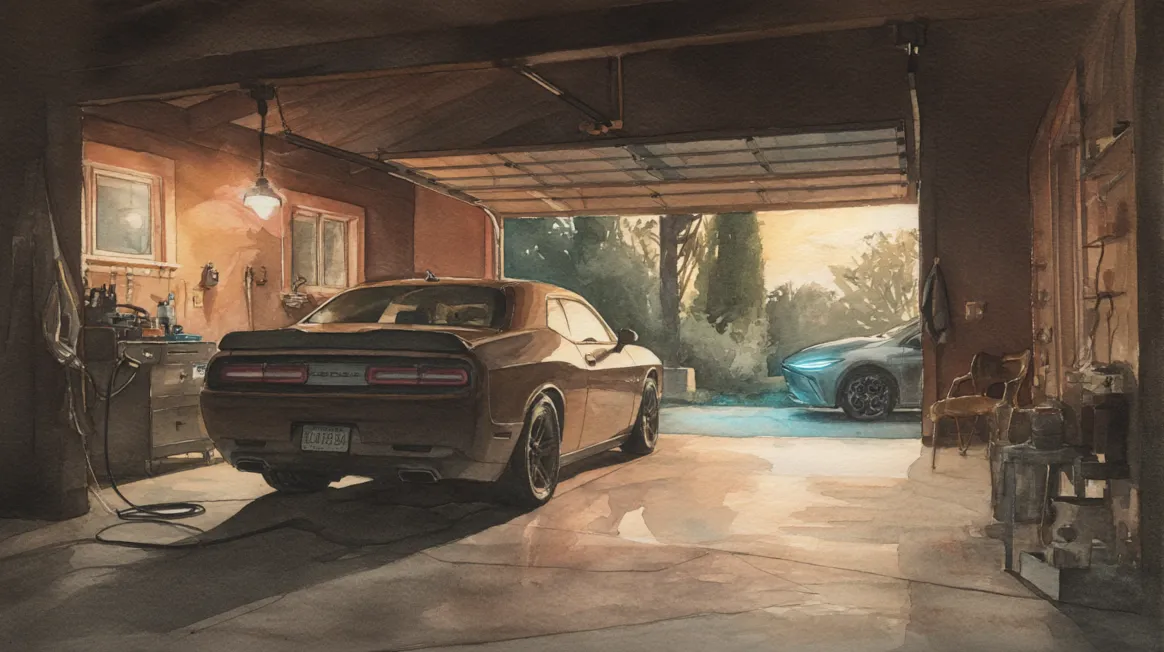
Which enthusiast models left the showroom
- High-profile exits:
Chevrolet Camaro sunset after MY2024.
Dodge Charger/Challenger (V8 era) retired; pivot to Daytona EV family. - Broader pattern: compact/mid-price enthusiast trims thinned out as demand drifted to crossovers or upmarket performance.
- Even icons adjusted: global sports lines shed trims or paused for electrified successors.
Longer take (capacity triage):
When a niche coupe and a profitable SUV compete for chips, labor, and plant time, the coupe loses. Low volumes, rising development and compliance costs, and tougher emissions targets compress the business case until there’s no daylight left.
Market and regulatory forces behind the exits
- Economics first: post-2019 price inflation and tight inventory pushed buyers toward necessity/space over weekend thrills.
- Regulation second: fleet targets reward electrification; thirsty performance trims add penalty pressure.
- Compliance mechanics: credits and tech upgrades kept OEMs within bounds—nudging portfolios toward hybrids, PHEVs, and BEVs.
- Brand calculus: one high-volume EV crossover can move more units and bank more compliance than three specialist coupes.
What the enthusiast market looks like now
- Enthusiasts adapted (didn’t vanish):
Performance SUVs with hybrid torque.
Electric sedans launching like supercars.
Traditional sports cars—still here, but at higher price points. - Track days, updated: charging plans and thermal management join tire pressures and brake fade in the paddock chat.
- Aftermarket evolves: tunes/hardware for hybrids and EVs grow alongside intake/exhaust lore.
Bright spot (and bittersweet):
The used market carries the torch. Clean, last-decade manuals and V8s became rolling time capsules—values lifted by a nostalgia tax that shows no sign of easing.
SUV And Truck Dominance Reshapes The Market
How segment mix shifted across the decade
- The line crossed: by the early 2020s, trucks and SUVs ≈ two-thirds of U.S. light-duty sales.
- Category swap: car-SUVs and truck-SUVs grew; sedans/wagons declined—design studios and dealer inventories followed.
- Surprise bright spot: car-SUVs became the emissions standout as BEVs concentrated there, dropping average CO₂ for MY2023.
Longer take (keep the texture):
Automakers build what people choose, and people keep choosing space and height. The showroom shifted around that reality; platforms, proportions, and purchasing paths now orbit the SUV/truck center of gravity, with sedans playing specialist roles.
Pricing, profitability, and production strategy
- Money flows up-size: trucks and three-row SUVs command higher MSRPs and richer options → bankroll battery plants and software stacks.
- Fewer low-margin sedans: production simplifies around shared platforms wearing multiple bodies.
- Skateboard logic: one EV chassis → family of crossovers and a performance variant.
- Post-2020 supply shocks → lock-in: chip scarcity prioritized high-margin builds; customer habits adapted; the mix stuck.
Rule of scale:
Scale cuts costs; consistency speeds launches. The segment that pays for capacity sets the roadmap.
What it meant for sedans, wagons, and coupes
- Sedans: didn’t vanish—shifted upmarket and toward efficiency badges.
- Wagons: niche (beloved, but scarce).
- Coupes: leaned into heritage—or bowed out when volumes couldn’t justify the slot.
- Value pitch evolved: safety/ADAS equality across segments narrowed the “sedan advantage”; winners pair standout efficiency with luxury cues at smaller footprints/costs than big SUVs.
Technology, Safety, And Connectivity Redefine The Car
Driver assist and active safety move mainstream
- From option to expectation: AEB, lane keeping, blind-spot, adaptive cruise = table stakes.
- Ratings pressure: evolving NHTSA protocols (pedestrian protection; advanced assistance) accelerated adoption.
- Daily impact: fewer low-speed fender benders; more guardrails against attention lapses.
- Reality check: assistance ≠ autonomy; hands-on oversight remains the rule even as highway hands-free systems expand on mapped roads.
- Quality of life: long trips feel less taxing; night driving calms with better cameras and lighting logic.
Longer take (clear but candid):
Yes, the beeps can be annoying. But the safety net works—when drivers treat assistance as assistive, not substitute.
Connectivity, infotainment, and over-the-air updates
- Rolling computers: OTA updates now fix bugs, add features, and refine drivability after delivery.
- Screens took over: larger displays consolidated controls (convenience ↑; “where did that button go?” headaches ↑).
- Usability sweet spot: tactile knobs for frequent tasks and fast, shallow menus for everything else.
- Phones, seamlessly: wireless mirroring became standard; voice assistants got meaningfully better.
- New responsibility: connected cars = cybersecurity stakes; stricter auth and secure architectures guard the doors opened by new features.
GM And Mopar As Anchors Of Change
How GM executed its electrification and software plan
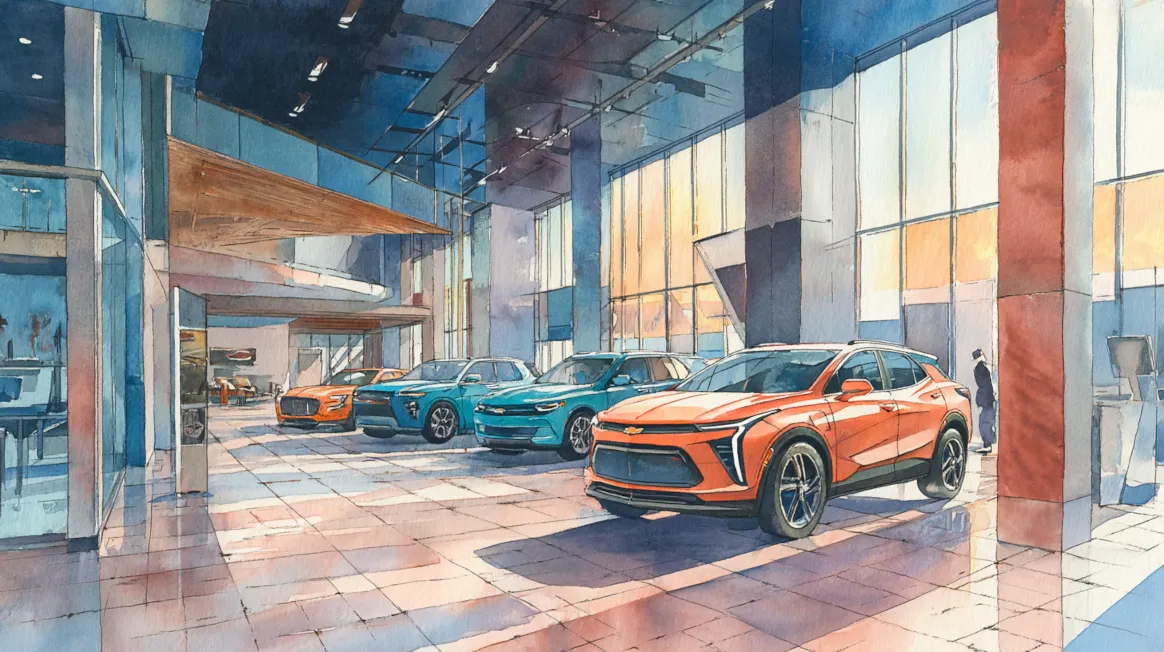
- Ultium = anchor: platform spans core segments; software strategy moves in lockstep.
- Transition math: truck-heavy mix lifted fleet CO₂ in the short term; scale of EVs/hybrids in high-volume segments is the remedy.
- Software-defined ownership: features improve post-sale; safety coverage can expand without a new VIN—not a one-and-done model year anymore.
Longer take (the cadence shift):
GM’s promise is iterative: hardware that supports repeated software and component upgrades, turning the car into a product that improves on your driveway schedule, not just at the dealership.
How Mopar evolved performance parts for EVs and hybrids
- Muscle, updated: the Daytona banner reframed EV muscle; parts strategy imagines modular electric performance.
- New hot-rodding knobs: calibration packs, cooling upgrades, driveline components sized for instant torque (not just rpm peaks).
- Bridging era: mild-hybrid torque fills made heavy SUVs feel lighter; goodbye tours for HEMI icons eased the pivot to kilowatts.
What these paths reveal about manufacturer strategy
- Shared playbook:
Use profitable trucks/SUVs to fund the pivot.
Platform thinking to scale batteries, motors, and software.
Keep performance visible as a halo while tech trends toward compliance and efficiency. - Different flavors:
GM: frames performance inside a broad EV lineup.
Mopar: frames EVs inside a performance narrative.
Endpoint, converged:
Fast, connected, and cleaner than the last generation.
Head To Head Comparisons That Tell The Story
2015 Camaro SS vs. 2025 GM Electric Performance
- 2015 Camaro SS(snapshot):
6.2-liter V8; manual shifter; thick mechanical idle; clutch pedal weight you feel at your ankle; low-frequency thrum echoing in a parking garage. - 2025 GM EV (contrast):
Cabin wakes with a chime; first 30 feet feel like a slingshot; no revs, no shifts—just motion. - Paper vs. pavement:
Quicker 0–60, calmer freeway manners; less theater, more speed.
Longer take (the daily reality):
Range planning adds a chore if you lack home charging. Maintenance deletes others: oil changes and most driveline services fall off the calendar. Your tire shop becomes your favorite stop. That’s the trade many drivers accept for instant torque and quiet commuting.
Charger Hellcat vs. Charger Daytona EV
- Hellcat (peak Mopar theater):
Supercharger whine; summer heat shimmer; caged-animal idle at a stoplight. - Daytona EV (different toolkit):
Instant shove; precise traction control; curated soundtrack for those who want noise with speed. - Skill vs. software:
Hellcat rewards mechanical sympathy and RWD torque management.
Daytona EV broadens access with AWD traction and algorithms that meter power where tires can use it.
Longer take (honest contrasts):
One car asks for your finesse; the other asks for your trust in code. Both are fast—each demands a different kind of attention.
What Drivers Notice In Real-World Use
- First impressions: quiet, then smoothness.
- City feel: low-speed lurches fade in EVs and strong hybrids.
- Highway behavior: passes happen without downshifts; less vibration = less fatigue.
- Quirks to learn:
Winter road trips require charging plans.
Winding rural drives may benefit from dialing back lane-keeping nudges.
Longer take (new normal):
Once habits set, the routines feel obvious. Adoption, from the inside, looks like a series of small adjustments that make the tech feel transparent.
What Independent News & Analysts Highlight
- Hidden engines of change: pricing and availability.
New/used prices rose sharply post-2019, then stabilized higher.
EV interest climbed as inventory expanded and prices adjusted.
A used-EV market opened doors for more households. - If you shopped 2015 vs. 2025:
Sticker shock is real; so is the tech gap.
Today’s base models pack safety and connectivity that used to be luxury.
Takeaway (put it all together)
- The reset: the showroom speaks EV, hybrid assist, and software.
- Collectors’ corner: manuals and affordable V8 coupes turned into time capsules.
- Business reality: SUVs and trucks fund the future.
Longer take (how to choose in 2025):
Test your real life against the tech. If home charging is easy, an EV likely fits. If towing and long-range road trips define your week, hybrid trucks and strong driver assistance cover a lot of ground. Either way, expect more updates—and fewer oil changes. The next decade will be faster in ways that won’t always show on a spec sheet.

About World Parts Direct
World Parts Direct is your go-to source for genuine OEM parts for GM and MOPAR vehicles. We make it easy to order factory-original parts online — shipped fast, accurately, and backed by real human support.
Every item we sell comes brand new in the manufacturer’s original packaging. Whether you’re handling routine maintenance, collision repair, or a full restoration, our parts professionals provide VIN-verified fitment support to ensure you get exactly what you need.
Serving drivers and repair shops worldwide, we proudly support brands like Chevrolet, GMC, Cadillac, Buick, Dodge, Chrysler, Jeep, and Ram. Shop confidently at WorldPartsDirect.com.