
Understanding Truck Step Packages: A Complete Guide to Running Boards and Assist Steps
Understanding Truck Step Packages: A Complete Guide to Running Boards and Assist Steps
Truck step packages have evolved from basic utility features into essential components for the modern pickup. As vehicle heights increase and truck cabins become more sophisticated, the necessity of a reliable point of entry has grown. This guide examines the various types of step systems available, their historical context, and the practical considerations for choosing between factory and aftermarket options. Understanding these systems is vital for owners who prioritize safety, accessibility, and the long-term protection of their vehicle's exterior.
Defining Truck Step Packages and Their Primary Functions
A truck step package refers to a set of structural components mounted to the rocker panels or frame of a pickup truck. These systems are designed to bridge the vertical gap between the ground and the vehicle cabin. While often referred to as running boards, the category encompasses several distinct designs including side steps, nerf bars, and rock sliders.
The primary function of these packages is to provide a safe and stable platform for passengers entering or exiting the vehicle. Because trucks sit higher off the ground than sedans or SUVs, the step serves as a transitional point that reduces the physical strain on the knees and hips of occupants. Beyond accessibility, these steps offer a secondary benefit by acting as a buffer against road debris. They can catch gravel and mud kicked up by the front tires, preventing damage to the side body panels and paint.
Additionally, step packages provide a functional platform for reaching the roof of the vehicle. For owners who utilize roof racks for cargo, kayaks, or lumber, having a stable surface to stand on while securing loads is a significant safety advantage. In a professional context, these steps allow workers to access equipment stored in the front of the truck bed more easily without having to climb over the bedside.
The Historical Shift Toward Integrated Step Systems
Historically, pickup trucks were utilitarian tools with lower ride heights and basic interiors. In the mid twentieth century, trucks were rarely equipped with steps because the step-in height was manageable for the average user. As trucks transitioned from strictly commercial vehicles to primary family transportation, manufacturers began to prioritize comfort and accessibility.
The 1990s and early 2000s marked a turning point in truck design. Manufacturers began producing larger trucks with higher ground clearance to improve off-road capability and towing capacity. This change in architecture made it difficult for children, elderly passengers, and shorter individuals to enter the vehicle comfortably. In response, the automotive industry began offering step packages as optional equipment.
Today, the prevalence of these packages is at an all-time high. The trend toward larger wheel diameters and heavy-duty suspension systems has pushed cabin heights to a point where a step is no longer just a luxury. It has become a functional requirement for a large segment of the truck-buying population.
Why Some Trucks Include Factory Steps While Others Do Not
When browsing a dealership lot, consumers will notice that some trucks arrive with steps pre-installed while others have bare rocker panels. This variation is usually dictated by the trim level and the specific intended use of the vehicle. Base model work trucks often exclude steps to keep the initial purchase price low and to maximize ground clearance for construction sites.
Higher trim levels, such as luxury or off-road packages, often include steps as standard equipment. In these cases, the manufacturer incorporates the cost of the step package into the overall MSRP of the vehicle. For luxury trims, the steps are often finished in chrome or high-gloss paint to match the aesthetic of the truck.
Geography and dealership ordering habits also play a role. Dealers in regions with older populations or where trucks are primarily used as family vehicles are more likely to order inventory with steps already installed. Conversely, in markets where trucks are frequently modified for extreme off-roading, dealers may leave them off to allow the buyer to choose their own specialized armor or sliders.
Different Types of Truck Step Packages
Traditional Running Boards
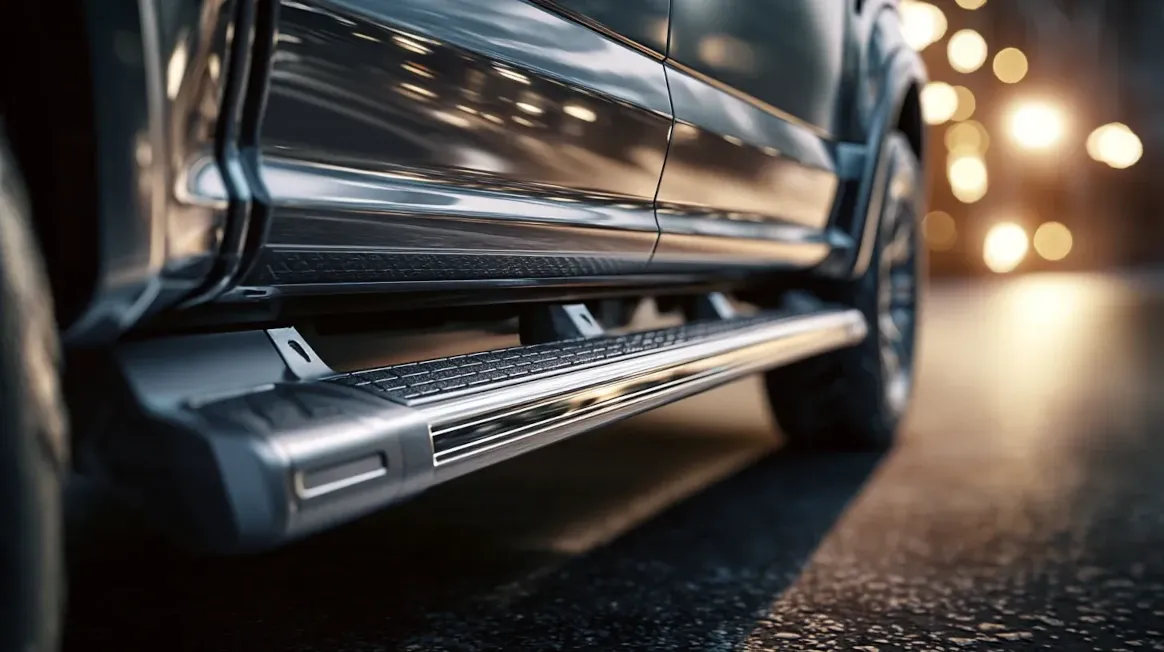
Running boards are wide, flat platforms that run the full length of the truck cab. They are typically mounted flush against the body of the truck, leaving very little gap between the board and the rocker panel. This design provides the most surface area for footwear, making them the safest option for families and children.
Most running boards feature a textured rubber or plastic surface to provide traction in wet or icy conditions. They are commonly constructed from aluminum or high-grade plastics with internal steel reinforcement. Their sleek profile often improves the aerodynamics of the truck slightly compared to more tubular designs.
Nerf Bars and Side Steps
Nerf bars are tubular in shape and generally sit slightly lower and further out from the vehicle body than running boards. They originated in the racing world to prevent vehicles from entangling their wheels. In the consumer truck market, they are prized for their rugged appearance and are usually available in round or oval diameters.
These bars feature recessed step pads located specifically under each door. While they offer a more industrial look, they provide less overall surface area than running boards. They are often preferred by owners who want a balance between functionality and a minimalist aesthetic that does not hide the frame of the truck.
Powered and Retractable Steps
Powered steps represent the high-end segment of the market. These systems use electric motors and linkages to deploy the step when a door is opened and retract it flush against the body when the door is closed. This allows for a very low step-in height when needed without sacrificing ground clearance while driving.
Because they tuck away when not in use, powered steps are ideal for owners who want a clean look or who drive in off-road environments where a fixed step might get caught on obstacles. They are equipped with sensors to stop movement if an obstruction is detected, and many include integrated LED lighting to illuminate the ground at night.
Rock Sliders and Drop Steps
Rock sliders are heavy-duty steps designed primarily for vehicle protection. They are usually made of thick-walled steel tubing and are welded or bolted directly to the frame. While they can be used as a step, their primary purpose is to support the weight of the truck if it slides over a rock or log, preventing body damage.
Drop steps are a variation of nerf bars where the actual stepping surface is suspended several inches below the main bar. This design is specifically intended for lifted trucks. It allows the main bar to stay high for ground clearance while providing a much lower point of entry for the passenger.
Comparing Factory (OEM) vs Aftermarket Step Packages
Advantages of Factory Installed Steps
Factory steps, also known as Original Equipment Manufacturer (OEM) parts, are designed by the same engineers who built the truck. This ensures that the mounting points are perfectly aligned and that the load capacity of the step is calibrated for the vehicle's frame. The finish and materials used in OEM steps are also tested to meet the same salt-spray and UV-resistance standards as the rest of the vehicle.
Another significant benefit of OEM steps is the warranty coverage. Because they are part of the original vehicle build, they are typically covered under the manufacturer’s 3-year or 36,000-mile bumper-to-bumper warranty. If a motor fails on a powered step or the finish begins to peel, the repair is usually handled by the dealership at no cost to the owner.
Considerations for Aftermarket Steps
The aftermarket industry offers a much wider variety of styles, materials, and price points than what is available from the factory. Owners who want a specific look—such as a matte black finish or a specific drop-down height—will find more options in the aftermarket. Additionally, aftermarket steps are often more affordable than buying the OEM equivalent through a dealer’s parts department.
However, aftermarket steps require careful research regarding compatibility. While most high-quality brands use existing factory mounting holes, some cheaper options may require drilling into the frame or rocker panels. This can lead to rust issues if the drilled holes are not properly treated. The warranty for these parts is also handled by the third-party manufacturer rather than the vehicle brand.
When to Consider Adding a Step Package
Deciding when to add a step package often depends on a change in the vehicle’s configuration or a change in the owner's needs. If a truck has been recently lifted or equipped with larger tires, the original step-in height may become impractical. In these instances, adding a drop step or a powered step becomes a matter of daily convenience and safety.
Another common scenario involves changes in household dynamics. A truck owner who previously had no trouble entering a high-clearance vehicle may find that a step is necessary when transporting elderly parents or young children. The step provides a mid-point that allows these passengers to enter the vehicle independently, reducing the risk of falls or muscle strain.
Finally, owners who frequently drive in areas with gravel roads or heavy winter salting may add running boards as a protective measure. By shielding the lower body panels, the boards can extend the life of the vehicle's paint and prevent the onset of rocker panel rust. This makes the addition of a step package a proactive maintenance choice as much as an accessibility one.
Impact of Truck Size and Lift Height on Selection
The physical dimensions of the truck are the most influential factors in choosing a step package. A standard half-ton truck with factory suspension usually functions well with a traditional running board or nerf bar. These provide a 3 to 4-inch drop from the door sill, which is sufficient for most adults.
For heavy-duty trucks (2500 or 3500 series), the frame sits significantly higher off the ground. On these vehicles, a standard flat running board might still feel too high for some users. Owners of these larger trucks often opt for powered steps, which can deploy lower than a fixed board, or hoop-style steps that provide a deeper drop.
Lifted trucks present the greatest challenge for entry and exit. When a truck has a 4-inch or 6-inch suspension lift, a standard running board becomes almost useless because it remains too high. In these cases, dedicated drop steps are recommended. These steps feature a secondary stirrup that hangs lower than the main bar, specifically designed to accommodate the extra height of the modified suspension.
Assessing Passenger Needs and Daily Use Patterns
The frequency and type of passengers should dictate the style of the step package. If the truck is a dedicated work vehicle used primarily by a single driver, a simple single-step hoop might be sufficient. This saves weight and cost while still providing an assist for the driver.
For family vehicles, full-length running boards are generally the superior choice. Children do not always step in the center of a designated step pad, and a continuous board provides a safe surface regardless of where they place their feet. Furthermore, running boards offer better traction for pets that may be entering the cabin.
Daily use patterns also matter for those who live in specific climates. In northern regions where snow and ice are common, a step with a "grate" design is often preferred. This design allows snow and mud to fall through the step rather than accumulating on the surface. This prevents the step from becoming a slippery hazard during the winter months.
Why Step Packages Matter More in the Modern Era
The modern truck is no longer just a utility vehicle; it is a multi-purpose tool that often serves as a mobile office or a primary family car. Because of this, the expectations for comfort and safety have increased. Step packages play a critical role in meeting these expectations by making the vehicle accessible to a broader demographic.
Safety standards have also evolved. Manufacturers and safety advocates recognize that slips and falls while entering or exiting high vehicles are a common source of injury. A well-designed step package minimizes this risk by providing multiple points of contact. When used in conjunction with interior grab handles, a step package allows for "three-point contact" (two hands and one foot, or two feet and one hand) at all times during entry.
Furthermore, the resale value of a truck is often influenced by its equipment. Most used truck buyers expect a vehicle to have some form of assist step. A truck without steps may be perceived as less "finished" or less convenient, potentially leading to a longer time on the market or a lower sale price. Investing in a quality step package is therefore seen as an investment in the vehicle's long-term value.
Structural Integrity and Mounting Considerations
The way a step package is mounted to the vehicle is fundamental to its performance and longevity. There are two primary mounting methods: frame-mounted and rocker-mounted. Each has specific implications for how the truck handles weight and stress.
Frame-Mounted Systems
Frame-mounted steps are attached directly to the heavy steel frame of the truck. This is the strongest possible connection. It allows the step to support significant weight—often over 500 pounds—without flexing. This mounting style is standard for rock sliders and heavy-duty work steps because it can withstand impacts from below without transferring that energy into the thin sheet metal of the body.
The trade-off for frame-mounted systems is usually a more complex installation process. Because the frame is a critical structural component, these steps must use existing factory holes or heavy-duty U-bolts. Some frames may require specialized brackets to clear fuel lines or electrical harnesses that run along the frame rails.
Rocker-Mounted Systems
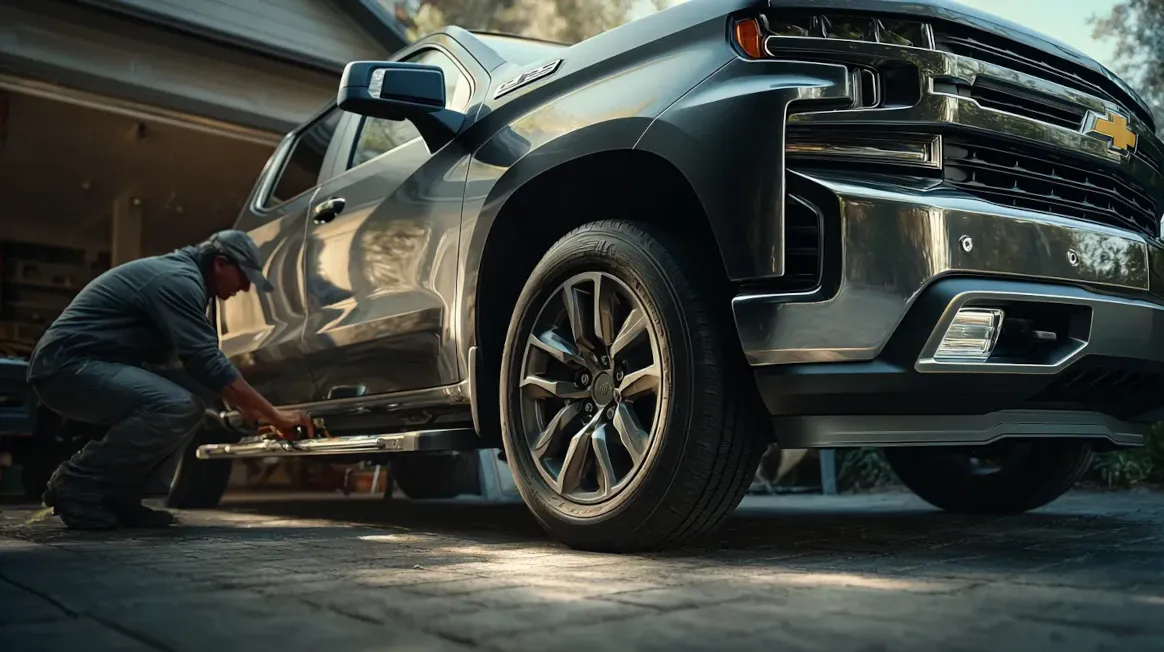
Rocker-mounted steps attach to the "rocker panel," which is the reinforced sheet metal at the bottom of the cab. This is the most common mounting method for light-duty running boards and nerf bars. Manufacturers pre-drill holes in the rocker panels and include threaded inserts to make installation fast and simple.
While rocker mounting is sufficient for daily passenger use, it is not designed for heavy impacts. If a rocker-mounted step hits a large obstacle, it can bend the body panels of the truck. However, for the vast majority of "everyday" truck owners who stay on paved roads or light trails, rocker-mounted steps provide a clean, integrated look with more than enough strength for entry and exit.
Material Choices and Corrosion Resistance
The longevity of a step package is largely determined by the materials used in its construction. Because steps are located in the "splash zone" of the tires, they are constantly bombarded by water, salt, sand, and chemicals. Choosing the right material for a specific climate is essential.
Stainless Steel
Stainless steel is a popular choice for its natural resistance to rust. High-quality steps often use T304 grade stainless steel, which contains high levels of chromium and nickel to prevent oxidation. These steps can be polished to a mirror finish or powder-coated. They are ideal for coastal regions or northern states where road salt is used heavily.
Aluminum
Aluminum has become increasingly common because it is lightweight and naturally corrosion-resistant. Aluminum running boards will not rust like traditional steel, even if the outer coating is scratched. This makes them an excellent choice for maintaining a clean appearance over many years. Their lighter weight also contributes to vehicle efficiency, though the difference is marginal for a single accessory.
Mild Steel with Powder Coating
Mild steel is the most affordable option. To prevent rust, these steps are treated with a powder-coated finish. Powder coating is more durable than standard paint, as it is baked onto the metal to create a hard, resilient shell. However, if the powder coating is chipped by a rock, the underlying steel can begin to rust. Owners who choose mild steel should periodically inspect their steps for chips and touch them up with paint to prevent corrosion from spreading.
Integrated Technology in Modern Assist Steps
As trucks become more technologically advanced, step packages have followed suit. We are seeing an integration of electronics and sensors that go beyond simple motorized movement. These features are designed to improve safety and the overall user experience during nighttime operation.
Integrated LED Lighting
Many premium step packages now include integrated LED lights. Some systems have lights built into the ends of the boards, while others use "puddle lights" mounted underneath that project onto the ground. These lights are usually wired to the vehicle's interior lighting circuit, meaning they activate automatically when the key fob is pressed or the doors are opened. This is a critical safety feature for identifying ice, mud, or puddles before stepping out of the vehicle.
Obstruction Detection
Modern powered steps utilize sophisticated control modules that monitor the electrical current used by the motors. If a step encounters resistance—such as a curb, a tall rock, or a person’s foot—the module detects a spike in current and immediately reverses the direction of the step. This prevents damage to the motor and reduces the risk of injury.
App-Based Controls
Some aftermarket powered step systems now offer Bluetooth connectivity. This allows the owner to control the steps via a smartphone app. Features often include the ability to manually deploy the steps for cleaning, or to "override" the system to keep the steps retracted while off-roading. This level of control was non-existent a decade ago and represents the premium end of the market.
Maintenance and Care for Truck Steps
To ensure that a step package remains safe and visually appealing, regular maintenance is required. This is particularly true for moving parts and finishes that are exposed to harsh environments.
Cleaning and Surface Care
Steps should be washed regularly with the same soap used for the vehicle's body. It is important to avoid using "tire shine" or silicone-based protectants on the stepping surfaces, as these can make the pads extremely slippery and dangerous. For polished stainless steel or chrome steps, a dedicated metal polish can be used once or twice a year to remove surface contaminants and restore the shine.
Lubricating Pivot Points
For powered or retractable steps, the mechanical hinges and pivot points require periodic lubrication. Manufacturers usually recommend using a dry-film lubricant rather than grease. Grease can attract road grit and sand, which eventually turns into an abrasive paste that wears down the bushings. A dry lubricant provides the necessary slickness without attracting debris.
Hardware Inspection
Because truck steps are subject to constant vibrations and temperature changes, the mounting hardware can occasionally loosen. It is a good practice to check the tightness of the mounting bolts during every oil change. Ensuring that the brackets are secure prevents the steps from rattling and ensures that the load is distributed correctly across the mounting points.
Conclusion
Truck step packages are no longer just an optional accessory for the enthusiast; they are a fundamental component of the modern pickup truck’s utility and safety. Whether an owner chooses the wide, protective surface of a traditional running board, the rugged look of nerf bars, or the high-tech convenience of powered retractable steps, the addition of a step package significantly improves the daily usability of the vehicle. By considering factors such as vehicle height, passenger needs, and regional climate, truck owners can choose a system that provides a safe entry point for years to come. As trucks continue to grow in size and capability, the role of the assist step remains central to the driving experience.

About World Parts Direct
World Parts Direct is your go-to source for genuine OEM parts for GM and MOPAR vehicles. We make it easy to order factory-original parts online — shipped fast, accurately, and backed by real human support.
Every item we sell comes brand new in the manufacturer’s original packaging. Whether you’re handling routine maintenance, collision repair, or a full restoration, our parts professionals provide VIN-verified fitment support to ensure you get exactly what you need.
Serving drivers and repair shops worldwide, we proudly support brands like Chevrolet, GMC, Cadillac, Buick, Dodge, Chrysler, Jeep, and Ram. Shop confidently at WorldPartsDirect.com.