
What 100,000 Miles Really Means Today
What 100,000 Miles Really Means Today
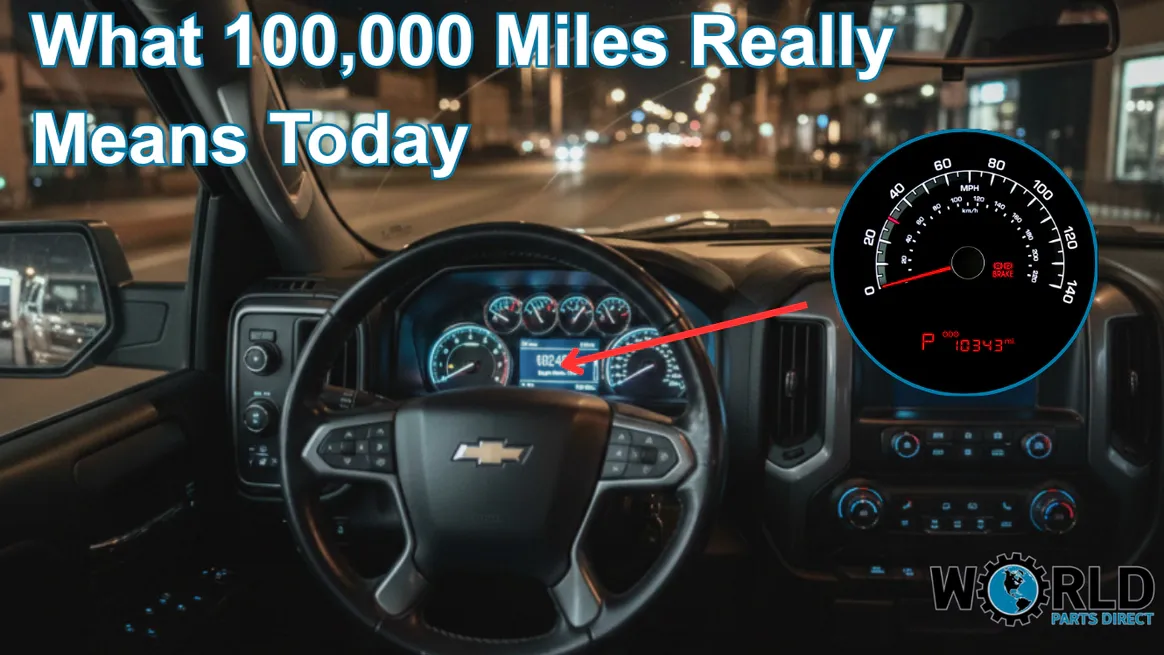
For decades, 100,000 miles was treated as a finish line. Reaching six digits on the odometer often signaled that a vehicle was nearing the end of its useful life, a point where reliability became questionable and replacement felt inevitable. That perception still lingers for many drivers, but it no longer reflects how modern vehicles are engineered, built, or owned today.
Advances in materials, manufacturing precision, electronics, and powertrain design have fundamentally changed what long-term ownership looks like. In today’s context, 100,000 miles is far less an endpoint and far more a transition point. It marks the moment when a vehicle moves from its early, relatively maintenance-light years into a phase where age-related wear becomes more noticeable and more important to understand.
TL;DR: Key Takeaways
- 100,000 miles is no longer an endpoint, but a transition into a phase where system aging becomes more noticeable and requires closer attention.
- Cooling, suspension, steering, and braking systems are typically the first to show age because they endure the greatest heat, motion, and stress.
- Rubber components, seals, and hoses often degrade quietly over time, creating small issues that can escalate if left unaddressed.
- Engine sensors and electronics tend to age intermittently, causing inconsistent symptoms that are difficult to diagnose without understanding long-term wear patterns.
- Recognizing gradual changes early allows owners to manage aging systems proactively instead of reacting to costly breakdowns.
Quick Verdict: Vehicle aging is predictable; understanding early system wear is the key to long-term reliability and confident ownership.
How Modern Vehicles Have Redefined the 100,000-Mile Milestone
Modern vehicles are designed with longer service lives in mind. Improved metallurgy, tighter tolerances, better lubrication strategies, and more sophisticated engine management systems have all contributed to powertrains that routinely exceed mileage figures once considered exceptional.
What 100,000 Miles Represents Today
- A midpoint rather than a conclusion for many well-maintained vehicles
- The beginning of visible wear in supporting systems rather than core mechanical failure
- A shift from preventive maintenance to condition-based awareness
Engines and transmissions are often still structurally sound at this stage, but they are no longer operating in the same low-stress environment they enjoyed when new. Heat cycles have accumulated, rubber components have aged, and moving parts have absorbed years of vibration and load. These changes do not usually announce themselves with sudden breakdowns. Instead, they appear gradually, system by system.
This is why the 100,000-mile mark is so important. It is often the point where attentive owners begin to notice subtle changes in how a vehicle behaves, feels, and responds.
Cosmetic Aging vs. Mechanical Aging
One of the most common misconceptions at higher mileage is confusing cosmetic aging with mechanical aging. While the two often occur simultaneously, they are not equally important when it comes to long-term reliability.
Cosmetic Aging
- Worn seat bolsters and faded interior trim
- Small exterior chips, scratches, or weathered plastics
- Interior rattles or minor squeaks
These changes are visible and familiar, but they rarely affect how a vehicle functions. They influence perception more than performance.
Mechanical Aging
- Degradation in systems exposed to heat, motion, and pressure
- Reduced elasticity in rubber components
- Gradual loss of efficiency in systems designed to operate within tight tolerances
Mechanical aging is quieter and easier to overlook, yet it has far greater implications. A vehicle can look old and still be mechanically healthy, or it can look fine while critical systems are slowly approaching their limits.
Understanding this distinction is key to navigating ownership beyond 100,000 miles. The sections that follow focus on the systems that tend to reveal mechanical aging first, not because they are poorly designed, but because they operate under the most stress over time. Recognizing these patterns early helps explain why some vehicles continue to feel stable and dependable long after the odometer crosses six digits, while others begin to feel tired long before their time.
The Cooling System: Where Heat and Time Collide First
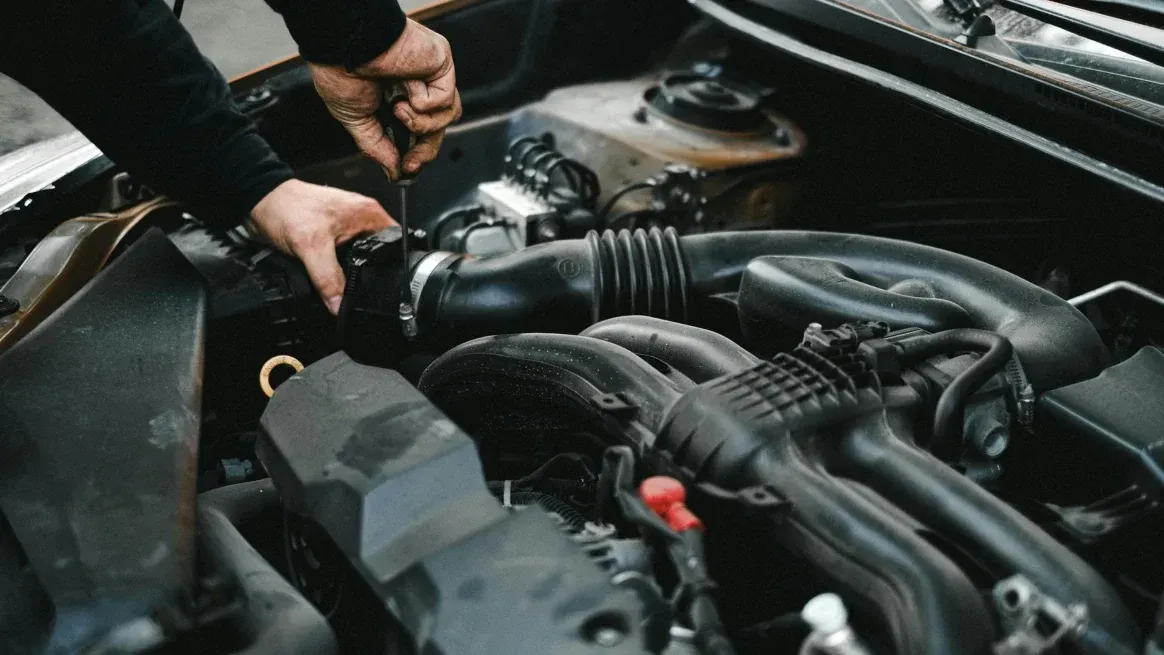
Among all vehicle systems, the cooling system is often the first to reveal the effects of long-term use. It operates quietly in the background, regulating temperature and protecting critical engine components from extreme heat. By the time a vehicle reaches 100,000 miles, this system has endured thousands of heat cycles, each one leaving a small but cumulative imprint on its components.
Unlike parts that wear primarily through motion or friction, cooling system components age through temperature fluctuation, pressure changes, and chemical exposure. This combination makes them especially vulnerable as a vehicle enters its second half of life.
Repeated Heat Cycles and Their Impact on Components
Every drive begins with a cold engine and ends with elevated operating temperatures. Over years of use, this constant expansion and contraction takes a toll on materials that were never meant to remain perfectly elastic forever.
How Heat Affects Cooling System Materials
- Rubber hoses gradually lose flexibility, becoming brittle or soft over time
- Seals and gaskets harden, reducing their ability to maintain a consistent seal
- Plastic components, such as fittings and reservoirs, weaken and develop hairline cracks
These changes happen slowly and unevenly. A hose may look intact externally while its internal structure has already begun to degrade. Plastic parts, in particular, tend to age invisibly until they fail under pressure or vibration.
What makes cooling system aging especially significant is that failure rarely remains isolated. A small leak or weakened connection can quickly escalate into overheating, which places stress on nearly every other engine system.
Common Early Warning Signs Owners Tend to Overlook
Cooling system issues often provide subtle clues long before a major problem occurs. However, these early indicators are easy to dismiss, especially when the vehicle still starts, runs, and drives normally.
Early Signs That Often Go Unnoticed
- Gradual coolant loss without visible puddles
- A sweet or slightly chemical smell after driving
- Temperature readings that fluctuate more than they used to
- Residue or discoloration around hose connections or reservoirs
Because these symptoms rarely cause immediate drivability issues, they are often attributed to normal aging or environmental factors. Many owners continue driving without realizing that the system is no longer operating with its original margin of safety.
At higher mileage, the cooling system’s role shifts from simple temperature regulation to risk management. Its ability to absorb heat spikes, handle pressure, and maintain stable operation becomes increasingly important as other components also begin to age.
Why Cooling System Aging Matters So Early
An engine can tolerate many forms of wear, but excess heat is not one of them. Even minor inefficiencies in cooling can accelerate wear elsewhere, affecting seals, sensors, and internal engine components.
This is why the cooling system is often the first place where age-related issues surface after 100,000 miles. It does not fail because it is weak, but because it operates at the intersection of heat, time, and material limits.
As vehicles move beyond this milestone, other systems begin to show similar patterns of gradual change. Understanding how and why the cooling system ages provides a useful framework for recognizing wear in the systems that follow, particularly those that rely on constant motion and load rather than temperature alone.
Suspension Components: When Ride Quality Begins to Change
Long before a vehicle struggles to start or displays warning lights, changes in ride quality often signal that mileage is beginning to take its toll. Suspension components operate under constant motion, absorbing impacts, stabilizing the vehicle, and maintaining contact between the tires and the road. By the time a vehicle reaches 100,000 miles, these parts have endured millions of small movements and thousands of significant impacts, each one contributing incrementally to wear.
Unlike systems that fail abruptly, suspension aging tends to be gradual and easy to rationalize away. Drivers often adapt to changes without realizing that what feels “normal” is actually the result of declining component performance.
How Constant Motion and Road Impact Accelerate Wear
Every mile driven subjects suspension components to repeated stress. Even on smooth roads, suspension systems are constantly working, responding to minor surface imperfections, weight shifts, and steering inputs. Rough roads, potholes, speed bumps, and uneven pavement only accelerate this process.
Sources of Suspension Stress Over Time
- Continuous vertical movement from road irregularities
- Lateral forces during cornering and lane changes
- Weight transfer during braking and acceleration
- Environmental exposure to moisture, road debris, and temperature extremes
Unlike engine components, which are protected within a controlled environment, suspension parts operate in the open. Dirt, water, and road salt contribute to corrosion and abrasion, further accelerating wear. Over time, this exposure reduces the system’s ability to control motion precisely, even if no single part has completely failed.
The Gradual Breakdown of Bushings, Joints, and Mounts
Much of a suspension system’s effectiveness depends on components that are designed to be flexible rather than rigid. Bushings, joints, and mounts serve as isolation points, allowing movement while controlling noise, vibration, and harshness. As these components age, their material properties change.
What Happens as Suspension Components Age
- Rubber bushings lose elasticity, leading to excess movement and noise
- Ball joints and tie rod ends develop internal wear, reducing precision
- Mounts and isolators compress or crack, allowing vibration to transfer into the cabin
These changes rarely announce themselves with dramatic symptoms. Instead, the vehicle may feel less stable over bumps, require more steering correction, or exhibit uneven tire wear. Ride quality often becomes firmer in some situations and less controlled in others, a contradiction that can be confusing for drivers.
Because suspension wear alters how forces are distributed throughout the vehicle, it often affects multiple systems at once. Steering feel may degrade, braking stability can change, and tires may wear faster or unevenly. These secondary effects are frequently treated as separate issues, when they are actually symptoms of a single aging system.
Why Suspension Aging Is Often Misunderstood
Suspension components do not have a clear on-off failure point. A vehicle with worn suspension can still be drivable, which makes deterioration easier to ignore. However, as ride quality declines, so does the vehicle’s ability to respond predictably to driver input.
At this stage of ownership, attention begins to shift from how the vehicle looks or sounds to how it feels. That same shift carries into other systems that influence driver confidence, particularly those responsible for directional control. As suspension wear becomes more apparent, it often leads owners to notice subtle changes in steering behavior next, revealing how closely these systems are connected.
Steering System Wear: Subtle Changes with Big Consequences
Steering systems rarely fail in dramatic fashion. Instead, they change slowly, almost imperceptibly, until the vehicle no longer responds with the clarity and confidence it once had. After 100,000 miles, the steering system has absorbed years of directional input, road shock, and vibration, all while operating under constant load. The result is not sudden loss of control, but a gradual erosion of precision.
Because these changes occur incrementally, many drivers do not recognize steering wear as a system-wide issue. They adapt their driving habits to compensate, often without realizing how much the vehicle’s behavior has shifted.
Wear Patterns in Steering Linkages and Assist Components
Steering systems rely on a combination of mechanical linkages and assist mechanisms working in unison. Over time, each of these elements develops characteristic wear patterns based on usage, environment, and driving conditions.
Common Areas Where Wear Develops
- Tie rods and steering joints experience internal wear that introduces play
- Steering racks or gear assemblies develop looseness from repeated directional load
- Power assist components, whether hydraulic or electric, lose consistency as seals, motors, or sensors age
These components are designed to handle constant movement, but they are not immune to fatigue. Small tolerances that once provided crisp response slowly widen. The steering wheel may need slightly more input to achieve the same result, or the vehicle may feel less eager to return to center after a turn.
Unlike suspension wear, which often reveals itself through noise or harshness, steering wear is more about feel. The vehicle may still track straight, yet require continuous minor corrections. On uneven roads, the steering can feel vague or unsettled, even if nothing appears visibly wrong.
How Aging Steering Systems Affect Driver Confidence
Driver confidence is built on predictability. When a vehicle responds consistently to steering input, the driver feels connected and in control. As steering systems age, that connection begins to weaken.
Common Confidence-Related Changes Drivers Notice
- A less precise on-center feel at highway speeds
- Increased effort or inconsistency during low-speed maneuvers
- A delayed response between steering input and vehicle reaction
These changes are subtle, but their impact is significant. Drivers may feel less comfortable making quick lane changes or navigating tight spaces. Long drives become more tiring as constant small corrections demand more attention.
Steering wear also tends to amplify the effects of other aging systems. Worn suspension components can place additional stress on steering linkages, while uneven tire wear further masks the root cause. As a result, steering issues are often treated as isolated problems rather than part of a broader pattern of mechanical aging.
Why Steering Wear Often Goes Unaddressed
Because steering systems rarely trigger warning lights and do not typically cause immediate drivability failures, they are easy to overlook. Many owners assume changes in steering feel are simply a normal part of driving an older vehicle.
However, steering is one of the primary ways a driver interacts with a car. When that interaction loses clarity, the entire driving experience changes. Addressing steering wear is less about restoring comfort and more about preserving control and safety.
As vehicles continue beyond the 100,000-mile mark, the systems that manage stopping power begin to show similar patterns of gradual decline. Just as steering wear alters how confidently a vehicle can be guided, aging brake components influence how predictably it can be slowed, making them the next critical area to examine.
Brake System Aging: Progressive Wear, Not Sudden Failure
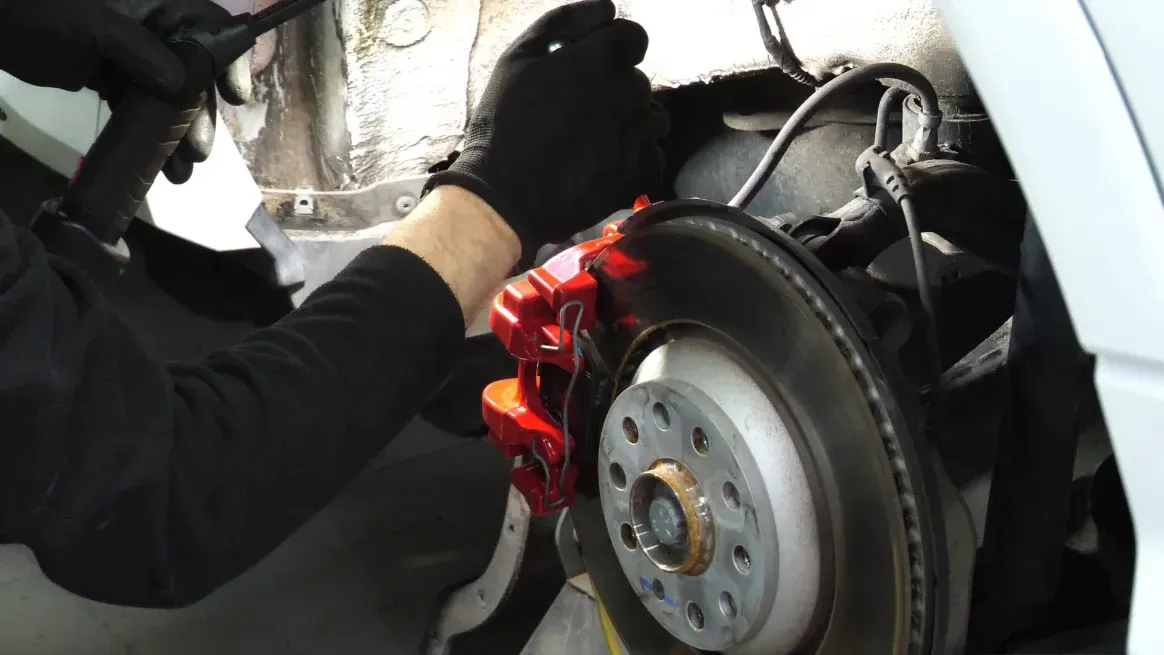
Braking systems are often associated with clear service intervals and visible wear, such as thinning brake pads or scored rotors. Yet beyond these obvious components, the brake system as a whole undergoes a slower, more complex aging process. By the time a vehicle reaches 100,000 miles, braking performance is shaped less by sudden failure and more by the cumulative effects of heat, moisture, and friction acting over time.
Unlike many other systems, brakes are designed to wear by nature. The challenge at higher mileage is recognizing when normal wear transitions into age-related decline that affects consistency and confidence.
Heat, Moisture, and Friction as Long-Term Stressors
Every time the brakes are applied, kinetic energy is converted into heat. Over years of driving, this repeated thermal stress affects not only pads and rotors, but also the components responsible for transmitting braking force.
How Long-Term Stress Affects Brake Systems
- Heat cycles cause metal components to expand and contract, leading to gradual distortion
- Moisture exposure contributes to internal corrosion within lines and calipers
- Friction byproducts accumulate, affecting moving surfaces and hardware
Brake fluid plays a critical role in this system, yet it is often overlooked. Over time, brake fluid absorbs moisture from the environment, reducing its boiling point and altering how pressure is transmitted. This process happens slowly, making it difficult to detect without close inspection.
As components age, braking performance can become less predictable. Stopping distances may increase slightly, or brake response may feel inconsistent depending on temperature and driving conditions. These changes are rarely dramatic, but they indicate that the system is no longer operating with the same efficiency it once did.
Common Signs of Hydraulic System Aging
Hydraulic components are particularly sensitive to time and environment. Unlike pads and rotors, which wear visibly, hydraulic parts tend to degrade internally.
Subtle Indicators of Hydraulic Aging
- A softer or spongier brake pedal during normal driving
- Pedal feel that changes with temperature or repeated use
- Delayed brake response after initial pedal application
- Inconsistent braking pressure from one stop to the next
These symptoms often appear gradually and may be mistaken for normal pad wear or road conditions. However, they usually point to aging seals, internal corrosion, or fluid degradation rather than surface-level issues.
Because braking systems are designed with redundancy and safety margins, they can continue functioning even as efficiency declines. This makes brake system aging easy to underestimate, particularly when the vehicle still stops reliably under most conditions.
Why Progressive Brake Aging Matters
The most important characteristic of a braking system is not just stopping power, but consistency. Predictable brake response allows drivers to modulate braking smoothly and react confidently in unexpected situations. As aging components reduce that consistency, the margin for error narrows.
Brake system aging also tends to coincide with wear in adjacent systems. Suspension condition affects how weight transfers during braking, while steering response influences how stable the vehicle feels under deceleration. Together, these interconnected changes shape the overall driving experience.
As vehicles move deeper into higher-mileage ownership, attention naturally shifts to components that quietly degrade without obvious symptoms. Beyond braking, many of these are made of materials that age silently, yet influence nearly every system they touch, making rubber components and seals the next critical area to examine.
Rubber, Seals, and Hoses: The Silent Aging Components
Some of the most consequential changes a vehicle experiences after 100,000 miles happen quietly, without noise, warning lights, or obvious performance loss. Rubber components, seals, and hoses age in the background, gradually losing the properties that once allowed them to flex, seal, and protect critical systems. Because their decline is subtle and often invisible, these parts are among the most commonly overlooked contributors to higher-mileage issues.
Unlike mechanical components that wear through motion, rubber-based parts deteriorate through a combination of time, temperature, and environmental exposure. Mileage matters, but it is only part of the equation.
Why Rubber Degrades from Time as Much as Mileage
Rubber and elastomer materials are designed to remain flexible, resilient, and airtight under a range of conditions. Over time, however, their molecular structure changes. Heat hardens them, cold makes them brittle, and repeated expansion and contraction accelerates fatigue.
Factors That Drive Rubber Aging
- Heat exposure from engine operation and exhaust proximity
- Ozone and oxygen slowly breaking down material structure
- Oil, coolant, and chemical contact altering elasticity
- Long periods of inactivity, which can be just as damaging as constant use
This means a vehicle with lower annual mileage but many years of service can experience the same rubber degradation as one driven more frequently. Hoses may appear intact externally while internal layers weaken or collapse. Seals that once maintained tight tolerances slowly lose their ability to adapt to movement and pressure.
Because this process is gradual, drivers often adjust without realizing it. Small losses in system efficiency or minor fluid consumption are dismissed as normal, even when they signal the early stages of component failure.
Common Leak Points That Emerge After 100,000 Miles
As rubber and sealing materials age, specific areas tend to reveal problems first. These are not catastrophic failures, but slow, persistent issues that compound over time.
Typical High-Mileage Leak and Failure Areas
- Cooling system hoses and junctions, especially near heat sources
- Valve cover and oil seals, where heat and pressure fluctuate constantly
- Vacuum lines, which crack or soften, affecting engine performance
- Weather seals, allowing moisture, air noise, or drafts into the cabin
Many of these leaks do not leave obvious puddles. Instead, fluids may burn off on hot surfaces or evaporate slowly, making detection difficult. Vacuum leaks are particularly deceptive, often causing drivability issues that seem unrelated to sealing components at first glance.
What makes rubber and seal degradation especially impactful is how it influences other systems. A small coolant seep can stress the cooling system. A minor vacuum leak can alter fuel and air delivery. Oil leaks can contaminate adjacent components, accelerating wear elsewhere.
Why These Components Shape Long-Term Reliability
Rubber parts act as connectors, buffers, and barriers throughout a vehicle. When they begin to fail, the effects ripple outward. Systems that were previously independent start influencing one another in unexpected ways.
Because these components rarely fail all at once, their aging is often underestimated. Yet addressing rubber, seals, and hoses is one of the most effective ways to stabilize a higher-mileage vehicle and prevent cascading issues.
As vehicles continue to age, the focus shifts from materials that physically contain fluids and air to components that interpret and manage data. The next layer of aging emerges not through leaks or wear, but through signals, sensors, and electronics that must continue functioning accurately in an increasingly harsh environment.
Engine Sensors and Electronics: Aging in a High-Heat Environment
Modern vehicles rely heavily on electronic systems to manage performance, efficiency, and emissions. Engine sensors and control components constantly monitor temperature, pressure, airflow, and chemical composition, translating physical conditions into data the vehicle can act upon in real time. After 100,000 miles, these systems often continue functioning, but they begin to show the effects of prolonged exposure to heat, vibration, and electrical resistance.
Unlike mechanical components that wear visibly, electronic aging is largely invisible. Sensors may remain physically intact while their accuracy slowly drifts, making problems harder to identify and diagnose.
Heat, Vibration, and Electrical Resistance Over Long Service Lives
Engine bays are harsh environments for electronics. Sensors and wiring operate near extreme temperatures, endure constant vibration, and experience repeated electrical cycling every time the vehicle is driven.
Long-Term Stressors Affecting Electronic Components
- Sustained heat exposure that degrades internal circuitry and insulation
- Vibration and engine movement that loosen connections over time
- Increased electrical resistance from aging wiring, connectors, and terminals
As components age, electrical signals become less stable. Resistance increases incrementally, causing sensors to report values that are slightly delayed or marginally outside their original range. These small deviations are often enough to affect how the engine operates, even if they do not immediately trigger a warning light.
Wiring harnesses and connectors are particularly vulnerable. Protective coatings harden, pins lose tension, and corrosion develops in areas exposed to moisture. Because these changes occur internally, they are difficult to detect through visual inspection alone.
Why Electronic Components Often Fail Intermittently First
One of the defining characteristics of aging electronics is intermittent behavior. Sensors may work correctly under certain conditions and fail under others, creating symptoms that appear and disappear unpredictably.
Common Intermittent Symptoms
- Warning lights that turn on and off without a clear pattern
- Rough running or hesitation that resolves temporarily
- Performance changes tied to temperature or engine load
- Fault codes that are difficult to reproduce consistently
These issues often intensify during temperature extremes, when heat causes expansion or cold increases resistance. A sensor or connector that functions within acceptable limits at one moment may drift outside those limits at another, confusing both drivers and technicians.
Because electronic systems are interconnected, a single aging component can affect multiple vehicle functions. Changes in sensor data can alter fuel delivery, ignition timing, or emissions control, leading to symptoms that seem unrelated to electronics at first glance.
The Growing Importance of Accurate Signals
As vehicles age, engines and mechanical systems become less forgiving of inaccurate data. Small inefficiencies elsewhere make precise sensor input even more critical. When electronic components begin to degrade, the vehicle loses its ability to compensate smoothly, resulting in drivability issues that feel sudden despite developing slowly.
Electronic aging represents a shift from physical wear to informational wear. The vehicle may still be mechanically capable, but its ability to interpret operating conditions accurately is diminished.
Beyond sensors and electronics, there are components designed specifically to absorb movement and vibration, protecting both mechanical and electronic systems alike. As these components age, they influence how stress is transferred throughout the vehicle, making drivetrain mounts and related hardware the next area where long-term wear becomes apparent.
Aging Is Predictable — Failure Is Not Inevitable
Reaching 100,000 miles does not represent a breaking point for a modern vehicle. Instead, it marks a phase where system aging becomes visible, understandable, and manageable. Every component discussed throughout this article reflects a simple truth of long-term ownership: vehicles are not static machines. They evolve with time, usage, environment, and care.
Recognizing this evolution is what separates confident ownership from reactive repair.
Why System Aging Is a Normal Part of Long-Term Ownership
No vehicle escapes the effects of time. Heat cycles, vibration, pressure, and environmental exposure gradually influence every system, regardless of how well engineered it may be. Aging does not indicate failure; it indicates use.
What Normal System Aging Looks Like
- Gradual changes in performance rather than sudden loss of function
- Subtle shifts in feel, sound, or response
- Wear occurring unevenly across different systems
- Components aging at different rates based on stress and exposure
Modern vehicles are built with durability in mind, but durability does not mean permanence. Materials behave differently after years of service, tolerances widen, and systems lose some of their original margin. This process is expected, predictable, and accounted for in design. Problems arise not because systems age, but because aging goes unrecognized.
When owners understand that aging is inevitable but manageable, the conversation shifts away from fear of breakdowns and toward informed decision-making.
The Importance of Recognizing Patterns Instead of Reacting to Breakdowns
One of the most costly misconceptions in vehicle ownership is the idea that problems appear suddenly. In reality, most mechanical and electronic issues develop gradually, following recognizable patterns long before they reach a critical stage.
Common Patterns Seen After 100,000 Miles
- Cooling systems showing early inefficiency before overheating occurs
- Suspension and steering losing precision before becoming unsafe
- Braking systems becoming less consistent before losing effectiveness
- Rubber components degrading quietly before leaks become obvious
- Electronics drifting intermittently before triggering persistent faults
When these patterns are understood, maintenance becomes proactive rather than reactive. Addressing systems early preserves stability across the vehicle, preventing one aging component from accelerating wear in another. This approach not only improves reliability, but also maintains the overall driving experience.
Reacting only when something fails often leads to compounded issues. A neglected cooling concern can affect sensors. Worn suspension can stress steering components. Aging seals can contaminate adjacent systems. Each delayed response increases complexity and cost.
Reframing Long-Term Ownership
The most reliable vehicles are not those that avoid aging, but those whose aging is managed intentionally. Long-term ownership rewards attention, awareness, and an understanding of how systems interact over time.
By viewing 100,000 miles as a transition rather than a verdict, owners gain clarity. Vehicles that feel predictable, stable, and trustworthy at higher mileage are rarely the result of luck. They are the result of recognizing aging early and responding thoughtfully.
As vehicles continue beyond this milestone, the principles explored here remain the same. Systems will continue to age, but when patterns are understood, failure becomes an option rather than a certainty.

About World Parts Direct
World Parts Direct is your go-to source for genuine OEM parts for GM and MOPAR vehicles. We make it easy to order factory-original parts online — shipped fast, accurately, and backed by real human support.
Every item we sell comes brand new in the manufacturer’s original packaging. Whether you’re handling routine maintenance, collision repair, or a full restoration, our parts professionals provide VIN-verified fitment support to ensure you get exactly what you need.
Serving drivers and repair shops worldwide, we proudly support brands like Chevrolet, GMC, Cadillac, Buick, Dodge, Chrysler, Jeep, and Ram. Shop confidently at WorldPartsDirect.com.