
Dodge Viper History and Legacy: The Complete Guide to America’s V10 Icon
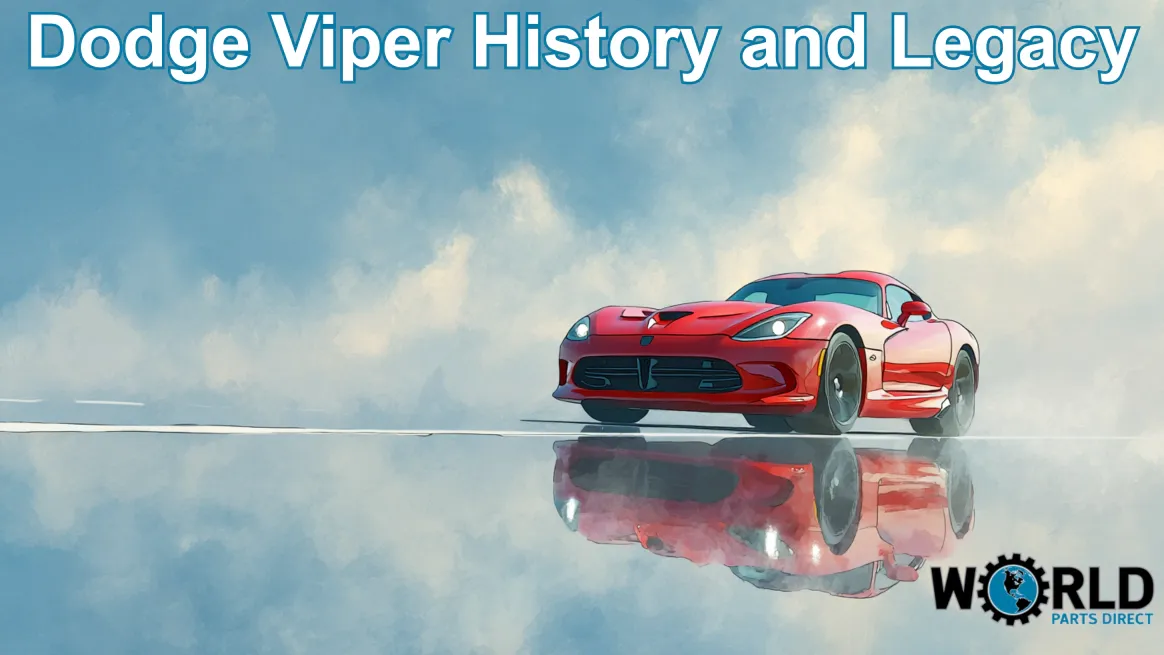
Dodge Viper History and Legacy - Complete Guide for Fans
The Dodge Viper History and Legacy is a story of audacity turned into aluminum, fiberglass, and a thundering V10. Born as a modern take on the Shelby Cobra, the Viper kept the analog sports-car flame alive from 1992 to 2017 with five generations of raw, manual-only power.
It gained a fierce “widowmaker” reputation, traded punches with Corvette and Porsche, and ended largely due to sales and safety-regulation economics.
Origins and Concept Development
Bob Lutz and Tom Gale set the vision
In late 1988, Chrysler’s president Bob Lutz asked chief of design Tom Gale a simple question with big consequences: why not build a modern-day Cobra for America again. That hallway challenge lit the fuse. Gale’s studio shaped a voluptuous roadster concept that shocked journalists when it hit the 1989 Detroit Auto Show, all long hood, side pipes, and no-nonsense intent.
Public enthusiasm was immediate, and by March 1989 a handpicked “Team Viper” of about 85 engineers started turning clay and sheet metal into a real car under chief engineer Roy Sjoberg. The mandate was clear. Keep it simple, keep it visceral, and keep the price comparatively attainable. Lutz viewed the project as a morale jolt for a company mired in K-car practicality. He wasn’t wrong.
The premise was deliberately elemental. Big torque. Rear-drive. Six-speed manual. Minimal comfort and zero electronic safety nets. The Viper’s persona; brash, mechanical, a little wild; wasn’t an accident; it was the point. Period photos show the “White Mule” test car, early fiberglass bodies, and a small-block V8 before the V10 arrived. The spirit was hot rod meets skunkworks, with decisions made quickly and politics kept outside the room.
Did Carroll Shelby help design the car
Carroll Shelby’s fingerprints were present, if not in the day-to-day CAD files, then in the Viper’s soul and early shepherding. Shelby consulted on the project, sat on the Technical Policy Committee, and helped validate the vision of an American brute that echoed his 1960s Cobra formula.
He even paced the 1991 Indianapolis 500 in a pre-production Viper when the UAW objected to a Japanese-built Dodge Stealth as the original choice. Shelby’s involvement was less about penning body lines and more about lending ethos and exposure. Think spiritual godfather rather than chief engineer.
Lamborghini and the V10 prototype
Chrysler owned Lamborghini at the time, and that connection proved pivotal. The team wanted a V10 not for elegance, but for drama, torque, and image. Lamborghini’s engineering expertise helped turn a cast-iron truck architecture into an aluminum-block 8.0-liter with real character.
Chief powertrain engineer Dick Winkles oversaw development, spending time in Italy refining what would become the Viper’s signature. The syncopated odd-fire growl that critics jokingly compared to an “angry UPS truck” and owners described, more fondly, as thunder in stereo. The production-ready V10 arrived by early 1990. Official greenlight came that May.
Dodge Viper History and Legacy Timeline and Milestones
Key dates from concept to final run
- 1989: Viper concept debuts at Detroit to raucous acclaim.
- 1991: Pre-production Viper paces the Indy 500. Media drives begin late that year.
- 1992: Retail RT/10 Roadster sales start. The legend launches.
- 1996: GTS coupe arrives with 450 hp and basic creature comforts.
- 2003: SRT-10 redesign with 8.3-liter V10 at 500 hp.
- 2008: Fourth-gen Viper returns with 600 hp and a major mechanical refresh.
- 2013: Fifth-gen VX I arrives with 640 hp, stability control, and modernized cabin.
- 2017: Final year of production. Approximately 31k–32k Vipers built over 26 model years.
Indianapolis 500 pace car moment
The Viper’s legitimacy wasn’t just forged on magazine covers. When the United Auto Workers pushed back on a Japan-built Dodge Stealth leading the 1991 Indy 500, the young snake stepped in.
Carroll Shelby drove a pre-production car as the official pace vehicle, beaming the Viper into living rooms nationwide. That was the public’s first live-action look at the shape and sound that would define the model.
Production sites and model milestones
Production began at the New Mack Assembly Plant in Detroit in 1991, then moved in late 1995 to Conner Avenue Assembly, where most Vipers were hand-built until 2017.
Milestones came rapid-fire: the original RT/10 roadster with no exterior door handles, plastic side curtains, and no airbags; the 1996 GTS coupe that finally added basics like glass windows and air conditioning; the track-tuned ACR packages; the 2008 jump to 600 hp; and the 2016 ACR’s record-slaying aero and braking hardware. Each generation nudged performance, but the formula stayed stubbornly analog.
First Generation SR I RT 10 Roadster
Design choices and minimalist interior
Open the door, well, reach inside and pull the latch and the early RT/10 told you everything. Vinyl side curtains instead of roll-up windows. Canvas top. No airbags. No exterior door handles. Even air conditioning was initially absent.
It was a street-legal concept car with plates, long hood tapering to a tiny windshield, and memorable side-exit exhausts that could warm a calf on exit if you weren’t careful. The look was muscular artistry, but the cabin made no apology for its mission. Minimal mass, maximum feel.
Driving experience and early tire setup
On period tires and without ABS or traction control, the first-gen Viper demanded respect. The 8.0-liter V10’s 400 horsepower and 465 lb-ft were delivered with creamy, low-rpm shove.
Long gearing kept revs relaxed on the highway and helped the EPA city/highway ratings of roughly 12/20 mpg for such a beast, but the car could still rip to 60 mph in a little over four seconds and cover the quarter-mile in the 12s. Large-section tires gave serious lateral grip, yet the limit arrived abruptly.
Catch it or pay for it. That edge defined the car’s myth.
Enthusiast and media reception
Media framed the RT/10 as the anti-Corvette. Louder, rawer, and less polished. Enthusiasts loved the honesty. The price; about $52,000 at launch; made it a blue-collar exotic. The uniform verdict was clear. Here was a Detroit two-seater unapologetic about being a barely tamed track animal for the street. The contrast to increasingly computerized competitors didn’t hurt its allure.
Second Generation SR II GTS Coupe and ACR
Powertrain and chassis upgrades
By 1996 the Viper matured. Midyear RT/10s gained power to 410 hp, then 450 a bit later, and lost the leg-singeing side pipes for a rear-exit exhaust that also improved output. Aluminum replaced some steel suspension parts, shaving weight and sharpening responses. A removable hardtop and actual sliding glass windows arrived. The Viper still felt elemental, but the edges weren’t quite as serrated.
GTS design and racing influence
The GTS coupe landed like a thunderclap. The “double bubble” roof nodded to helmet clearance and the Daytona Coupe heritage. Airbags, power windows, AC, and exterior handles became baseline. The 8.0-liter V10 made 450 hp with a fatter torque curve, giving the GTS serious pace to 180 mph.
The look was timeless; broad shoulders, long snout, tucked tail. It wasn’t just a pretty face either. The race-bred GTS-R would soon start stacking trophies around the world.
Safety additions and daily usability
The late 1990s brought incremental but meaningful updates. By 1998, second-generation airbags arrived and exhaust manifolds dropped weight. In 2001, ABS finally joined the party.
The Viper was still no commuter car, yet buyers could now daily drive one without feeling like they were piloting a concept car through a rainstorm. It still needed finesse. It finally gave a bit back.
Third and Fourth Generation ZB Evolution and ACR Return
Viper SRT 10 design and chassis updates
For 2003, the SRT-10 rebooted the exterior with sharper lines and brought a stiffer chassis with reduced mass. Power rose to 500 hp from an 8.3-liter V10. At first, the SRT-10 was a roadster only, then the coupe returned for 2006 with 510 hp and the familiar double-bubble silhouette. Underneath, the car felt more cohesive, with better rigidity and more bandwidth for hard driving.
8.4 liter V10 tuning and new transmission
The 2008 refresh was a big step. Displacement stretched to 8.4 liters. Output hit 600 hp and 560 lb-ft thanks to better-flowing heads with larger valves, twin electronic throttles, and an ingenious cam-in-cam variable timing strategy on the exhaust side. The T56 ceded to a Tremec TR-6060 with burlier synchronizers.
Suspension tuning brought more neutral responses. Even the exhaust was reworked to reduce cabin heat. This was the Viper evolving from bruiser to scalpel without softening its punch.
ACR track focus and records
The ACR (American Club Racer) badge returned with purpose. Aero addenda, adjustable suspension, big brakes, and purpose-built tires turned the ZB II ACR into a track-day terror.
Lap records fell, including a 7:22.1 at the Nürburgring Nordschleife and a sub-two-minute blast at Miller Motorsports Park’s Outer Course. The engine remained stock on paper.
Fifth Generation VX I Final Chapter
Stability control and modern tech arrive
After a brief hiatus, the 2013 Viper arrived with its biggest philosophical change since birth: electronic stability control and traction control. Purists grumbled. Reality nodded. With 640 hp from an 8.4-liter V10 and a top speed beyond 200 mph, the fifth-gen VX I embraced modernity in service of survivability.
Torsional rigidity improved about 50 percent over the outgoing car. Brembo brakes, Pirelli P Zeros, and a better cockpit made it more livable without muting the soundtrack.
Special editions TA and GTC customization
Dodge leaned into limited runs. Time Attack (TA) editions dialed in handling and aero, trading some top speed for massive cornering confidence.
The GTC program let buyers order near one-of-one personalization with thousands of paint and stripe combinations, down to a concierge sending color chips and a scale model to confirm the spec. It was a neat blend of hand-built tradition and modern customer experience.
Sales challenges and price adjustments
Capability was higher than ever, yet sales faltered. By late 2013, production slowed due to inventory build. In 2014, Dodge cut about $15,000 from unsold cars and carried lower pricing into 2015, when output rose to 645 hp. The talent was unquestioned. The market had shifted. Five-figure premiums for niche, manual-only supercars are a tough sell when dual-clutch convenience and all-wheel-drive security steal hearts at the same price.
What Made The Dodge Viper Special
Raw V10 performance and manual purity
Plenty of cars were quicker on paper by the mid-2010s, but very few felt anything like a Viper. The naturally aspirated V10 delivered instant torque and a seismic, mechanical soundtrack.
Every generation used a six-speed manual. No paddles. No compromises. The linkage felt industrial. The clutch took a firm leg. That physicality bonded drivers to the car in a way spec sheets can’t describe. It’s why people still talk about the way a Viper smells hot after a session or how the shifter vibrates at idle. Those sensory details matter to enthusiasts as much as lap times.
Minimal driver aids and skill threshold
Early cars had no ABS or traction control. Even later models, post-2013, kept the nannies light-handed. The result was a reputation. The Viper rewarded smooth inputs and punished clumsy ones. It taught throttle modulation. It asked for warm tires, straight steering at full throttle, and caution in the wet. In return, it gave that pure, connected feeling so many modern cars filter away.
That bargain defined the brand.
Iconic styling and roadster to coupe lineage
A Viper looked like speed even when parked. The RT/10’s side pipes and sculpted flanks became posters. The GTS’s double-bubble roof and stripes defined 1990s bedroom walls.
Third- and fourth-gen cars sharpened the lines but kept the stance. The final VX I carried the DNA forward with more aero honesty and modern lighting. Under the shape sat a front mid-engine layout with a long dash-to-axle and short rear deck. Classic sports-car proportion turned up to eleven.
The Widowmaker Reputation and Safety Perceptions
Why early models felt unforgiving
Throw 400 horses and 465 lb-ft through big rear tires without ABS or traction control, give the chassis little patience for mid-corner lifts, and keep the curb weight relatively low, and you get a car that wants a skilled hand.
Snap oversteer wasn’t inevitable, but it was available if you jabbed the throttle or lifted at the wrong time. The shorter the reaction time, the harsher the lesson. That edge became lore and, in some circles, cautionary tale.
Driver skill, tires, and conditions
Tire choice and condition mattered. So did temperature and road surface. Many owners learned to give the car space until the tires warmed, to straighten the wheel before unleashing full torque, and to respect rain. The car was never out to get anyone. It just didn’t hide physics behind software.
How the “widowmaker” nickname stuck
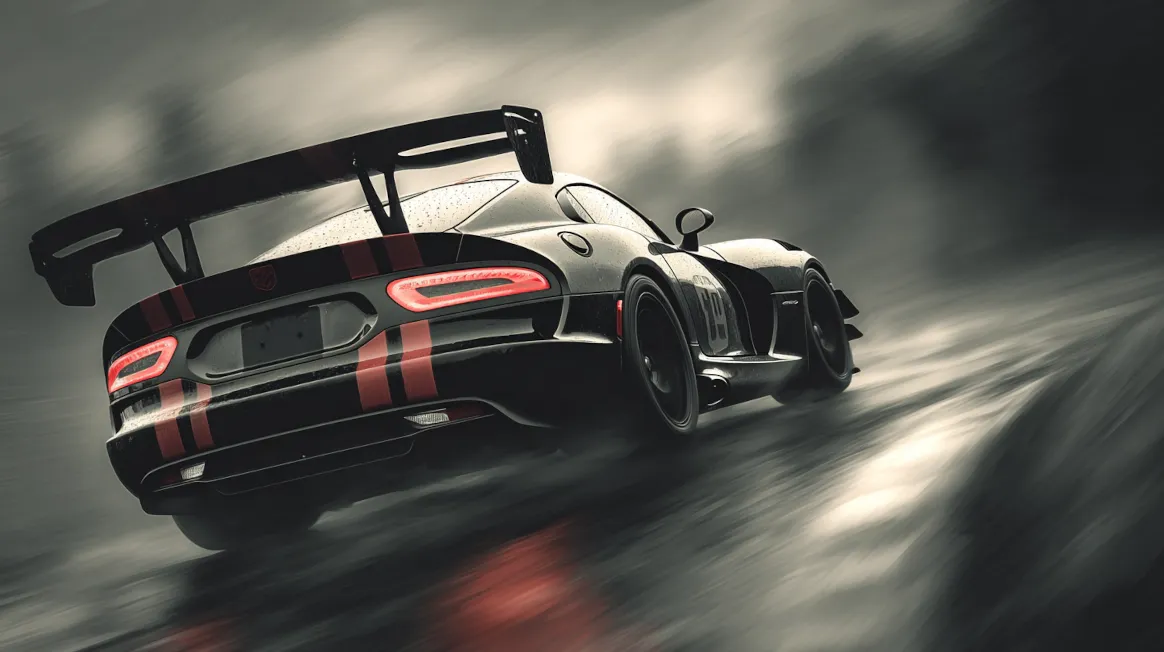
Few factory cars have worn a scarier nickname. The Viper didn’t earn “widowmaker” from a single headline or official designation; it accumulated the label in the 1990s through a mix of owner anecdotes, magazine bravado, and the way its limits revealed themselves.
Journalists praised the Viper’s visceral feel but warned inexperienced drivers, and high-profile incidents—often involving cold tires, damp roads, or aggressive throttle—fed the mythology. In reality, the nickname reflected a cultural moment when big displacement and minimal electronic aids were the Viper’s calling card.
It was a folk label, not a data-backed death sentence, and seasoned owners often bristled at the caricature because the car, driven with respect, could be remarkably predictable.
Training setup and respect: the antidote
The enthusiast community developed best practices to neutralize the sting behind the nickname. Start on fresh, quality tires at proper pressures. Warm them. Keep steering straight before going full throttle. Learn threshold braking and weight transfer in a safe, open environment.
Many owners recommend performance driving schools or local track days with an instructor. Alignment and suspension settings matter too: small adjustments to toe, camber, and tire compound can soften the car’s on-limit behavior. By the fifth generation, with stability control and vastly better rubber, the Viper became friendlier without losing its bite. The reputation lingered; the reality evolved.
Comparable Cars and Rivals Across Eras
Chevrolet Corvette and American rivals
The Corvette was the Viper’s foil from day one. Where the Viper leaned into brute force and simplicity, Corvette often delivered a more polished, daily-drivable package with similar or better numbers. ZR-1s, Z06s, and later ZR1s traded jabs with Viper generations on track and in magazines.
The Ford GT, though pricier and rarer, represented another American answer with Le Mans roots, composite construction, and an overt track pedigree.
Porsche 911 and European benchmarks
Against European royalty like the Porsche 911, the Viper felt like an unfiltered alternative. A 911 often offered more finesse, better weather versatility, and later, breathtaking turbocharged acceleration.
The Viper countered with displacement, engagement, and a sense that the driver mattered more than the mode dial. Enthusiasts chose based on philosophy as much as performance. One didn’t replace the other. They framed two schools of speed.
Ford GT and other limited exotics
Limited-production exotics from Ferrari to the Ford GT occupied the echelon above in price and sometimes speed, yet the Viper stood near their performance orbit while costing far less new. That value, combined with its American-made, hand-built mystique, gave the Viper a cult standing even in garages that also housed Italian badges.
Why The Dodge Viper Was Discontinued
Safety regulations and airbag compliance
The official story and the industry whisper both point to regulations and economics. By mid-2010s standards, integrating side-curtain airbags into the Viper’s architecture without a full platform redo was not trivial. Reports pointed to FMVSS 226 side-curtain requirements as a core hurdle, and the cost to re-engineer a low-volume chassis didn’t pencil out.
Sales volume, cost, and business case
Even great cars need great P&Ls. Fifth-gen Viper base prices crested into six figures at launch, and early sales were soft. Dodge trimmed pricing and added special editions, but average annual volume for Gen V hovered in the hundreds, not thousands.
With corporate attention pulled toward high-margin trucks, SUVs, and Hellcat-powered heroes, a manual-only two-seater built largely by hand was always going to be a tough internal sell.
Brand strategy and market shifts
Performance customers aged into dual-clutch transmissions and all-wheel-drive traction. Insurance and tire costs climbed. Track days grew, but the share of buyers craving a raw, no-compromise manual supercar shrank. FCA’s broader strategy focused on muscle sedans and coupes that could scale globally.
The Viper remained iconic but niche. It was time, as Dodge design chief Ralph Gilles put it, and the line went quiet in 2017.
Legacy Value and The Enthusiast Community
Motorsport achievements and GTS R success
Racing validated the road car’s swagger. The Viper GTS-R dominated late-1990s GT racing, amassing wins at Daytona and a trio of class victories at Le Mans from 1998 to 2000. That record shifted the Viper’s image from brash street brawler to bona fide international contender. Later ACRs turned production-car lap records into headlines, cementing the Viper’s track credibility to the very end.
Best years for ownership and collector value
Ask ten Viper people for the “best” model and you’ll get twelve answers. The 1996–1997 GTS holds classic status for design and raw character. Gen III cars (2003–2006) blend power and relative reliability with broader availability.
Final-run VX I cars offer the most performance and build refinement, with special editions and ACRs already enjoying collector premiums. Values have been climbing for well-kept, low-mile examples, especially limited colors and one-of-one GTC builds.
Viper clubs, driver culture, and media
Viper culture is tight-knit. Owners share setup notes for track days, host meetups that rumble like distant thunderstorms, and mentor new drivers on the car’s quirks. Clubs and forums became knowledge bases on tires, alignment, cooling, and driver technique. Media pieces often framed the Viper as the last American supercar of the “analog” age.
Aftermarket track programs and the ACR X
The factory encouraged the track ethos. Dodge and SRT supported Viper Days, which evolved into the Viper Cup under NARRA, giving owners structured competition and coaching. The ACR-X, a non-street-legal spec built for track use, distilled the formula even further with weight reduction, racing aero, and an uprated V10.
These programs did more than sell parts; they cultivated a safe environment to learn the car and showcased how capable a well-driven Viper could be. Many owners point to these events as the moment the car “clicked,” transforming apprehension into mastery.
Ownership realities, maintenance, and costs
Living with a Viper means embracing a few practical truths. Tires are consumables; performance compounds can heat-cycle out, and fresh rubber transforms behavior. Brakes, fluids, and cooling need attention, especially on track.
Early cars radiate cabin heat; later generations improved this but still reward owners who proactively manage it. Insurance and maintenance are not economy-car cheap, yet they are manageable for a supercar if you plan ahead.
Most long-term owners emphasize preventive care, methodical warm-up, and periodic professional inspections. The payoff is a car that feels special every time you twist the key and hear that odd-fire rumble settle into a bassy idle.
Enthusiast Perspectives: What Owners Learn After 10,000 Miles
Talk to owners who have lived with a Viper for a few seasons and you’ll hear a similar arc. The first months are about respect: learning to manage torque on cold tires, finding the right clutch take-up, and experimenting with pressures that balance front-end bite with rear stability.
The next phase is about fluency. Drivers begin to sense the car’s weight transfer as a living thing — how a smooth lift can tuck the nose, how an early throttle brush can settle the rear, how a tiny steering correction at speed pays dividends.
By the time an owner has logged 10,000 miles and a handful of track days, the Viper’s supposed scariness often gives way to a feeling of transparency. It may never be gentle, but it is honest.
Owners also talk about the rituals that make the car theirs. The warm-up drive before a spirited run. The post-session cool-down lap to bring temps in line. More than a few owners joke that the Viper turns them into better drivers away from the track, too, because it rewards planning, smoothness, and a wide field of vision. It’s a teacher disguised as a troublemaker.
Then there’s the social component. Viper meets are part car show, part rolling seminar. A new owner might arrive anxious and leave with a setup sheet, torque specs, and ten phone numbers. Veteran drivers swap tips about brake pad compounds for mixed street/track use, how to route heat shielding near the side sills, or quick checks to keep the differential happy after a hot day.
The sense of tribe is strong, and that community knowledge is a big reason many first-time buyers feel comfortable stepping into such a potent machine.
The Viper in Popular Culture
Beyond circuits and canyon roads, the Viper cemented its place in 1990s and 2000s car culture through ubiquity in video games and media. It was a star in early console titles and sim racers alike, a digital poster child for big-displacement Americana.
Its bold shapes and primary-color liveries translated perfectly to die-cast models, slot cars, and RC bodies. On television and in magazines, the double stripes and side-exit exhausts became shorthand for American excess in the best sense: loud, simple, and fast.
That visibility mattered. For a generation of enthusiasts, the Viper wasn’t just a car they read about — it was the car they “drove” after school with a game controller, or the one on the shelf above a desk. Those touchpoints feed today’s collector demand, especially for iconic colorways like Viper Blue with white stripes or Snakeskin Green. Cultural memory keeps values buoyant long after a production line stops.
“Widowmaker” In Context
The Viper isn’t the only performance car to wear a menacing nickname. The air-cooled Porsche 930 Turbo was once dubbed a widowmaker for its abrupt boost and rear-engine weight transfer. Decades later, the 997 GT2 revived that reputation with huge turbo torque and rear-drive drama.
What separates the Viper’s legend is that it paired massive naturally aspirated torque with period tires and virtually no electronic mediation in its early years, all wrapped in a package that was relatively attainable. That democratized access to genuine supercar pace and, with it, to consequences.
Context matters, though. Tire and brake technology have leapt forward since the 1990s. A Gen II on fresh, modern rubber behaves very differently than a low-mile car still riding on decade-old compounds. Alignment, bushing health, and even driver seating position (which influences leverage and input smoothness) play a role.
The widowmaker label endures because it’s evocative, but owners who treat setup and technique as part of the ownership experience tend to report predictability, not paranoia.
Quick Buying and Setup Guide
- Match generation to use case: Gen I/II for raw character, Gen III/IV for balanced performance and value, Gen V for the most refined and capable street/track package.
- Tires first: Replace old or unknown rubber immediately; many “scary” stories trace back to expired tires.
- Cooling and heat management: Inspect side-sill heat shielding and underhood airflow, especially on early cars.
- Brakes and fluids: High-quality pads and fresh high-temp fluid are cheap insurance for spirited use.
- Alignment: A mild track-friendly setup (a bit more negative camber up front) can stabilize responses without sacrificing street manners.
- Seat time: Invest in coaching. A day with an instructor pays back more than any bolt-on.
Could There Have Been a Sixth-Gen Viper?
Enthusiasts often ask whether a Gen VI could have threaded the regulatory and economic needle. The short answer: only with a clean-sheet platform and a very different business case. Meeting modern crash and side-curtain standards, integrating advanced driver assistance, and delivering emissions compliance would have required an all-new structure and electronics backbone.
Powertrain is the other piece. The iconic naturally aspirated V10 made the Viper special, but replicating that formula in a stricter emissions era would be challenging. A downsized, forced-induction V8 or a hybridized setup might have delivered performance while easing compliance, yet those choices would have changed the car’s character.
In the years since production ended, Dodge’s performance strategy pivoted toward supercharged V8 muscle and, more recently, electrified performance. That evolution doesn’t preclude a future analog outlier, but it underscores why the Viper’s final bow in 2017 felt definitive.
Its magic was inseparable from a simpler era of engineering and expectations. Trying to recreate it wholesale might satisfy nostalgia while missing the point that made the original so compelling.
Summary and What’s Next
The Dodge Viper History and Legacy reads like an American folk tale told in aluminum and rubber. It started with an idea to channel the Cobra’s spirit, grew into a five-generation icon that mixed a massive V10 with manual-only conviction, and bowed out when regulations and economics caught up.
The takeaway is simple. The Viper proved there’s lasting value in cars that ask something of the driver. If the bug has bitten, learn the generations, budget for tires and training, and seek out seat time before choosing a model. The next great chapter may be yours, whether that’s hunting a clean GTS, chasing track records in an ACR, or keeping the analog flame bright on weekend roads.

About World Parts Direct
World Parts Direct is your go-to source for genuine OEM parts for GM and MOPAR vehicles. We make it easy to order factory-original parts online — shipped fast, accurately, and backed by real human support.
Every item we sell comes brand new in the manufacturer’s original packaging. Whether you’re handling routine maintenance, collision repair, or a full restoration, our parts professionals provide VIN-verified fitment support to ensure you get exactly what you need.
Serving drivers and repair shops worldwide, we proudly support brands like Chevrolet, GMC, Cadillac, Buick, Dodge, Chrysler, Jeep, and Ram. Shop confidently at WorldPartsDirect.com.