
The Complete Guide to Corvette Evolution — From Stingray to Z06, ZR1, and E-Ray
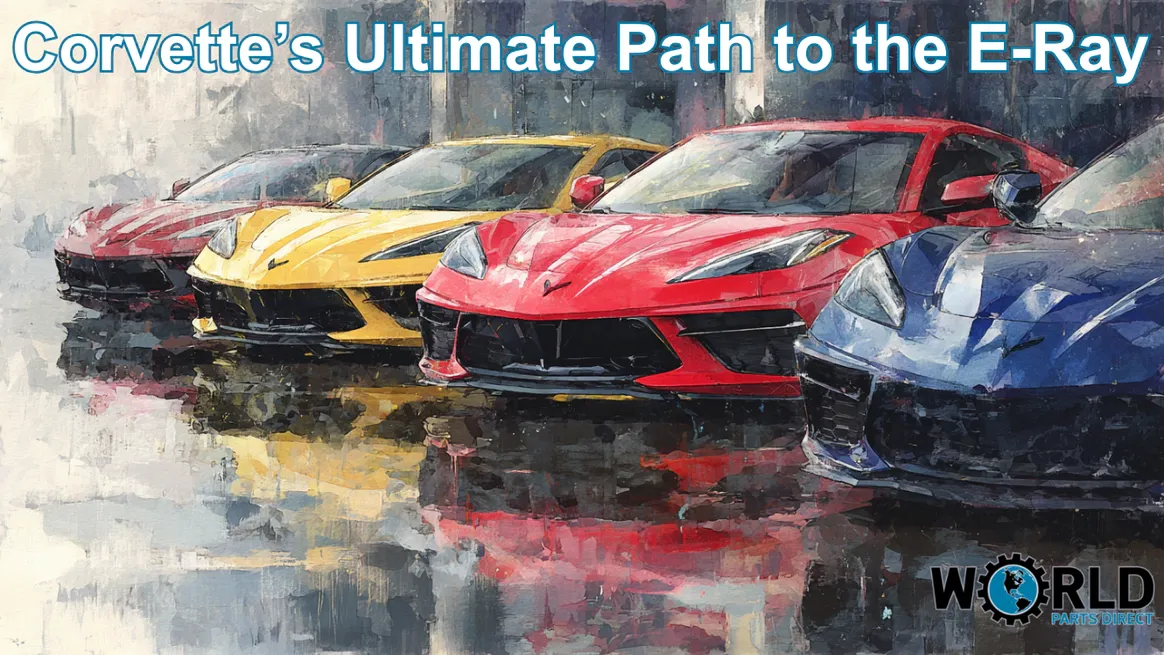
Stingray, Z06, ZR1- Corvette’s Ultimate Path to the E-Ray
The story of stingray, Z06, ZR1 isn’t just a spec sheet arms race. It’s the arc of an American icon that kept learning, iterating, and outsmarting its rivals until electrification finally made sense on Corvette’s terms. Over the past decade, the mid-engine pivot unlocked new possibilities, and that’s how the E-Ray arrived with poise instead of compromise.
Key comparison points. Stingray balances daily civility with rear-drive thrills. Z06 cranks race-bred precision with a flat-plane LT6. ZR1 turns the wick to twin-turbo ferocity. E-Ray overlays instant electric torque and AWD without muting Corvette feel. That’s the progression in a sentence.
From Stingray Z06 ZR1 To E-Ray
How Corvette evolved through engineering milestones
Corvette has always been a steady study in cause and effect. Move the engine. Rethink airflow. Raise redlines. Add traction intelligence. Each milestone wasn’t random; it was the next logical step in a long chain of problem-solving. The mid-engine C8 Stingray set packaging ground rules. The Z06 proved the chassis could swallow race-level loads and survive the abuse. The ZR1 showed the platform’s ceiling wasn’t a ceiling at all. The E-Ray then took that foundation, layered electric front-axle torque, and reframed what a Corvette can do in everyday life and bad weather without losing the street-corner swagger.
A quick aside. People often describe Corvette’s evolution as one big leap. It wasn’t. It was many small decisions made by engineers who kept asking the same question. How do you keep the car honest as speeds climb, tires widen, and expectations shift. That mindset created a lineup that’s coherent, not chaotic. Stingray, Z06, ZR1, then E-Ray. The sequence matters.
Why electrification arrived when it did
Electrification wasn’t bolted on to chase headlines. The E-Ray appeared when the mid-engine layout, battery size, cooling capacity, and software maturity could work together without turning Corvette into a science project. The C8’s central tunnel and front compartment gave space for a compact battery and a front electric drive unit. Magnetic damping, refined performance traction management, and a robust 8-speed DCT already lived in the ecosystem. Add the fact that instant torque can improve low-speed response and front-axle grip, and the timing aligns. As of 2025, the E-Ray’s hybrid AWD sits beside Stingray, Z06, and ZR1 as a distinct answer to the same Corvette question. Go faster. Feel sharper. Keep it usable day-to-day.
There’s another reason. Weather and daily miles didn’t fit the old mold. People want the Corvette experience on cold mornings and rain-soaked commutes, not just track-days. Electric assist helps there. The result is a car that acts like a Corvette when you want drama and behaves like a calm grand tourer when you don’t.
Where the lineup stands today
As of the 2025 model year, the lineup spans four personalities. Stingray anchors the value-performance equation with a naturally aspirated 6.2-liter V8 and rear-drive character. Z06 adopts a flat-plane LT6 that revs to the heavens and brings wider-body aero with track intent. ZR1 sits at the top with twin-turbo violence, aero downforce well past a thousand pounds, and braking hardware sized for hypercar speed. E-Ray shares the wide-body vibe while pairing the LT2 V8 with a front electric motor for 655 combined horsepower, quick launches, and all-weather confidence. The range covers commuter-friendly manners to world-class numbers without fragmenting the brand’s identity.
Chevrolet Corvette Stingray Origins And The Mid Engine Shift
C8 Stingray design and layout
The mid-engine Stingray changed the Corvette conversation overnight. Put mass close to the center. Shorten the nose. Widen the stance. A 6.2-liter pushrod V8 lives just aft of the cabin, feeding an 8-speed dual-clutch transmission. You see it through glass, hear the burble behind your shoulders, and feel the balance in turn-in. The platform’s compact wheelbase and low cowl improve sightlines. Cooling paths run shorter. Luggage shifts to the front trunk and a shallow rear compartment. It’s tidy engineering with street appeal.
Power lands at 490 horses in standard spec and 495 with the Z51 package. That’s enough for sub-three-second 0 to 60 runs under ideal conditions, and near-200 mph top speeds in the right configuration, all while keeping the car approachable. The layout paid off in body control that felt natural rather than forced. Even at neighborhood speeds, the steering loads and chassis composure make everyday drives feel special.
Daily usability and performance balance
Stingray’s magic is the blend. It’s quick enough to embarrass supercars off a light. It’s calm enough to idle through coffee lines without heat-soak tantrums. Magnetic Ride Control reads the road thousands of times per second, backing comfort when surfaces get messy, then stiffening in an instant when canyon roads beckon.
One small scene. A driver eases out of a suburban driveway early at sunrise. The V8 hum is soft, not shouty. Tires whisper over cold pavement. Ten minutes later, the freeway on-ramp opens and the dual-clutch grabs a lower gear faster than the brain expects. That’s the Stingray balance. Civility then surprise.
Coupes and convertibles in the lineup
Corvette didn’t make body style a personality test. Stingray offers coupe and convertible formats with similar dynamics. The coupe’s rear window shows off the engine bay. The convertible’s folding top lowers the barrier to wind-in-hair weekends. Both keep trunk access and the commanding driver-focused cockpit. Pricing stays accessible relative to European rivals as of 2025, which is part of Stingray’s appeal in car enthusiast communities and local club circles.
Chevrolet Corvette Z06 Track DNA And The LT6 V8
Flat plane V8 character and racing roots
The Z06 exists to answer the track call. The LT6 is a 5.5-liter, DOHC, flat-plane crank V8 derived from Corvette Racing practice. It revs to about 8,600 rpm, makes 670 horsepower, and sounds like a high-strung exotic more than a traditional American muscle car. It’s sharp, quick to breathe, and happiest when worked hard. People hear the tenor scream and look up. On track, the engine’s linearity helps drivers place the car precisely corner to corner.
That character reflects a philosophy. Keep the chassis honest. Build an engine that doesn’t lug. Match response with grip. Z06 translated race knowledge into a production car that still handles the school run without protest.
Aero and chassis tuning for the circuit
Wider bodywork, bigger heat exchangers, and more aggressive front and rear devices turn airflow into performance. The C8 structure welcomed higher loads thanks to the mid-engine design and rigid central tunnel. With more tire under each corner and revised spring-damper rates, the Z06 brings confidence at speeds that would tie a front-engine layout in knots. Performance Traction Management helps drivers modulate slip without smothering the fun. The steering stays conversational, never numb.
Z06’s body speaks the language of lap times. The stance sits low. The air moves through and over with intent. On the right rubber, the chassis communicates each micro-slide. You feel it in your palms and lower back, not just in stopwatch data.
Z07 package and tire options
The Z07 package sharpens everything for serious track days. Stiffer springs. More aggressive aero. Michelin Pilot Sport Cup 2R tires that favor heat and precision over rain confidence. Brakes and cooling get attention because repeatability wins sessions, not single flyers. This is the version that turns high-speed confidence from a wish into an expectation. For drivers who split time between road and track, the base Z06 on Sport 4S tires keeps wet-weather sanity while preserving the LT6’s mercurial thrill.
Corvette ZR1 Halo Power And Aerodynamics
From Corvette C7 ZR1 to the C8 ZR1
ZR1 is the name that signals no excuses. The C7 ZR1 already pushed over 750 horsepower with a supercharged LT5 and teased wild aero solutions. The C8 ZR1 stepped far beyond that, switching to a 5.5-liter twin-turbo V8 known as LT7, which builds on LT6 architecture with turbocharging, revised fuel delivery, and unique internals. Output climbs to 1,064 horsepower with 828 lb-ft. That’s where the halo terminology earns meaning rather than marketing.
It’s not just power. The mid-engine chassis lets ZR1 run more extreme aero without turning numb. The coupe even plays a visual nod to the 1963 split-window history with carbon-fiber detail work, while the rest of the shape stays laser-focused on cooling and drag management.
Twin turbo V8 and advanced cooling
Moving to twin turbos isn’t simply bolting snails onto a block. The LT7 carries a reworked intake, secondary port injection for fuel flow, unique pistons and rods, and new head castings with CNC ports intended for big boost reliability. Roof-mounted ducts on the coupe route air to the turbos. Side ducting targets brake temps. A flow-through hood aids front downforce and cooling. The intent is obvious the moment a ZR1 idles. There’s a low, dense rumble and faint turbo whir that hints at serious airflow.
Reality check. This car makes over 1,200 pounds of downforce in its most aggressive aero configuration and stops with front carbon-ceramic rotors sized at 15.7 inches, the largest ever fitted to a Corvette as of 2025. That’s hypercar territory executed with Corvette sensibility, meaning the price lands far below Italian exotica while the speed numbers don’t flinch.
Supercar performance benchmarks and braking
Testing shows the scale of performance. Figures around 2.2 to 2.5 seconds for 0 to 60 depending on setup, sub-10-second quarter-mile runs near 150 mph, and a top speed claim beyond 225 mph in the right mode. Braking from 70 to 0 in roughly 140 feet speaks to matched hardware, not just brute force. On track, drivers feel the balance. The rear weight bias and aero work to keep stability under big lift-off moments, while Michelin Cup rubber digs into the tarmac and finds grip in long, loaded corners.
Common saying at the paddock. “You bring brakes to find speed.” ZR1 brings a lot of braking.

Engineering Pathways That Enabled E-Ray
Mid engine packaging and weight distribution
The mid-engine layout did more than move mass. It opened the front compartment for an electric drive unit in E-Ray and centralized the battery path under the tunnel. That makes weight distribution cooperative rather than adversarial. The rear stays planted under V8 torque. The front contributes on launch and in low-traction conditions. Packaging synergy matters because it lets E-Ray feel like a Corvette, not a patchwork hybrid. The stance, seating, and visibility remain familiar. The balance stays playful, then adds calm when conditions deteriorate.
That packaging also minimized compromises in luggage and cabin space. Corvette interior ergonomics continue with a driver-canted screen, clear row of center controls, and upright visibility that keeps city driving relaxed.
Traction management and AWD lessons
Performance Traction Management learned hard lessons on Z06 and ZR1. Those lessons carried into E-Ray’s front-motor strategy. Instant torque brings huge benefits if the software knows when and how to deploy it. E-Ray’s AWD is electric at the front and mechanical at the rear, which makes response split-second fast. In wet conditions or on cold tires, the car’s composure changes the way people use the throttle. You get confidence that doesn’t dull the feedback loop. This is an AWD system tuned by performance people, not comfort engineers.
Drivers report a calmer launch experience and steady feel on patchy pavement. In a canyon with leaf litter and shaded hairpins, the front unit lends grip and makes speed sustainable without spikes of fear.
Magnetic Ride Control and chassis learnings
Magnetic Ride Control reads and reacts at a rate people can’t consciously process, yet they feel the effect through relaxed muscles and lower mental load. That system was refined across Stingray, Z06, and ZR1, then calibrated for the hybrid’s mass and front-drive behavior. The same applies to brake sizing and pedal feel. Carbon ceramic standardization on E-Ray speaks to repeatability and thermal headroom, not just bragging rights. The chassis learnings baked into the C8 platform let E-Ray behave consistently with added variables in play.
E-Ray Explained Hybrid Power And AWD
Powertrain layout and energy flow
E-Ray pairs the familiar LT2 6.2-liter V8 with a front-mounted electric motor fed by a compact battery. The hybrid is not plug-in. It’s self-managed and designed to deliver up to 160 horsepower of front assist when needed, with a combined system output cited at 655 horsepower as of model-year context. Energy recapture happens under braking and lift-off. The 8-speed DCT continues to handle rear torque, while the front motor responds independently, which is why the launch feel is so decisive and the exit of tight corners feels clean rather than scrappy.
Think of energy flow like a duet. The rear sings with classic pushrod torque. The front adds quick notes that keep rhythm when grip falls away. Together the cadence feels like a Corvette with extra confidence baked in.
Stealth mode and everyday drivability
Stealth mode is the party trick. Leave quietly on electric-only power up to neighborhood speeds. People appreciate that in real life. Early morning departures. Valet lanes. Weekend trips where noise is a courtesy problem, not a thrill. Then a toe deeper on the pedal wakes the V8, and the car pivots from hush to heartbeat. E-Ray’s breadth is what makes it fit modern use cases while keeping the familiar aura.
Daily drivability also means predictable climate behavior, calm low-speed creep, and brake feel that doesn’t wobble when the hybrid blends regen with friction. Corvette calibrated those moments to feel seamless rather than experimental.
Performance app and driver tech
E-Ray introduces a Performance App that gives drivers real-time data on battery status, power contribution, and lap metrics. It’s not tech theater. It’s the kind of information drivers use to time cool-down laps, plan charge-on-brake strategies during track sessions, and understand how the front axle contributes in specific corners. The interface appears on the driver-angled screen and anchors the cockpit’s modern feel while staying faithful to Corvette usability patterns.
Stingray Z06 ZR1 And E-Ray Comparison
Acceleration and top speed differences
As of 2025, Stingray delivers sub-three-second sprints to 60 mph and roughly 190 to 194 mph depending on spec. Z06 trims that sprint by tenths thanks to the LT6’s rev-happy response and lands near 195 mph. ZR1 drops the 0 to 60 further into the 2.2 to 2.5-second range and pushes claimed top speed beyond 225 mph with test figures near 233 mph depending on setup [11]. E-Ray sits between Stingray and Z06 in top speed, but jumps hard with AWD and instant torque to hit about 2.5 seconds 0 to 60, making it the quickest launch among non-ZR1 models [3][9].
Those differences map to intent. Stingray is the everyday hero. Z06 is the circuit scalpel. ZR1 is the hypercar hunter. E-Ray is the all-weather sprinter.
Handling and aero characteristics
Handling splits align with aero and tire packages. Stingray keeps road-friendly rubber and aero designed for stability without fatigue. Z06 leans into wider tires, bigger cooling, and aero addenda that matter on long laps. ZR1 brings deep downforce, flow-through hood work, and ducting that transforms bodywork into an integrated cooling system. E-Ray adopts the wide-body stance and shares chassis architecture, then layers front-drive traction that changes the way tight corners feel. On equal tires, E-Ray gives a sense of planted calm on cold days, while Z06 rewards disciplined heat management and lines.
On the street, most people feel the steering tone first. Stingray talks in friendly sentences. Z06 speaks fast and direct. ZR1 shouts through grip and speed. E-Ray adds a second voice that keeps confidence alive when roads get complicated.
Price positioning and ownership considerations
Price ladders reflect capability and hardware. As of 2025, Stingray starts near the low seventy-thousand range, Z06 crosses into six figures, E-Ray lands around the low one-hundred-ten range for coupes, and ZR1 climbs toward the high one-seventy to two-hundred bracket depending on trim and options [11][5]. Ownership considerations differ. Stingray keeps maintenance simple and tires affordable. Z06 owners plan for track consumables and heat management. ZR1 owners think in terms of brake life, rubber heat cycles, and respecting speed. E-Ray owners account for hybrid system monitoring, yet benefit from AWD traction and carbon-ceramic consistency in daily weather shifts.

Collector Highlights And Charity Auctions
Rick Hendrick and VIN 001 tradition
Collectors often watch the first-retail VINs for Corvette’s hottest models, and Rick Hendrick has turned that into an ongoing tradition with intent. In January 2025 at Barrett-Jackson Scottsdale, the first retail 2025 Corvette ZR1, VIN 001, hammered for about $3.7 million, with proceeds directed to the American Red Cross to support disaster relief for wildfire and hurricane victims. That kind of headline keeps Corvette anchored in American car culture beyond lap times.
Hendrick also secured the first retail 2025 Z06 at the Palm Beach auction, connected to charitable causes including Tunnel to Towers. The VIN 001 practice signals halo interest, community impact, and a collector market that treats Corvette as more than a garage trophy.
Media coverage from Car and Driver and others
Media testing and coverage crystallize what enthusiasts already feel. Outlets reported ZR1 performance with twin-turbo LT7 output at 1,064 horsepower, quarter-miles in the nines, and braking figures that match high-speed confidence. Reviews highlighted the coupe’s carbon-fiber split-window homage and the size of the front rotors as the biggest ever on a Corvette as of 2025. Coverage of E-Ray framed it as the fastest-launch Corvette, with AWD and hybrid assistance serving everyday use as much as lap times.
Those stories shape perceptions. People read, then show up at local Cars and Coffee meets, where you see Stingray owners chatting with Z06 drivers while a ZR1 idles nearby with a dense soundtrack and the E-Ray glides in quietly before waking the V8.
What high bids signal to enthusiasts
High charity bids and VIN 001 fever don’t just point to scarcity. They signal confidence in the platform’s future and respect for engineering ambition. Enthusiasts read those numbers as a cultural vote. Corvette sits at the intersection of attainable performance and headline-grabbing halo models. The stingray, Z06, ZR1 sequence builds credibility, and E-Ray’s presence adds modern relevance without erasing the ethos.
Choosing Your Corvette For Road And Track
Daily street and weekend canyon drives
Pick Stingray if daily street miles matter and weekend canyon runs make happiness. The punch-to-price ratio stays strong. The cabin feels special without turning theatrical. E-Ray suits people living with seasonal weather or mixed-use roads. The electric front axle keeps the pace steady when conditions wobble, and stealth mode adds neighborhood grace.
Z06 can absolutely do daily duty, but its genius shows up on roads that reward higher revs and more committed cornering. If your weekends include sunrise drives on clear mountain routes, the LT6 feel is addictive. ZR1 is best for people who plan their drives like events. It’s theater, logistics, and speed discipline.
Track days and time attack goals
For track days, start with Z06. The Z07 package, aero, and tire strategy anchor repeatable performance. Consumables cost money, but the seat time payoff is obvious. E-Ray can play on track with its hybrid support and standard carbon ceramics. It changes the launch dynamics and stabilizes corner exits. Stingray makes sense for learning lines and building consistency without punishing costs.
Time attack goals and lap records live in ZR1 land. The aero, brakes, and power sprint beyond the rest of the lineup. Drivers need room and respect for speed, plus a plan for tire life and brake temp cycles. The car rewards preparation, not improvisation.
Grand touring comfort and features
Grand touring isn’t only about softness. It’s about arriving relaxed. Stingray and E-Ray sit naturally in that lane. Comfortable seats, clear infotainment, and storage that works for weekend duffels. Z06 does fine at highway pace but gets chatty on certain tires. ZR1 can tour, yet the power reserves mean long trips need a calm right foot and fuel stops planned with a smile. Pricing tiers mirror those realities, while options like carbon roofs, Bose audio, and seat trims personalize comfort without changing the car’s core.
FAQs
What is the difference between Stingray Z06 and ZR1?
Stingray is the baseline sports car with a 6.2-liter NA V8, rear-wheel drive, and everyday balance. Z06 ramps track focus with a 5.5-liter flat-plane LT6, wider body, and sharper aero. ZR1 sits at the top with a twin-turbo 5.5-liter LT7, extreme downforce, massive carbon-ceramic brakes, and speed benchmarks that step into hypercar territory as of 2025.
Which one is faster, Z06 or ZR1?
ZR1. Acceleration drops into the low-two-second 0 to 60 range and top speed climbs past 225 mph depending on setup. Z06 is extremely quick, with 0 to 60 near 2.6 seconds and about 195 mph top speed, but ZR1’s turbos and aero push performance into a different tier.
Is a ZR1 faster than a Stingray?
Yes. ZR1 outpaces Stingray across acceleration, quarter-mile, and top speed by a large margin. Stingray remains the everyday champion for price and usability, while ZR1 operates in halo territory with 1,064 horsepower and advanced aero as of 2025.
Key Takeaways
The lineup tells a clear story. Stingray, Z06, ZR1 created the scaffolding. E-Ray arrived at the right moment, using hybrid front-drive and AWD to widen Corvette’s usable envelope without dulling its character. Pick Stingray for daily thrills, Z06 for lap days, ZR1 for headline speed, and E-Ray for all-season pace. Next step. Drive them. Find the feel that matches your life, then go make more mornings interesting.

About World Parts Direct
World Parts Direct is your go-to source for genuine OEM parts for GM and MOPAR vehicles. We make it easy to order factory-original parts online — shipped fast, accurately, and backed by real human support.
Every item we sell comes brand new in the manufacturer’s original packaging. Whether you’re handling routine maintenance, collision repair, or a full restoration, our parts professionals provide VIN-verified fitment support to ensure you get exactly what you need.
Serving drivers and repair shops worldwide, we proudly support brands like Chevrolet, GMC, Cadillac, Buick, Dodge, Chrysler, Jeep, and Ram. Shop confidently at WorldPartsDirect.com.