
2025 Corvette ZR1 Reveal: Twin-Turbo Power, Specs, and Complete Breakdown
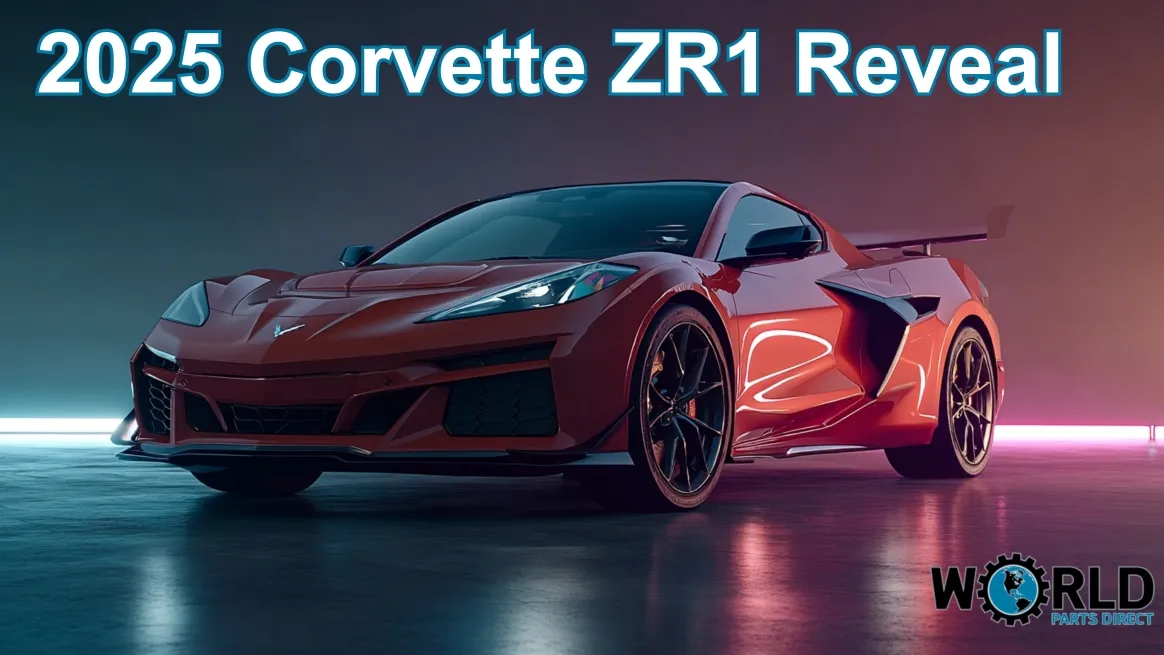
2025 Corvette ZR1 Reveal
TL;DR
Reveal: Debuted July 25, 2024, as the most powerful Corvette ever; the first factory twin-turbo V8 (LT7) with 1,064 hp and 828 lb-ft.
Performance: ~2.3 sec 0–60 mph, quarter mile in the 9s, top speed up to 233 mph depending on aero. Standard carbon ceramics and strengthened 8-speed DCT.
Engineering: New cylinder heads, turbo plumbing, flow-through hood, wider inlets, and extensive heat management. Cooling and aero shape the entire design.
Design: Split-spine rear, carbon fiber roof/aero, high-downforce or low-drag package options. Up to 1,200 lbs of downforce with track kit.
Interior: 3LZ trim, Napa leather, sport buckets, Bose 14-speaker audio, factory boost gauge, and Performance Data Recorder.
Colors: 10 options including Torch Red, Rapid Blue, Sea Wolf Gray, Competition Yellow, and new Hysteria Purple.
Pricing (US): Starts at $174,995; carbon fiber aero ($8,495) and ZTK track package ($1,500).
Production: Built in Bowling Green; initial runs limited, some 2025 orders pushed to 2026 with ~$7,200 price bump. 12-month resale hold applies.
Competition: Outpaces Z06 and E-Ray; benchmarks against Porsche 911 Turbo S, McLaren 765LT, Ferrari SF90 — but undercuts them on price.
Impact: A halo car meant to cement Corvette’s ICE legacy before electrification. Widely praised as a “hypercar-level” value and cultural touchstone.
Complete Story, Specs, Impact
Every few years a performance car arrives that resets expectations. The 2025 Corvette ZR1 is that moment. The 2025 Corvette ZR1 reveal planted a flag for American engineering and for the Corvette faithful who wanted numbers, nuance, and narrative in one package. Power is only part of the story. The context and craft matter just as much.
The 2025 Corvette ZR1 is the most powerful and quickest production Corvette to date. Chevrolet revealed the car on July 25, 2024, confirmed a twin turbo 5.5 liter LT7 V8, headline speeds beyond 215 miles per hour.
2025 Corvette ZR1 Reveal Details
Reveal date and event timing
Chevrolet officially pulled the covers on July 25, 2024, a summer date chosen to maximize attention as the brand ushered in a new chapter for the mid engine C8 platform. The announcement capped months of teasers and insider chatter, then landed with a clear message. The factory twin turbo era for Corvette had finally arrived.
Instead of a traditional auto show stage, the debut leaned on digital reach and a curated media rollout. That format suited a car meant to dominate on paper and in pixels. It also gave engineers room to spotlight the hardware that upgrades the Z06 playbook with forced induction, deeper cooling, and fortified driveline components.
Official images and video from Chevrolet
Factory assets highlighted a sculpted body with a flow through hood, wider intake apertures, and a dramatic rear profile that integrates functional vents and a split spine aesthetic. The images put carbon fiber in the foreground, from the aero package to the roof panel, while video showcased turbine whoosh under hard throttle and the quick cadence of the dual clutch upshifts.
The presentation underlined purpose built changes that are more than cosmetic. They are airflow and heat management decisions made visible.
Key moments from the reveal event
- Confirmation of the LT7 architecture. A twin turbo evolution of the LT6 with unique cylinder heads and intake hardware.
- Headline performance claims. Power beyond one thousand horsepower and claimed top end beyond two hundred fifteen miles per hour.
- Factory aero strategy. A selectable path between maximum downforce and more v max oriented trim, each validated in Chevrolet testing.
There was a tone to the reveal that long time Corvette watchers recognized. Pride in the homegrown engineering. A quiet confidence that the spec sheet would speak for itself. And a willingness to let the community debate the finer points because the fundamentals looked so strong.
Performance Specs And Highlights
Powertrain outputs and acceleration
At the center sits the LT7. This 5.5 liter, twin turbo, DOHC, flat plane crank V8 pushes past four figure output, with published peaks of 1,064 horsepower and 828 pound feet of torque as validated in Chevrolet communications and supporting media reports.
The character is distinct. Fast spooling compressors and the high revving personality of the LT6 base architecture meet in a powerband that pulls hard and keeps pulling.
Acceleration claims match the big numbers. Chevrolet cites 0 to 60 miles per hour in roughly 2.3 seconds on a prepared surface with the right tire and weather window. Quarter mile times dip into the nines, with trap speeds near a buck fifty.
Those are hypercar lane figures, delivered through an 8 speed dual clutch that has been materially strengthened for the LT7’s load.
Top speed and track performance
Top speed depends on aero configuration. Chevrolet disclosures and media briefings point to a terminal velocity well beyond 215 miles per hour, with a v max claim reaching 233 miles per hour in low drag trim.
With high downforce aero fitted, the car trades a slice of top end for grip and confidence through fast corners. It is a deliberate choice. Owners can opt for the package that fits their driving reality.
On track, the ZR1’s balance comes from three pillars. Power with sustained cooling. Chassis poise tuned around Magnetic Ride Control. And braking capacity sized for repeated high energy stops. The Performance Data Recorder helps drivers chase consistency and compare laps. Numbers are one thing. Repeatability is what track days demand.
Braking and chassis systems
Standard carbon ceramic rotors give the ZR1 the fade resistance it needs. The caliper and rotor pairing is the largest ever fitted to a production Corvette and is aimed at heat management first, vanity second.
Magnetic Ride Control 4.0 and a suite of stability and traction logic keep the car approachable as speeds climb. The calibration team’s brief reads as control without dullness. The car should feel alert, not edgy.
Engine And Technical Innovations
LT7 architecture and turbocharging
The LT7 builds from the Z06’s LT6 geometry but diverges in ways that matter. Unique cylinder heads, a new intake tract, and turbocharger hardware developed to maintain response under partial throttle all distinguish the ZR1 program.
The goal was a wide, usable plateau of torque, not just a dyno queen spike. That philosophy shows up in the drivability brief and in the upgraded oiling strategies for consistent lubrication at g loads.
Forced induction changes the Corvette sound as much as the thrust. Expect a sharper intake note, layered with compressor whistle and wastegate chatter, and a deeper exhaust timbre under load. In daily use the car can run quiet enough for a morning commute. Open the taps and it reminds you why engineers pushed so hard for a twin turbo path.
Cooling strategies and airflow management
Heat is the invisible rival. The ZR1 answers with a flow through hood that evacuates high pressure air from the front radiators, wider side inlets that direct mass flow toward the intercoolers, and functional hatch intakes that draw in cooler air from above. The rear deck treatment nods to Corvette heritage while acting like a heat extractor for the mid mounted powertrain.
Cooling decisions shaped the styling more than any single aesthetic trend.
Underbody attention matters too. The ZR1 uses strakes and a flat floor to manage the boundary layer and to calm flow ahead of the rear diffuser zone. Aero balances were tested across a range of speeds so that stability remains a constant, not a feature that shows up only at triple digits.
Transmission upgrades and driveline durability
The 8 speed dual clutch might look familiar, but internal changes are significant. Chevrolet and GM engineering cite strengthened input shafts, shot peened gears for surface durability, revisions to oil management, and tweaks to the final drive ratio. These are the quiet decisions that make a thousand horsepower car livable. The aim is consistent shift quality, reliable torque transfer, and bearing health when oil temps climb.
Rear wheel drive remains the layout. It keeps mass low and the steering honest. With modern traction logic, the car can meter torque through first and second without feeling strangled.
It is a balance between mechanical grip from the rear size rubber and electronic guardians that understand when to step back.
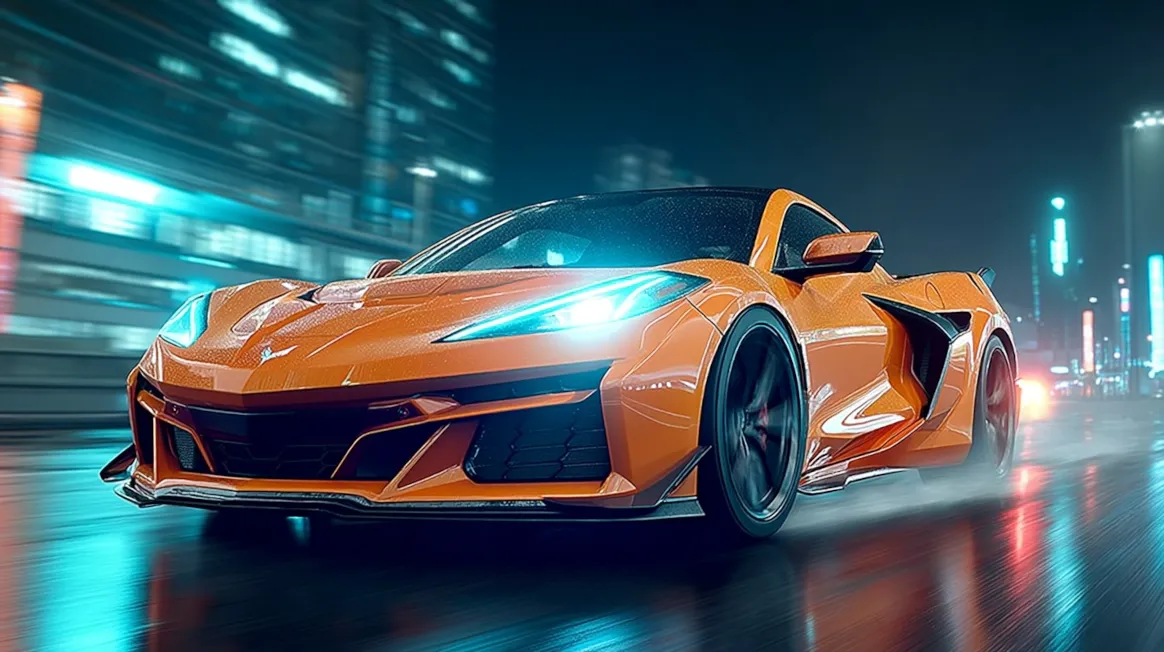
Design And Aerodynamics
Flow through hood and aero package
The front storage space gives way to an open channel that starts at the radiators and exits through the hood. That move cuts lift, feeds the underbody with calmer air, and lets the front splitters work without stalling.
The optional aero package adds taller front elements, more aggressive underbody strakes, and a rear wing with multiple settings so owners can move between road trip range and track day stick.
Chevrolet’s own numbers point to more than 1,200 pounds of downforce at speed with the high downforce package installed. That figure is not a party trick. It shows up in faster corner entry speeds and in the confidence drivers feel through high speed kinks where the car stays settled rather than skittish.
Carbon fiber elements and downforce
Carbon fiber is both structure and signal here. The aero package, the roof panel, and select trim pieces serve to cut weight up high and to keep thermal expansion in check around hot zones.
The presentation at launch emphasized function first. Carbon fiber wheels and other lightweight options have been part of the wider C8 ecosystem and fit the ZR1 brief for owners who chase lap time and steering precision.
Downforce is only useful if the chassis can carry it. That is where spring rates, damper curves, and bushing choices join the party. Chevrolet tuned the system to allow real compliance on imperfect roads so the ZR1 does not beat up its driver on the way to the circuit. The track alignment and tire choices then unlock the full aero envelope.
Wheel tire and brake options
- Staggered performance tires in road or track oriented compounds, prioritized for heat tolerance and repeatability.
- Standard carbon ceramic brakes with cooling paths optimized around wheel design and hub airflow.
- Lightweight wheels in forged and carbon fiber constructions appear in the broader C8 catalog and align with ZR1 use cases.
Interior And Driver Tech
Seats materials and sound system
The cabin stays driver centric. The 3LZ trim brings a leather wrapped instrument panel, door tops, and console, along with Napa leather seating that can be heated and ventilated for year round use.
A 14 speaker Bose Performance Series audio system matches the noise floor improvements made around the mid engine bay, so music still wins on the freeway when the turbos are off boost.
Seat support matters when aero loads climb. Chevrolet’s sport buckets balance long distance comfort with bolstering that keeps shoulders and hips anchored under braking.
The seating position and sightlines carry over the C8 strengths. It feels like a proper cockpit, not a concept car, and that familiarity shortens the learning curve.
Displays boost gauge and PDR
A factory boost gauge appears for the first time in a production Corvette, a simple but meaningful nod to the new induction strategy. The Performance Data Recorder returns as a tool for track sessions and for owners who like data as much as seat of the pants feedback. It helps drivers visualize trends like brake release timing or mid corner minimum speed, then make changes that show up in the next lap.
Instrument cluster logic shifts based on drive mode. In the most aggressive settings the tach and temperature readouts take center stage, while road modes prioritize speed limit data and navigation. The tech stack supports the driver rather than distracting with novelty.
Available Exterior Colors for the 2025 Corvette ZR1
The 2025 Corvette ZR1 is offered in 10 exterior paint options, blending new additions with established favorites. The lineup includes:
- Torch Red (GKZ)
- Sebring Orange Tintcoat (G26)
- Sea Wolf Gray Tintcoat (GXA)
- Riptide Blue Metallic (GJV)
- Red Mist Metallic Tintcoat (GPH)
- Rapid Blue (GMO)
- Hysteria Purple Metallic (GXL)
- Competition Yellow Tintcoat Metallic (GBK)
- Black (GBA)
- Arctic White (G8G)
Three colors in particular — Sebring Orange, Competition Yellow, and Hysteria Purple — represent new or returning names in the ZR1 palette and were highlighted in the launch materials.
Ordering Pricing And Availability In The US
MSRP trims and options
| Configuration | Starting price USD |
|---|---|
| ZR1 1LZ coupe | $174,995 |
| ZR1 1LZ hardtop convertible | $184,995 |
| ZR1 3LZ coupe | $185,995 |
| ZR1 3LZ hardtop convertible | $195,995 |
Carbon Fiber Aero Package. $8,495. This package adds the highly visible aerodynamic components, including the high rear wing, front dive planes, and hood spoiler. This package can be selected on its own.
ZTK Performance Package. $1,500. This package further enhances track performance by adding stiffer springs, a unique Magnetic Ride Control calibration, and high-performance Michelin Pilot Sport Cup 2 R tires.
You must purchase the Carbon Fiber Aero Package first to get the ZTK package.
These figures anchor the ZR1 as a price to performance outlier among high end sports cars. The Corvette formula has always mixed attainability with ambition. This is the most ambitious expression yet.
Production Allocation And Owner Policies
Bowling Green assembly and build status
Bowling Green remains Corvette’s home. The ZR1’s complexity required updates to station content and quality checks specific to turbo plumbing, heat shielding, and carbon aero fitment.
Media reporting in mid 2025 suggested that only a limited number of ZR1 units had been completed by early summer as supply and process scale ramped. That reality added exclusivity and caution.
Owners who have toured Bowling Green will notice the extra attention around underbody fasteners and heat wrapping for the ZR1 program. The car carries more thermal energy and needs more inspection touchpoints to match Corvette reliability expectations.
Constraints and model year transitions
By late June 2025 General Motors informed dealers that not all 2025 ZR1 orders would be built in the model year. Orders in earlier build codes were encouraged to resubmit for 2026.
The 2026 model year also brought a price increase of $7,200 compared with equivalent 2025 configurations. That update shaped buyer strategy and dealer communication.
These transitions are not unusual for first year halo programs. They do require clarity. Buyers should keep deposits documented and agree on how a model year roll will handle pricing deltas and option availability.
Owner retention rules and resale considerations
Chevrolet and GM implemented ownership retention policies intended to keep early cars in original hands for a set period. A twelve month hold before resale was widely reported for the 2025 ZR1.
That type of policy reduces immediate flipping and stabilizes early market pricing. It also changes insurance and tax planning for buyers who had expected quicker churn.
Resale considerations remain strong. Rarity in year one, combined with performance headline status, supports residuals. Long term value favors cars with factory aero, documented track service, and clear service history.
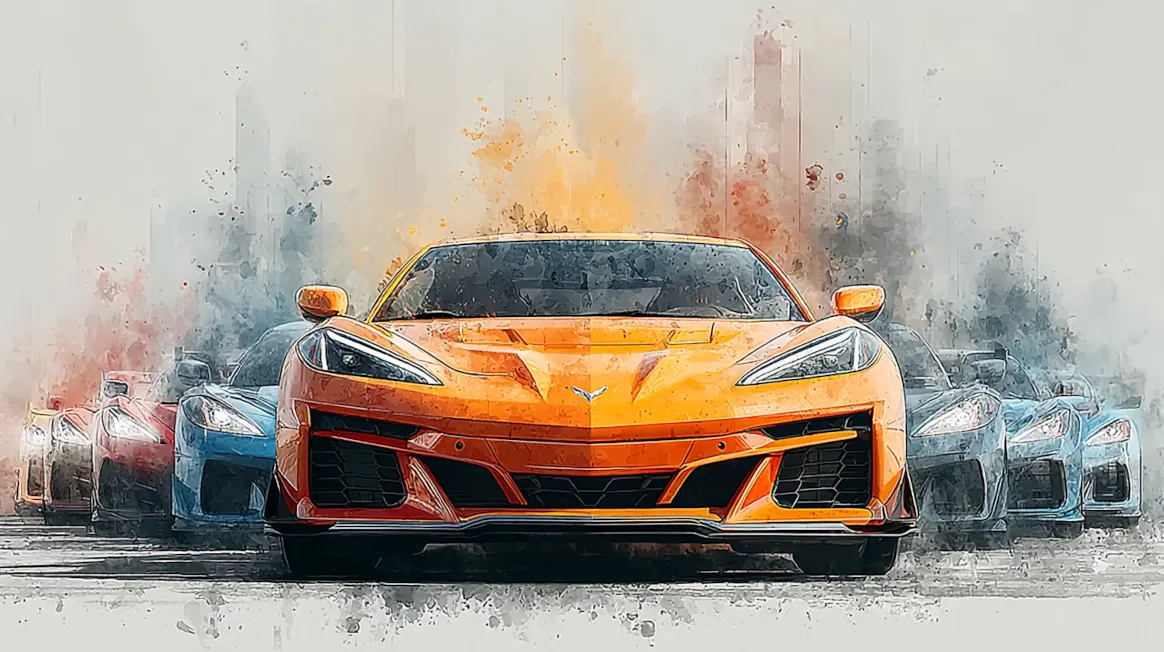
Corvette ZR1 Lineage And History
Early ZR1 origins and milestones
The ZR1 name dates to 1970 when Chevrolet created a racing oriented package for the C3. It stripped comfort features and focused on durability and performance. Very few were built across 1970 through 1972, which makes surviving cars prized among collectors.
That original intent still echoes today. Build the most focused Corvette of its time.
Fast forward to the 1990s and the LT5 powered C4 ZR1 returned with a 5.7 liter DOHC V8 co developed with Lotus and assembled by Mercury Marine. Output grew from 375 to 405 horsepower as the program matured. It redefined Corvette as a global performance conversation starter and proved that an American badge could carry real engineering gravitas.
C4 C6 and C7 ZR1 highlights
- C4 ZR1. 1990 through 1995. LT5 DOHC V8. Six speed manual. The arrival of a modern high rev Corvette and a new ceiling for the badge.
- C6 ZR1. 2009 through 2013. Supercharged LS9 V8 with 638 horsepower. Carbon ceramics and carbon body panels. Two hundred five miles per hour and a Nürburgring time that moved the goalposts.
- C7 ZR1. 2019 model year. Upgraded LT5 supercharged V8 with 755 horsepower and 715 pound feet. Two hundred twelve miles per hour with the low wing aero. A final front engine thunderclap.
Each generation carried a distinct flavor. The C4 proved sophistication. The C6 went loud with boost and carbon. The C7 closed the front engine era with violence and composure in equal measure.
How the C8 ZR1 changes the formula
The C8 moved the engine behind the seats and rebuilt the Corvette’s dynamics from the ground up. The Z06 showed what a naturally aspirated screamer could do with a flat plane crank. The ZR1 builds on that hardware and adds boost. It is the first factory twin turbo Corvette.
The numbers tell one story and the drivability brief tells the rest. Stability, repeatability, and a broad torque curve that does not punish the driver.
Heritage still matters. The return of the split spine look, the functional vents, and the choice of high downforce or v max oriented aero make this car feel like a natural extension of the badge rather than a clean sheet outlier. That is how icons evolve without losing their center.
Competitive Comparisons And Benchmarks
ZR1 vs Z06 and E Ray
| Model | Engine and layout | Output | 0 to 60 mph |
|---|---|---|---|
| ZR1 | 5.5 liter twin turbo V8. Mid engine. RWD | 1,064 hp and 828 lb ft | About 2.3 seconds |
| Z06 | 5.5 liter naturally aspirated V8. Mid engine. RWD | 670 hp and 460 lb ft | About 2.6 seconds |
| E Ray | 6.2 liter V8 with front axle electrification. Mid engine. AWD | 655 hp and 125 lb ft | About 2.5 seconds |
The gap is clear. The ZR1 becomes the halo for straight line speed and for top end circuit work. The Z06 remains the naturally aspirated purist’s choice, a car that sings to nine tenths. The E Ray plays year round supercar with all wheel drive and hybrid calm.
ZR1 vs Porsche Ferrari and McLaren
- Porsche 911 GT3 RS. About 518 horsepower and 184 miles per hour. Track focus and aero wizardry. Price well beyond two hundred thousand dollars.
- McLaren 765LT. About 755 horsepower and 205 miles per hour. A carbon rich, limited chassis benchmark.
- Ferrari SF90 XX. About 1,016 combined horsepower and 199 miles per hour. Hybrid speed with special series rarity.
The Corvette’s case rests on value density. The ZR1 starts in the mid one hundred seventy thousands in the United States and brings headline speed beyond European rivals that cost far more.
Some buyers will still prefer hand stitched drama and low volume scarcity. Others will see the numbers, the warranty, and the dealer network and call it an easy decision.
Legacy icons such as F40 and GT3 RS
Context helps. The Ferrari F40 defined an era with raw response, minimal aids, and a look that still stops traffic. The modern 911 GT3 RS shows what aero and incremental gains can do when measured in downforce and precision. The ZR1 speaks a different dialect. Everyday durability with outrageous speed, and a price tag that reopens the conversation about what a supercar can be for people who actually drive them.
Market Impact And Segment Outlook
Position in the US sports car market
As of 2025 the American sports car market is fragmented by propulsion, price, and purpose. Muscle coupes wrestle with shrinking volumes. Premium European sports cars face tariff pressure. Hybrids and EVs find buyers who want fast without the fuel.
The ZR1 does not try to be all things. It doubles down on internal combustion theater and measurable performance per dollar. That clarity helps it cut through the noise.
Sales leadership is not the goal for a ZR1. Halo effect is. The car casts a long shadow across the Corvette lineup, driving attention to Stingray and Z06 while lifting showroom traffic for Chevrolet dealers in general.
Cultural Impact And Media Reception
Media reviews and Top Gear discussions
Early reactions from the performance press have leaned toward awe wrapped in curiosity. The awe is for the numbers and the way the car appears to deliver them without drama. The curiosity is for how the package will feel on bumpy circuits and ordinary roads.
Legacy outlets highlighted the lineage and the technical leaps, framing the ZR1 as the high point of the mid engine program so far.
Conversations that used to take place in print now play out on social feeds and long form videos. The ZR1 looks ready for that stage. You can almost hear the audio check in your head. Cold start bark, a rising turbine chorus, then the deep bark as the tach climbs. It is the kind of media bait that turns casual browsers into late night spec readers.
Fanboy debates and owner perspectives
Any halo Corvette stirs predictable debates:
- Corvette versus the world
- Numbers versus nuance
- Track times versus tactile feel
Owners tend to cut through the noise. On a cool Saturday morning at a cars and coffee meet, the crowd notes what they always note. Presence. Sound. Details in the weave of the carbon. A practical note comes next. Ground clearance in the lot. Ride quality over a broken curb. The ZR1 seems wired to score well on both lists.
A small micro anecdote illustrates it. A Z06 owner slips into the ZR1 display car at a dealership event. The seat is familiar. The sightlines feel right. The difference arrives with a press of the start button. The idle has a more urgent edge. The throttle picks up a hair quicker. The owner nods and smiles. “Numbers are only half the story.” True enough.
Generational appeal among adults and teenagers
Posters and phone wallpapers used to crown heroes. The ZR1 checks both boxes. Adults see a car that is finally a match for the posters from the past, but with a warranty and a dealer thirty minutes away. Teenagers see content gold. Flame blue exhaust on overrun in the dark.
Aero that looks like it could slice through a parking garage column. This is how a badge stays relevant across time. Similar to the Corvette CX Concept.
Conclusion
The 2025 Corvette ZR1 is more than a spec sheet. It’s a statement — a final, thunderous expression of what the internal combustion Corvette can be before electrification rewrites the formula. It captures six decades of refinement, race-bred instincts, and engineering grit, distilled into a twin-turbo package that looks forward without forgetting what made it iconic. For many, this car marks the peak of an era; for others, it’s a promise that the Corvette spirit isn’t fading anytime soon.

About World Parts Direct
World Parts Direct is your go-to source for genuine OEM parts for GM and MOPAR vehicles. We make it easy to order factory-original parts online — shipped fast, accurately, and backed by real human support.
Every item we sell comes brand new in the manufacturer’s original packaging. Whether you’re handling routine maintenance, collision repair, or a full restoration, our parts professionals provide VIN-verified fitment support to ensure you get exactly what you need.
Serving drivers and repair shops worldwide, we proudly support brands like Chevrolet, GMC, Cadillac, Buick, Dodge, Chrysler, Jeep, and Ram. Shop confidently at WorldPartsDirect.com.