
Chevrolet Corvette CX Concept — The Future of American Performance
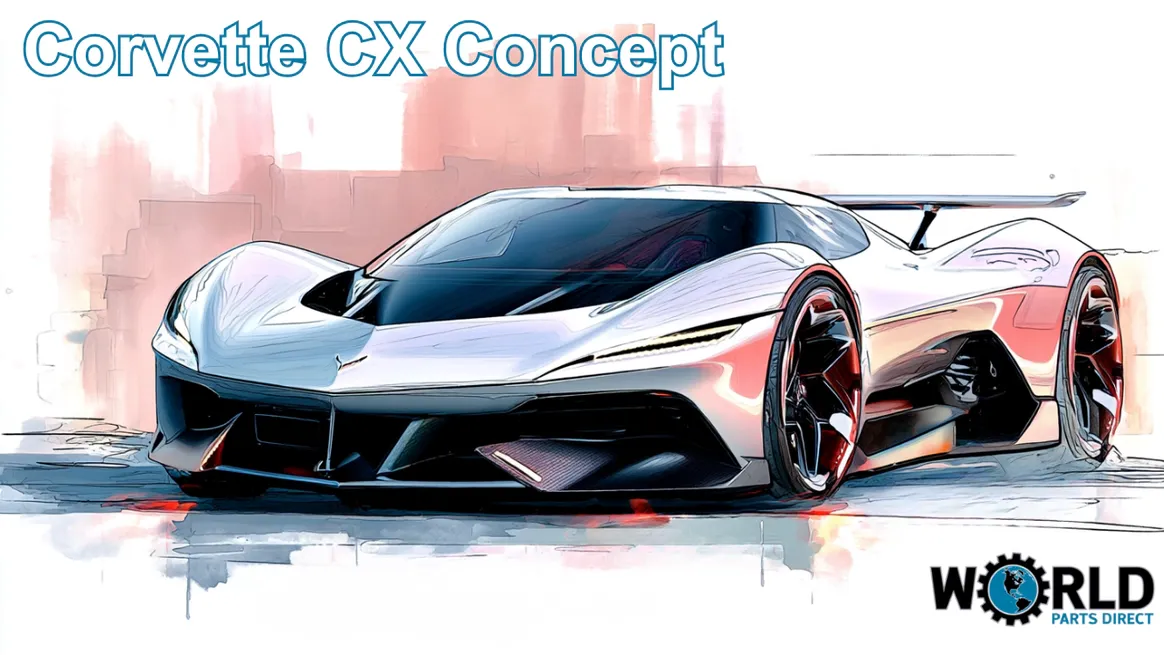
Chevrolet Corvette CX Concept
TL;DR: The Chevrolet Corvette CX Concept reimagines the iconic sports car with a bold design and innovative technology, blending performance with futuristic style. It showcases Chevrolet’s vision for the next generation of Corvettes, focusing on aerodynamics, lightweight materials, and cutting-edge features.
This concept pushes the boundaries of what a Corvette can be, offering a glimpse into the future of American muscle and engineering excellence.
The Chevrolet Corvette CX Concept is a real, drivable design study shown in 2025 that previews an electrified Corvette future. It uses four electric motors with more than 2,000 horsepower, fan-based active downforce, and a fighter-jet-style lift-off roof.
It is not intended for production, but it informs future Corvette design language and technology.
Overview and origin of the Chevrolet Corvette CX Concept
What the CX Concept is and why it matters
The Chevrolet Corvette CX Concept is a high-visibility design and engineering study that imagines an all-electric hypercar wearing one of America’s most recognizable nameplates.
It was created to signal where Corvette design and packaging could go next, rather than announce an immediate production model. The intent is clear. Test bold ideas, show the public the vision, and pull the best thinking into future Corvettes.
Two companion models were revealed together. The road-oriented CX, an all-electric halo with four motors and a 90 kWh battery, and the CX.R Vision Gran Turismo track variant, a hybrid pairing a screaming V8 with three electric motors and an eight-speed automatic. Both share an obsession with fan-generated downforce and rapidly adjustable aero elements. Both also make more than 2,000 horsepower, a symbolic line in the sand for performance aspirations.
Why it matters comes down to three threads. First, it embraces electrification without abandoning Corvette character. Second, it experiments with aero systems that could shape how future high-performance models maintain balance across real-world roads. Third, it shows designers and engineers working in parallel with virtual platforms so fans can “drive” the concept quickly and provide feedback.
That public loop, from show stand to game controller, is clever and unusually fast.
Reveal timeline, rumors, and ’25/2025 outlook
The Corvette CX and CX.R concepts appeared during Monterey Car Week in August 2025, with showings tied to The Quail Motorsports Gathering and media previews. Chevrolet stated they were not intended for production, though the pair would inform design language going forward.
Both concepts were announced for Gran Turismo 7 the same month, which meant anyone with a console had a way to sample the direction almost immediately.
As of late 2025, the corporate messaging stayed consistent. These are inspiration tools. They demonstrate an approach to proportion, aero management, and electrified power that could shape the ninth-generation Corvette timing later in the decade.
Design language and aerodynamics
Exterior proportions, aero, and signature cues
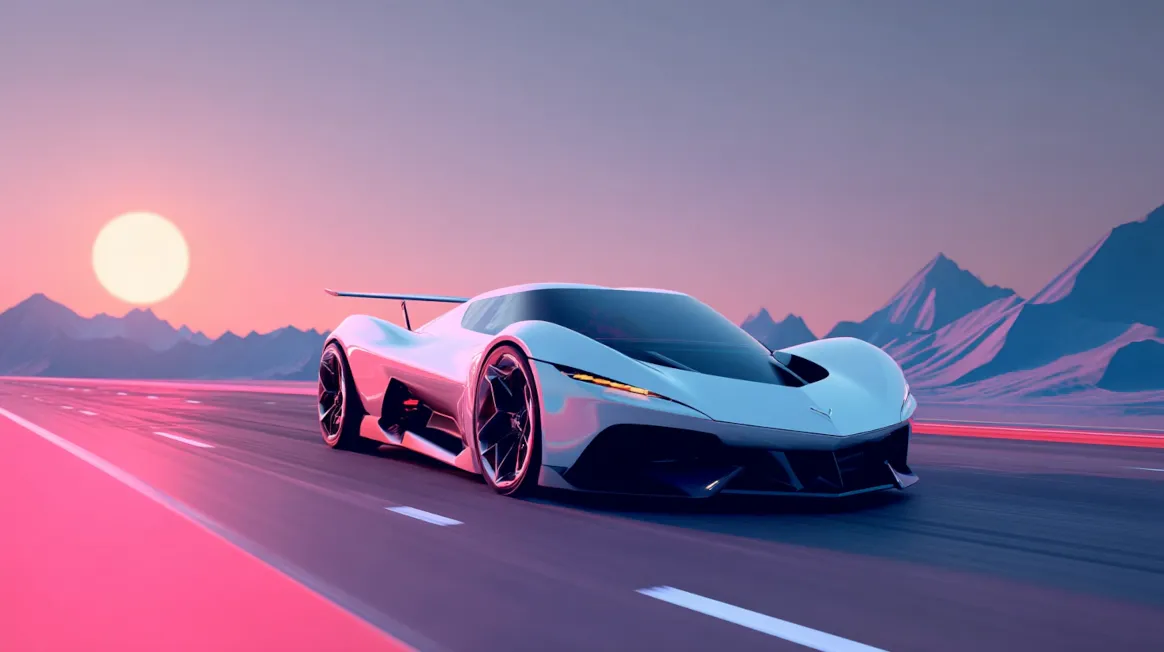
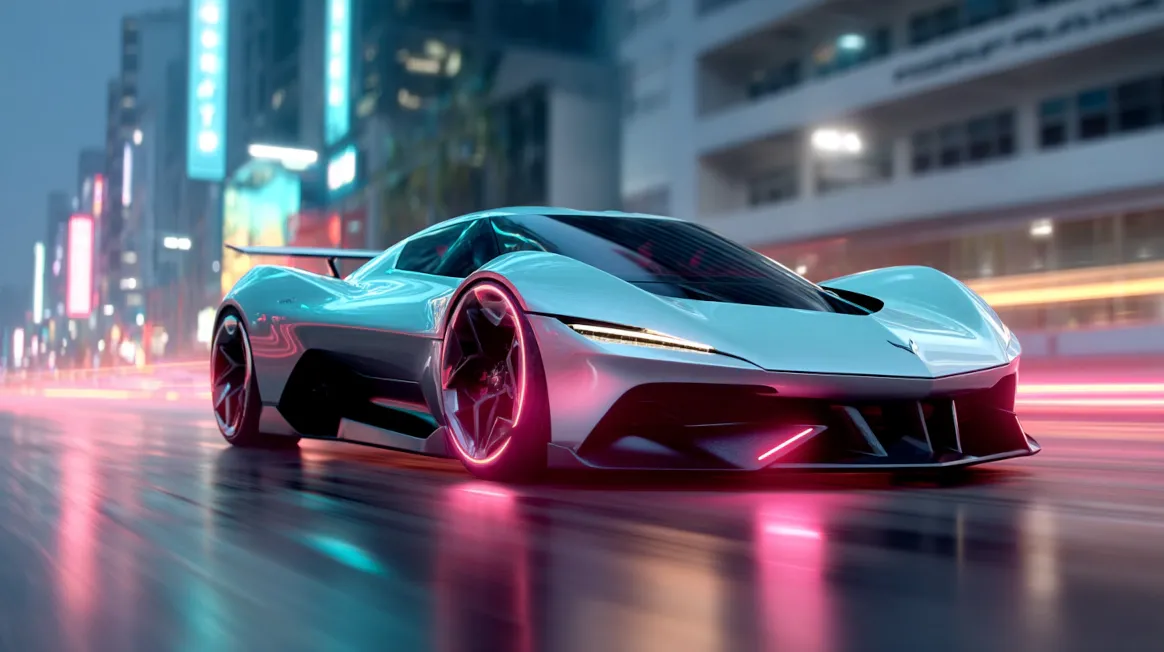
The CX presents a familiar Corvette stance layered over new surfacing. The proportions feel mid-engine, with a cockpit tucked low between muscular haunches and a forward-lunging nose that signals intent.
Designers preserved hallmarks like quad taillights and peaked fenders while evolving the beltline crease and coke-bottle shape into cleaner volumes that read futuristic without losing brand DNA.
Now, here’s where it gets interesting. Air is a design material on the CX. Open-channel bodywork routes flow toward integrated fans that draw air through the car to generate vacuum downforce. Active elements at the front and rear adapt to driver inputs. The rear diffuser and wing do not sit as static ornaments. They are part of an orchestration meant to maintain balance and maximize grip in real time. Think aero as an active chassis rather than a fixed adornment.
A small micro-moment on the stand made that point. As the clamshell roof opened, you saw deep channels and structural framing that look engineered to keep surfaces rigid while flow does the work. Light fell across edges with a kind of metallic shimmer. People leaned in.
You could almost hear them thinking about how those channels pull air where fans want it, then how thrust vectoring might trim balance at speed.
Interior layout, materials, and user experience
Open the front-hinged top section and you enter a cockpit that feels jet-inspired without turning theatrical. The interior was shown in an Inferno Red theme with tight, supportive seating. Controls live on a yoke-like steering device that houses a display and physical knobs. This is a telling detail. Even as screens spread, tactile controls remain where hands rest, which keeps high-speed, high-load operation simple and intuitive.
The interface reads driver-first. That yoke consolidates primary functions, reducing reach and distraction. Visibility is low, the roofline slopes gracefully, and cabin materials emphasize lightness over luxury. It’s not a lounge. It’s a lightweight control cell framed into an athletic body.
Designers went for clear ergonomic logic rather than glossy excess. People often appreciate when tech doesn’t ask for extra attention. The CX follows that logic inside.
Chevrolet Corvette CX Concept specs and performance
Powertrain architecture, hybrid or EV possibilities
The road-oriented CX is presented as a pure EV. Four electric motors, one at each wheel, delivering more than 2,000 horsepower. A 90 kWh battery pack supports that output, positioned to keep mass centralized and low.
The layout signals how torque vectoring could become a defining trait of future Corvettes. With independent control at each corner, engineers can shape response with remarkable granularity.
The CX.R Vision Gran Turismo concept takes a different path. It pairs a high-revving V8 that reportedly spins to 15,000 rpm with three electric motors. Each front wheel has its own motor. A third motor integrates into an eight-speed automatic to assist the engine at the rear, with system output again pegged around 2,000 horsepower.
The CX.R not only explores hybridization, it showcases a motorsport-leaning architecture meant for sustained track work.
These two forks reflect the broader possibilities. The “Chevrolet Corvette Concept CX” shows what a full EV could be. The “CX Corvette Concept by Chevrolet” demonstrates how a complex hybrid might fuse combustion drama with instant electric shove.
Fans get to see both, then ask themselves which path feels more like Corvette to them. That reaction matters to designers who will preserve the soul while changing the toolkit.
Acceleration metrics and handling dynamics
Official acceleration figures weren’t published with the reveal. That said, the math suggests ferocious launches. With more than 2,000 horsepower in a package targeting around 1,400 kg in-game, sub-two-second 0 to 60 mph times are plausible depending on tire compound and surface. Multi-motor torque vectoring would add precision off the line and out of corners, trimming wheelspin and keeping the car settled while the aero fans do their work.
Handling dynamics read as part mechanical grip, part aerodynamic balance, part software orchestration. The fan-based downforce should keep load consistent across speed ranges, avoiding the on-off feel some cars exhibit as wings wake up at higher speeds.
That steadiness matters on imperfect public roads. It also matters at the edge on track, where drivers want the car to send clear signals rather than surprise them. Early virtual driving in Gran Turismo 7 gives a taste of that blend, even if game physics differ from reality.
In simple terms, the CX aims to feel planted and adjustable. The chassis would likely be tuned to exploit the aero while allowing drivers to steer with the throttle, knowing the system delivers grip where needed. The hybrid CX.R leans toward endurance balance and repeatable lap performance. The EV CX leans toward instant response and road readiness with the same aero logic at play.
Chevrolet Corvette CX Concept top speed: early estimates
Gran Turismo 7 lists a 391 km/h, or 243 mph, top speed for the Corvette CX Concept in-game, paired with a 2,176 PS output and a 1,400 kg curb weight. That figure is a helpful directional marker, though it is presented within a simulation and not a validated real-world test. Any real prototype’s top speed would depend on battery output sustainability, aero trim, and tire specification.
As a working estimate, 240-plus mph aligns with the power and aero described. The fan downforce system would need careful tuning at those speeds to avoid excess drag. The concept’s adjustable rear wing and diffuser could trim load for v-max runs, then reintroduce downforce for braking zones. That flexibility is exactly why this aero approach is compelling for future high-speed Corvettes.
Technology platform and engineering innovations
Chassis, suspension, and weight distribution
The CX’s proportions point to a mid-structure battery layout and compact motor modules positioned near the wheel centers. The in-game specification lists a 45 percent front, 55 percent rear balance, which fits a mid-focused EV with a low-slung cabin and deep rear haunches. That rear bias helps traction under acceleration while allowing the front axle to remain communicative in quick direction changes.
Suspension tuning details were not published at reveal. Even so, the packaging makes a few assumptions reasonable. Expect multi-link geometry tuned around the aero fans’ load curves, with electronically controlled dampers mapping to torque vectoring strategies so the car stays flat when power shifts corner to corner.
Think of the platform as an interplay of four systems. Mechanical grip. Electric torque distribution. Fan downforce. Active aero trim. All four talk to each other as speed and inputs change.
That integrated mindset is key. Many performance cars add pieces. The CX shows a platform built so those pieces are native and synchronized.
You feel it when the car takes a set into a fast sweeper and stays calm as downforce and torque vectoring hold your line. You hear it when the fans spool, a low mechanical hum under the electric whir, reminding you the car is shaping air in real time.
Software, infotainment, and driver assistance
Chevrolet emphasized the steering yoke’s integrated display and physical knobs. That suggests a software philosophy that puts essential information close to the hands, while leaving secondary controls lower in priority.
Any driver assistance narrative remains unannounced. It would be sensible to expect performance-focused stability systems tuned for the fan downforce and torque vectoring, with track modes that relax intervention as tires and aero warm up. Detailed ADAS suites were not disclosed and would need confirmation if a prototype is shown again.
On infotainment, the CX appears to treat the display as instrument cluster and command center more than entertainment hub. This is a sports car cockpit logic. Keep eyes up, hands on, and inputs intentional. Even as software becomes the spine of modern vehicles, there is a quieter trend toward simplifying the driver’s ergonomic world under load. The CX aligns with that trend.
Price, release date, and availability
Chevrolet Corvette CX Concept price: projections and factors
There is no official “chevrolet corvette cx concept price.” Chevrolet described both the CX and CX.R as design studies, not intended for production. If a future model takes cues from the CX, pricing would hinge on whether it lands as an EV flagship or a hybrid track special, plus battery chemistry, motor count, and aero system complexity.
A production car with four motors, a 90 kWh pack, and a fan downforce system would sit well into six-figure territory. Precise figures need confirmation if a production program is ever announced.
For those searching “chevrolet corvette cx concept for sale,” availability is virtual rather than physical. The concept is drivable in Gran Turismo 7, which is the intended outlet for enthusiast access at this stage.
Position in the Corvette lineup and target buyers
How it compares to Stingray, Z06, E-Ray, and ZR1
The CX sits outside the traditional lineup as a vision, but it maps nicely against the current Corvette landscape. Compared to Stingray and Z06, which center on mid-engine V8 power and track-hardened dynamics, the CX reframes capability through electrification and fan downforce.
The E-Ray already introduced hybrid all-wheel drive thinking to Corvette, and the CX pushes that electrified logic to its limit with a full EV configuration and vectorable torque at all four corners.
Against any future ZR1, often considered the apex of production Corvette performance, the CX concept shows where an apex might go next. There’s a philosophical shift embedded here. Less displacement, more motors. Less fixed aero, more managed airflow.
Fans will argue, and that’s healthy. The CX presents an option set rather than a verdict. It says Corvette can keep its personality while changing its toolset, which opens the door for those who want cutting-edge performance with familiar soul.
Use cases: track focus vs grand touring
The hybrid CX.R reads as a track-dominant concept, with systems designed to run hard and long. The electric CX makes more sense as a grand touring hypercar with track chops. Quiet cruising in urban spaces, massive thrust for highway merges, and enough aero and software to make a weekend at your local circuit feel dialed rather than chaotic.
The balance is the trick. A “CX Concept Chevrolet Corvette” would need efficient thermal management and a charging strategy that respects real-world travel patterns if it ever moved beyond concept status.
For everyday enthusiasts, the appeal is clarity. You see where Corvette might land once electrification becomes the norm. You also see that track focus doesn’t mean sacrificing usability if software and aero share the work to keep the car relaxed when it’s not chasing lap times.
CX R Vision Gran Turismo concept connection
Design and aero links to the Chevrolet Corvette CX R Vision Gran Turismo Concept
The CX.R Vision Gran Turismo rides alongside the CX as the racing-leaning interpretation. The connection is tight. Shared open-channel bodywork. Fan-derived downforce that actively manages pressure on the diffuser. Adjustable aero elements that respond to driver inputs to keep balance consistent.
The difference is powertrain character. The CX.R’s high-revving V8 and triple-motor hybrid layout deliver the kind of sound and endurance pacing people expect from a race program, while the CX stays all-electric with torque on tap at each wheel.
The CX.R also signals how Corvette Racing thinks about the next phase of competition. Electricity isn’t just a supplement. It’s a core element in how the car makes speed lap after lap. That narrative is shared by major endurance programs across the globe. The CX.R nods to that world while keeping unmistakable Corvette cues coherent on a race-ready silhouette.
Lessons from virtual development to real-world testing
Making both cars available in Gran Turismo 7 quickly was not a throwaway gesture. It accelerates the feedback cycle.
Drivers everywhere get an early sense of balance, response, and visual cueing. Even acknowledging the gap between game physics and asphalt, this kind of virtual rollout helps calibrate perception, discover what people love, and identify what needs refinement before any demo mules are built. It also keeps the Corvette brand talking to a younger audience that sees cars first on screens, then on streets.
Long term, the virtual-to-real pathway will likely shape how software maps power delivery and aero logic. If thousands of players respond positively to stability cues at certain speeds or prefer steering weight curves that rise with aero load, those signals could inform the calibration philosophy. It’s crowdsourced taste refined by engineering discipline.
Corvette concept cars lineage and naming variations
Where the CX Concept fits among Corvette concept cars
Over the past decade, Corvette has used concept cars as public thinking spaces. Show what could be. Then keep the pieces that resonate.
The CX fits in as the electrified, aero-managed chapter of that lineage, bridging the mid-engine production era to an electrified horizon. It speaks to fan memory by echoing classic proportions while arguing for a very different toolbox behind the scenes.
Past Corvette concepts have explored structural ideas, race-inspired surfacing, and interior ergonomics. The CX loads that heritage into a design that asks people to consider how performance will feel when torque vectoring and vacuum downforce shape grip more than displacement. In that sense, the CX earns its place as a north star rather than a museum piece.
Media naming variants explained: Chevy Corvette CX Concept and more
Media coverage often shuffles phrasing, so you’ll see “Chevy Corvette CX Concept,” and “CX Corvette Concept by Chevrolet.” All reference the same road-oriented EV concept revealed in 2025. The “CX.R Vision Gran Turismo” label refers to the track-oriented hybrid revealed alongside it. If you see “VGT,” that tag flags the virtual racing tie-in rather than a separate production intent.
Options outlook
Trims, options, and special editions
Because it’s a concept, there are no trims or options in the retail sense. If the design language evolves into a production EV or hybrid, a logical structure would mirror Corvette tradition. A base model with accessible performance. A track-enhanced variant with aero and tire upgrades. A halo that leans into motorsport-grade braking, suspension, and thermal management.
All of that is speculative and needs confirmation if a production program emerges. For now, “chevrolet corvette cx concept cars” means the show builds and their virtual avatars.
FAQs about the Chevrolet Corvette CX Concept
Is the Corvette CX concept real?
Yes. The Corvette CX is a physical concept shown publicly during Monterey Car Week in 2025. It is drivable in Gran Turismo 7 and was presented by Chevrolet as a design and technology study, not a production-intent model.
Is the Chevy Corvette SUV real?
As of 2025, Chevrolet had not announced a production Corvette SUV for sale. Reports and rumors have circulated about broader Corvette-branded products, but nothing official was confirmed for the U.S. market.
What is the holy grail of Corvettes?
Enthusiasts often call rare models the “holy grail,” including storied builds like the 1967 L88, early competition cars, and limited-run high-output variants. The term is subjective and shaped by rarity, racing pedigree, and historical significance.
How much will the 2026 Corvette cost?
Pricing varies by trim and powertrain. As of 2025, Chevrolet had not set pricing related to a CX-derived model, and there was no announced 2026 CX variant for sale.
Conclusion
The Chevrolet Corvette CX Concept redefines what a modern sports car can be, blending cutting-edge technology with bold design. It offers a glimpse into the future of performance and innovation, promising an exciting driving experience.
As Chevrolet continues to push boundaries, the CX Concept stands as a testament to their commitment to evolving the Corvette legacy. Fans and enthusiasts alike have much to look forward to as this concept moves closer to reality.
Key takeaways
- The Chevrolet Corvette CX Concept is a real 2025 design study that previews an electrified Corvette future, not a production model.
- Four motors, more than 2,000 horsepower, and a 90 kWh battery define the CX’s EV layout. The CX.R uses a high-rev V8 plus three motors and an eight-speed automatic.
- Fan-based downforce and active aero balance grip at all speeds, a technology focus shared by both concepts.
- Top speed in Gran Turismo 7 is listed at 243 mph, offering an early estimate within a simulation rather than a real-world test.
- Expect CX-inspired cues to influence the next-generation Corvette design language from 2027 onward, while enthusiasts can “drive” the concepts in GT7 today.

About World Parts Direct
World Parts Direct is your go-to source for genuine OEM parts for GM and MOPAR vehicles. We make it easy to order factory-original parts online — shipped fast, accurately, and backed by real human support.
Every item we sell comes brand new in the manufacturer’s original packaging. Whether you’re handling routine maintenance, collision repair, or a full restoration, our parts professionals provide VIN-verified fitment support to ensure you get exactly what you need.
Serving drivers and repair shops worldwide, we proudly support brands like Chevrolet, GMC, Cadillac, Buick, Dodge, Chrysler, Jeep, and Ram. Shop confidently at WorldPartsDirect.com.