
The Complete Breakdown of GM and Mopar Special Edition Muscle Cars
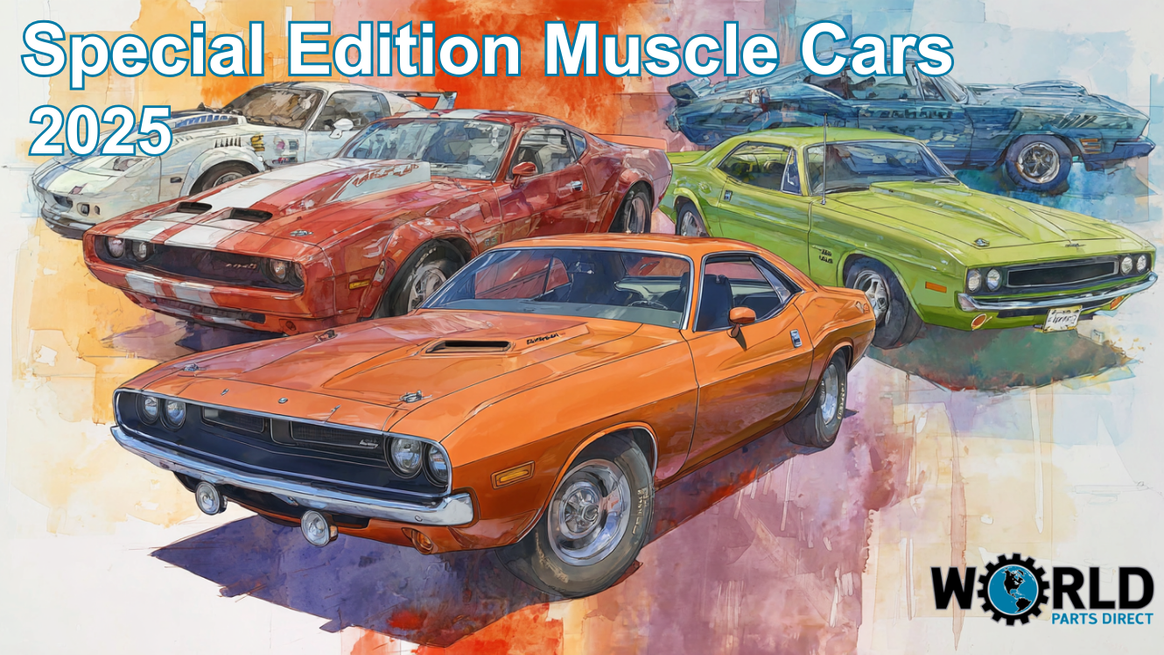
Breakdown: Rarity, Racing, and Legacy
Special edition muscle cars are the limited-production riffs on familiar nameplates that brands use to celebrate performance, test ideas, or mark cultural moments. They stand apart through scarcity, signature design cues, and upgraded hardware. In short: these are the halo builds that turn a great car into lore; and they’re central to how GM and Mopar built their legends.
Collectors chase them because they blend factory pedigree with stories that outlive the spec sheet.
What Are Special Edition Muscle Cars
Start with a baseline. A muscle car is a relatively affordable, high-horsepower American coupe or sedan built to go hard in a straight line and look wicked parked under fluorescent lights. A special edition takes that formula and adds scarcity with purpose.
That scarcity might serve homologation for racing, a brand anniversary, a dealer collaboration, or simply a send-off for an era. The result is a blend of provenance and performance that moves markets and moves people.
- Unique powertrains or factory tunes, often pulled from racing programs.
- Short production runs, sometimes double-digit or even single-digit numbers.
- Exclusive paint, graphics, and trim that telegraph “this one’s different.”
- Documentation trails. Build sheets, window stickers, COPO orders, and broadcast sheets become part of the story.
GM and Mopar perfected this playbook. From Chevrolet’s COPO (central Office Production Order) network to Mopar’s package cars and modern Last Call specials, these editions created moments. And those moments drove value. Even as the broader collector market cooled into 2025, top-shelf limited Mopar and GM icons continued to command attention and premium prices because the stories are as strong as the specs.
History And Evolution Of GM And Mopar Limited Editions
Golden era in the US and key milestones
The late 1960s and early 1970s brought an arms race. Insurance tables and emissions were tightening, but for a few glorious years, Detroit stuffed the biggest motors into mid-size bodies and backed them with race programs.
Milestones came fast. Plymouth’s winged cars were born for NASCAR speed traps, while Chevrolet’s COPO channeled backdoor factory power to drag strips. Rarity wasn’t always the goal at first. Homologation was. But limited numbers followed naturally when the public options had to mirror the race hardware.
- Consider a few touchstones. Chevrolet built only 69 1969 Camaro ZL1s with an all-aluminum 427, cars that existed because a dealer used the Central Office Production Order to spec parts meant for Can-Am and NHRA grids.
- Dodge created the 1969 Charger Daytona with an outrageous nose cone and sky-high rear wing, a shape drawn by wind tunnels and the rules of NASCAR, capped at 503 units.
- Mopar’s Hemi E-bodies and AAR ‘Cuda leveraged Trans-Am and drag racing credibility and cemented the Hemi mystique.
From old muscle cars to modern revivals
Fast-forward to today. As emissions and safety shaped new limits, brands learned to celebrate heritage. Dodge’s “Last Call” series became rolling tributes, with names pulled from street lore and a clear message. One final chorus for the V8, built in collectible volumes. GM did similar things with the 2024 Camaro Collector’s Edition, a run that closed the book on a storied name with exclusive finishes and numbered ZL1 allocations for North America.
The philosophy is familiar. Limited runs and clear storytelling create future provenance.
Powertrains evolved, too. Hybrids and electrified systems are stepping into performance roles, with manufacturers exploring ways to keep the visceral feel while meeting rules.
The narrative has shifted from cubic inches to systems engineering, yet the special edition blueprint remains the same. Short runs. Big identity. Immediate community buzz.
How GM and Mopar shaped American muscle cars
- GM brought scale and internal variety.
- Chevrolet pushed drag-ready specials.
- Pontiac built theater into performance with Judge stripes and Ram Air bravado.
- Oldsmobile and Buick added torque-rich luxury that aged well in the collector world.
- Mopar brought edge and aerodynamics.
- The Hemi didn’t just make power; it made a statement.
The winged cars didn’t just win at Daytona; they rewrote the silhouette of a street car. Each brand taught the market that muscle could be many things, but a special edition should be unforgettable.
Mopar Exclusives And Rarity Highlights
Dodge Charger Daytona and Plymouth Superbird
The aero cars are the poster children for purpose-built rarity. The 1969 Dodge Charger Daytona and its cousin, the 1970 Plymouth Superbird, existed to win on Sunday and sell the minimum on Monday.
The Daytona’s pointed nose, tall wing, and Hemi power turned outrageous into functional. It was the first NASCAR car to break 200 mph, and street examples were built in the low hundreds, with 503 Daytonas produced overall and Hemi cars prized far above the rest.
The Superbird followed with a sleeker nose and similar wing, produced in roughly 1,920 units for the road. At the time, some buyers balked. Today, the aero look is currency. Auction numbers reflect that confidence, with verified sales cresting into the high six figures for top specifications.
Plymouth Hemi Cuda and AAR Cuda
The Hemi ‘Cuda sits in rarefied air. The combination of the 426 Hemi, shaker hood, and high-impact colors created a factory hot rod that felt barely domesticated. Production numbers for Hemi E-bodies were low to begin with, and convertibles were microscopic. By 1971, Hemi ‘Cuda convertibles were built in double digits.
That scarcity, combined with a legend built on street and strip, pushed values into the multi-million range for the right car through 2025. The AAR ‘Cuda adds a different flavor. Developed with All American Racers for Trans-Am, AAR cars used a 340 Six-Barrel with a side-exit exhaust and a unique fiberglass hood. They connected everyday buyers to a racing program with authentic parts-bin magic.
Modern Mopar tributes and Last Call editions
Mopar didn’t leave nostalgia to the auction houses. Limited modern runs like the Mopar ’10, ’11, and ’14 Challengers and Chargers kept the exclusivity flame lit with numbered builds, Mopar Blue accents, and documented kits.
More recently, Dodge launched a series of “Last Call” cars to mark the end of Hemi-powered Challenger and Charger production. Editions such as the Black Ghost told very specific stories, borrowing from Detroit street lore and wrapping them in numbered runs that sold out quickly. The effect was twofold. Fans got factory-blessed myths they could title. And the brand created future collectibles by design.
Dodge Viper: The Modern Unicorn
Few cars symbolize Mopar’s raw spirit like the Dodge Viper. Born in the early 1990s as a back-to-basics supercar, the Viper rejected comfort in favor of outrageous power and presence. Hand-built in small volumes, every generation carried the same DNA: a massive V10 up front, rear-wheel drive, and styling that looked as wild as it performed.
What makes the Viper truly rare today is its discontinuation. Production ended in 2017, closing a 25-year chapter. Unlike the Challenger or Charger, there’s no sign of a revival—regulations, safety requirements, and market shifts have made a direct successor unlikely. That finality means every Viper, from the early RT/10 roadster to the track-focused ACR, now sits in finite supply.
Special editions pushed exclusivity even further. The Viper GTS-R Commemorative Editions, ACR Extreme Aero packages, and especially the Viper GTC “1 of 1” program let buyers spec unique colors and trims.
Dodge promised no two cars would be alike, creating genuine one-offs straight from the factory. Combined with already low production numbers, those builds stand as some of the rarest modern Mopars ever.
Values reflect that scarcity. Even as broader markets cooled into 2025, well-kept Vipers—particularly limited-run ACRs and 1-of-1 customs—remain in strong demand. They represent the last uncompromising analog supercar Mopar ever built, and with no return in sight, their legend only grows.
GM Collector Gems And Limited Runs
Chevrolet Camaro ZL1 and COPO story
The COPO program is GM’s backdoor legend. It allowed dealers to order configurations outside the normal ordering system, which opened the door to dragstrip monsters that never needed a glossy brochure.
The 1969 Camaro ZL1 is the apex. Only 69 cars got the all-aluminum 427, a racing heart in a showroom body. Official horsepower ratings were conservative. Real output comfortably cleared 500 horsepower, which mattered more at the track than on a window sticker. Rarity and purpose continue to set the ZL1 apart, with seven-figure sales surfacing in 2024 for prime examples.
COPO’s spirit lives on in modern continuation programs and crate-engine builds, but the original cars carry a unique mix of corporate stealth and dealer audacity. Documentation is everything here, from Fred Gibb dealer invoices to shipping records. The paper trail is part of the performance.
Pontiac Firebird Trans Am and The Judge
Two Pontiacs illustrate how design and marketing fuse into collectible muscle. The 1969 Firebird Trans Am launched in white with blue stripes and Ram Air power. Only 697 built. The purity of the spec and the birth of a nameplate made those cars instant blue-chip pieces in Pontiac circles.
On the GTO side, The Judge added orange paint, spoiler drama, and a Hurst shifter to a well-known package. The message was playful and bold. The hardware delivered. Special editions that balance theater and thrust tend to age well, and these Pontiacs prove it.
Oldsmobile Hurst Olds and Buick GSX Stage 1
Hurst knew how to make a statement. The 1968–69 Hurst/Olds collaboration turned the 442 into a torque-forward muscle sedan with signature gold-on-white or black-on-gold liveries and the famous Dual-Gate shifter. Production stayed in the low hundreds per year, which helped create a deep collector base later.
Buick’s 1970 GSX Stage 1 shows another side of GM’s performance tree. With 455 cubes and staggering torque, it was brutally quick while wearing a suit. Only 678 GSX cars were built in 1970, primarily in Saturn Yellow or Apollo White, which makes the color palette as much a signature as the hood tach. Limited production. Big numbers. Serious intent.
Legendary Collaborations And Origin Stories
Hurst Performance partnerships
Hurst Performance became a household name not just for shifters, but for co-branded muscle cars that felt like sanctioned hot rods. Beyond the Olds tie-up, Hurst fingerprints appear on drag-ready Mopars and even experimental GM one-offs. The formula was consistent. Identify a platform with headroom. Add parts with credibility. Cap production so each car feels like an inside tip.
These collaborations blurred the line between factory and tuner while keeping warranty credibility, which matters decades later when titles and provenance are scrutinized.
Racing team homologation efforts
Homologation forced brands to sell their race hardware on the street. That created some of the most charismatic specials in history. The Daytona and Superbird are obvious. So is the AAR ‘Cuda. On the GM side, think ZL1 Camaros and L88 Corvettes that de-contented comfort to keep weight down and octane up.
The public got just enough of the race car to qualify the actual race car. Fifty years later, collectors are effectively buying eligibility slips to history’s fastest leagues.
Dealer led COPO and special orders
Plenty of icons started with one savvy dealer. Fred Gibb’s COPO ZL1 play is the template. But regional specials, paint codes, and district-only editions add texture across brands. These origin stories matter because they create granular provenance.
Rare Cars That Made It to the Racetrack
Some of the most collectible GM and Mopar specials weren’t just built for bragging rights—they were born with racing in mind. Rules often required manufacturers to sell a minimum number of street versions to qualify their hardware for competition. The result: showroom cars that doubled as track weapons.
Dodge Charger Daytona and Plymouth Superbird
Created for NASCAR homologation, these winged warriors were designed in wind tunnels, not just studios. Their massive rear wings and pointed noses looked outrageous but gave a real aerodynamic edge. The Daytona was the first NASCAR car to break 200 mph, and the Superbird quickly followed.
With only hundreds built to satisfy NASCAR rules, they remain some of the rarest and most famous Mopars to ever hit both the street and the track.
Plymouth AAR ’Cuda and Dodge Challenger T/A
For the Trans-Am series, Plymouth teamed up with Dan Gurney’s All American Racers (AAR), while Dodge fielded the Challenger T/A. Both cars carried race-bred 340 Six-Barrel V8s, side-exit exhausts, and special suspensions tuned for cornering—an unusual trait for Mopar muscle of the era.
Though only built for one model year (1970), these cars gave everyday buyers a taste of the Trans-Am grid.
Chevrolet Camaro ZL1 and COPO Specials
Chevrolet’s use of the Central Office Production Order (COPO) system allowed drag racing specials to escape the standard ordering process. The 1969 Camaro ZL1, with its all-aluminum 427, was built to qualify parts for NHRA competition.
Only 69 were made, and most ended up at the strip. Other COPO cars included 427 Chevelles and Novas, each designed with quarter-mile dominance in mind.
Corvette L88 and Trans-Am Efforts
On the GM side, the Corvette L88 blurred the line between showroom and SCCA racer. Built with a brutally under-rated 430 hp 427 big-block (real output closer to 550), it came without creature comforts like radios or heaters—proof that it was aimed squarely at the track. Similarly, Pontiac’s Firebird Trans Am began as a direct nod to the SCCA Trans-Am series, with unique styling and race-ready tuning.
Design Driven One Offs And Bespoke Builds
Prototype concepts that influenced production
Concepts and prototypes often seeded the look of later collector cars. Aero lessons learned in NASCAR test mules showed up on showroom wings and nose cones. GM’s racing-spec engines slipped into dealer-ordered street shells.
Even small touches like hood tachs, cowl induction, or functional ducts trace back to test programs. The lesson is simple. When a production special borrows real engineering from a prototype, it earns a long tail of interest.
Continuation builds and licensed recreations
Continuation cars sit in a gray zone. They’re not period-correct originals, but they can be factory-licensed recreations built to honor a one-off prototype or tiny run. In Ford and Shelby circles, that conversation is loud.
For GM and Mopar fans, continuation or licensed tribute programs still create buzz and sometimes confusion. The collector market tends to reward originals most, then well-documented continuations, and at the end, tribute builds. The key is clarity. A build sheet is worth more than a brag sheet.
Custom restorations with modern tech
Restomod culture touches special editions, too. The craft today can integrate modern brakes, electronics, and even hybrid assist into classic shells without erasing character. Owners chase drivability and reliability while preserving era-defining visuals like high-impact paint or shaker hoods.
For special editions, restraint helps. Upgrades that can be reversed protect provenance. Say it plainly. People want to drive their legends, but they also want to keep the paper trail clean for the next steward.
| Car | Approx. Production |
|---|---|
| 1969 Chevrolet Camaro ZL1 (COPO) | 69 units |
| 1969 Dodge Charger Daytona | 503 units |
| 1970 Plymouth Superbird | 1,920 units |
| 1970 Plymouth Hemi ’Cuda Convertible | 14 units (1970) / 11 units (1971) |
| 1970 Plymouth AAR ’Cuda | 2,724 units |
| 1970 Dodge Challenger T/A | 2,399 units |
| 1969 Pontiac Firebird Trans Am | 697 units |
| 1970 Buick GSX Stage 1 | 678 units |
| 1968–69 Hurst/Olds | 515 units (’68), 906 units (’69) |
| 2017 Dodge Viper ACR (Final Edition) | ~100 ACRs, ~630 total Vipers in final year |
The One Of One Philosophy And Why It Matters
What one of one really means
People toss “1-of-1” around too loosely. In the strictest sense, it means a unique build combination verified by factory production records. Paint and trim can get you there, but the market values mechanical uniqueness more.
A one-of-one created by a factory delete, a rare engine-transmission pairing, or a district-only spec is the sweet spot. Dealer add-ons alone don’t make a car 1-of-1. The factory has to back the claim.
Factory special order examples
COPO Camaros, Hurst/Olds runs, and district paint specials all produced legitimate one-of-one examples when you stack options, colors, driveline, and interiors. Mopar’s high-impact palette and broadcast sheets create similar unicorns.
The trick is proving it. Chrysler and GM both generated internal paperwork that, when saved, lets owners substantiate claims. Without the paper, “1-of-1” is just a story.
How bespoke builds affect provenance
Custom builds can be breathtaking. But provenance works like a chain. Every modification either adds a documented link or weakens the original links. Numbers-matching blocks, original body tags, and documented dealer installs hold value. Unverified swaps and missing broadcast sheets knock it down.
For special editions, the safest upgrades are reversible and accompanied by receipts. Keep the original parts. Keep the paper. Future you will thank current you.
Cultural Impact Across Street And Track
Pop culture moments and media
Car culture is a feedback loop. A movie puts a winged Plymouth on screen and suddenly teenagers recognize a silhouette drawn in a wind tunnel half a century ago. Magazine covers and YouTube features keep COPO codes and Hemi myths alive. Dodge’s Black Ghost tribute is a perfect example. A street legend becomes an official special edition, then sells out on reputation as much as horsepower.
Street legends and driver lore
Every town had that one car. The one that pulled up under sodium lights, idling high, smelling like unburned fuel and cold metal. Owners traded cams and jets like baseball cards. The best tales became brand signals. GM’s sleeper ethos. Mopar’s rowdy edge. Special editions distilled those reputations into VINs you could point to.
Car shows clubs and community
Community keeps value alive. Club registries, national meets, and judging standards form a parallel record system for special editions. You’ll see broadcast sheets laminated next to radiator supports, and old Polaroids taped to display boards.
A practical note. Owners swap tips on tire compounds, ethanol-safe fuel lines, and fire suppression kits. These are more than cars. They’re projects that bring people together across generations.
Collector Market Trends And Value Retention
Auction indicators and 2025 sentiment
True special editions still attracted strong money. Examples include seven-figure results for period-correct ZL1 Camaros and continued strength for winged Mopars and top-spec Hemi E-bodies in verified condition. The pattern is familiar. Scarcity plus story keeps value more stable when sentiment softens.
Rarity condition and documentation factors
Three variables set the floor and ceiling. Rarity defines the field. Condition sets the immediate appeal. Documentation proves it all happened the way the fender badges suggest. On paperwork. Original window stickers, broadcast sheets, COPO invoices, and dealer correspondence change bidding behavior. On the car. Correct stampings, period-correct finishes, and careful restorations keep buyers confident.
The more verifiable the story, the tighter the bid spread and the stronger the final number.
How To Spot Authentic Limited Edition Models
VIN tags build sheets and provenance
Start with identity. Match VIN tags to title and to hidden stampings where applicable. Cross-check the VIN against period-correct engine and transmission stamps. Hunt for build sheets under seats or behind panels on older Mopars.
For GM COPO or low-run specials, seek original invoices and shipping records. If a seller claims “1-of-1,” ask to see the factory documentation that makes that more than a tagline.
- Verify numbers-matching engine and transmission stampings when the model is known to matter.
- Confirm special-order paint codes and interior trims against factory charts.
- Photograph and archive every document. Create a digital binder for redundancy.
Original parts finishes and colors
Authenticity lives in details. GM and Mopar used specific finishes, plating, and fastener types. Hood tachs, shaker assemblies, and aero parts have telltale casting marks. High-impact colors should match known codes and hues.
A modern repaint can be acceptable if the prep and color matching are correct and documented. Original sheet metal with repairable patina often beats a shiny reshell with vague history.
Common red flags and misrepresentation
Watch for restamped blocks without documentation. Beware tribute cars represented as factory specials, especially when rare engines or colors are involved. Check that options claimed to be factory were available on that build month and plant.
If a car’s story leans on lore rather than paper, price it like a well-done clone, not a factory legend. Trust but verify. Then verify again.
Future Outlook For GM And Mopar Special Editions
Electrification hybrids and performance
Performance isn’t married to displacement. As of 2025, manufacturers are testing hybrid assistance and full electrification as force multipliers for traditional muscle. Instant torque pairs well with rear-drive platforms, and tuners are already imagining electrified crate solutions.
The soul of a special edition is story plus scarcity. Power delivery will change. The blueprint won’t.
Limited runs and brand collaborations ahead
Expect more tightly curated, numbered packages tied to anniversaries, race wins, and cultural moments. Collaboration will broaden beyond classic performance brands into media, gaming, and lifestyle partners.
The lesson from Last Call and factory heritage runs is clear. When the narrative is specific and the volume is truly limited, the community responds.
Generational shifts in collector interest
There’s a changing of the guard. Younger buyers bring different nostalgia. Interest pulls forward into 1980s and 1990s performance, turbos, and analog electronics. That doesn’t dim the golden-era icons. It adds new feeders into the hobby.
Import rules like the 25-year exemption continue to shape U.S. availability for niche models, and that enthusiasm spills back into American muscle meets and cars-and-coffee conversations. The common thread remains the same. People want a story they can drive.

About World Parts Direct
World Parts Direct is your go-to source for genuine OEM parts for GM and MOPAR vehicles. We make it easy to order factory-original parts online — shipped fast, accurately, and backed by real human support.
Every item we sell comes brand new in the manufacturer’s original packaging. Whether you’re handling routine maintenance, collision repair, or a full restoration, our parts professionals provide VIN-verified fitment support to ensure you get exactly what you need.
Serving drivers and repair shops worldwide, we proudly support brands like Chevrolet, GMC, Cadillac, Buick, Dodge, Chrysler, Jeep, and Ram. Shop confidently at WorldPartsDirect.com.