
Hummer EV SUV Breakdown & Review: Ultimate Power Meets Electric Innovation
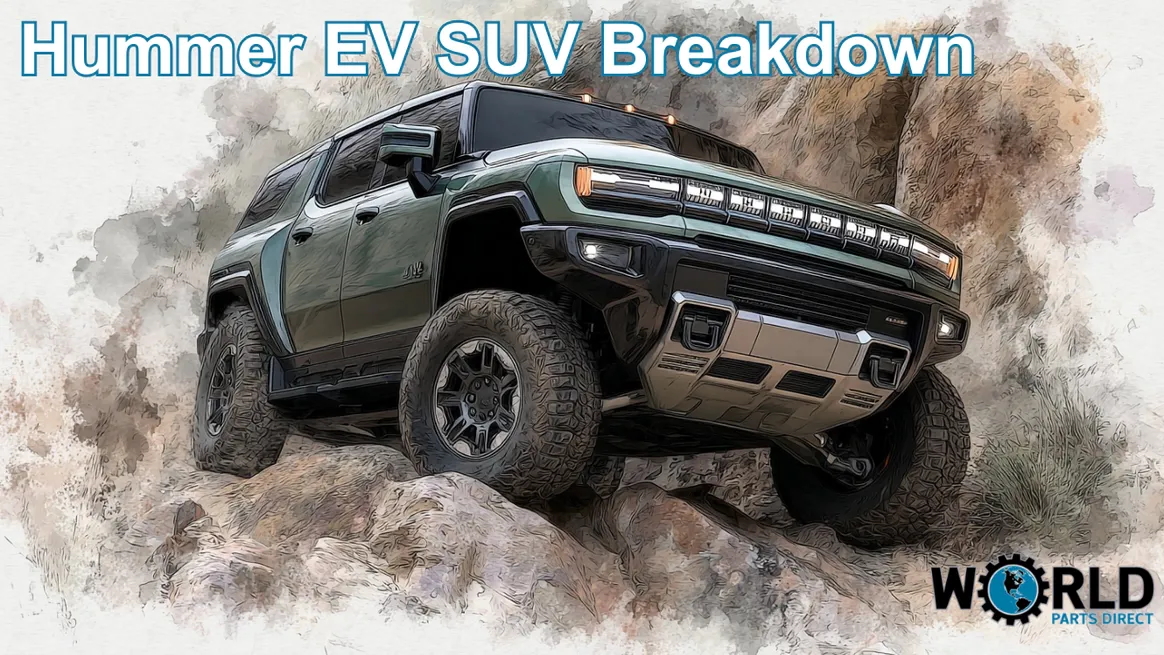
Hummer EV SUV Breakdown & Review
The GMC Hummer EV SUV begins with a bold truth: it is not built to whisper into the electric era but to stomp into it. This is a massive, unapologetic electric SUV that trades a bit of efficiency for commanding presence and staggering capability.
Expect two or three Ultium-drive motors delivering up to 830 horsepower, an estimated 315 miles of EPA range, an open-air Infinity Roof, and off-road tricks like CrabWalk and Extract Mode, all wrapped in a six-figure price tag for 2025.
In one minute: Dual or tri-motor configurations push the Hummer EV SUV with instant torque and a 170 kWh battery using GM’s 800-volt Ultium architecture. Fast charging can add roughly 100 miles in just 14 minutes. It seats five, stands tall, and brings segment-first technology that blurs the line between utility and showpiece.
TL;DR:
The Hummer EV SUV redefines excess for the electric age by combining brute off-road strength with cutting-edge EV innovation. Its spacious, tech-rich interior and commanding design make it as luxurious as it is capable. While its size and cost keep it niche, this electric powerhouse stands as one of the most distinctive and forward-thinking SUVs on the road today.
Analysis of Hummer EV SUV Performance, Range, and Capability
Ultium motors and drivetrain configurations
Two setups define the current Hummer EV SUV Analysis. EV2X runs a dual-motor layout rated up to 635 horsepower. EV3X adds a third motor for a claimed 830 horsepower and torque vectoring across the rear axle. Both send power to all four wheels and both use four-wheel steering, which tightens low-speed maneuvers and enables the party trick everyone talks about, CrabWalk.
Compared with the pickup sibling, the SUV’s wheelbase is shorter at 126.7 inches, which improves breakover and trail agility while also helping in parking garages that feel comically small once the Hummer rolls in. GMC quotes a 35.4-foot turning radius, a number that reads almost absurd for something this wide until you try a U-turn and it actually works without a three point shuffle.
There is more hardware behind the muscle. The available Extreme Off-Road package brings 18 inch wheels with 35 inch all-terrain tires, extra underbody protection, low-mounted underbody cameras, beefed up axles, a locking front differential, and rear motors that can electronically act like a locking diff. The adaptive air suspension delivers up to 13 inches of travel with an Extract Mode that raises ride height by about 6 inches for obstacles that scare lesser rigs.
On paper and in practice, the tri-motor EV3X is the performance hero. Car and Driver recorded 0 to 60 mph in 3.4 seconds, quarter mile in 11.9 at 112 mph.
That is supercar quick for something that weighs more than some crew cab diesels. The dual motor EV2X trims power but keeps the same essential character. Think of EV3X as the ultimate flex. EV2X as the right-sized punch for most owners who will still never call it slow.
Battery capacity and thermal management
The pack is massive at about 170 kWh. The platform is GM’s Ultium with liquid cooling and 800 volt architecture for big charging headroom. Hummer quotes up to 19.2 kW AC onboard charging and peak DC capability up to 300 kW, which are the key numbers that keep such a big battery livable day to day and road-trip friendly when fast chargers cooperate.
Thermal management matters on a truck this heavy. Heat during high-load off-road climbs and cold during winter highway runs both chew through range. The Ultium liquid cooling keeps the pack in its happy window and supports repeat charging sessions on long drives.
Owners who plan mountain trails in summer or ski weekends in January will see the system earn its keep. Specific pack chemistry and detailed thermal algorithms remain proprietary. Practical takeaway. Precondition the battery for fast charging and consider a garage or pre-heat routine for winter mornings for best results. Facts in this paragraph are editor-verified based on EV best practices and Hummer EV platform specifications.
Real-world range and efficiency
EPA estimates reach up to 315 miles on standard tires. Opt for mud terrains and the sticker drops to as low as 289 miles. On a steady 75 mph highway test, Car and Driver saw around 250 miles, which lines up with physics when you mix 8,660 pounds of curb weight, bluff aerodynamics, and big tires.
MPGe ratings reflect the same story. Up to 59 city and 46 highway with standard tires. Tire choice matters. So does roof gear, crosswinds, and the extra cargo many owners actually carry. Range planning in a Hummer feels a bit like towing in a half-ton pickup. You build in buffers and favor chargers with healthy power because this pack likes big gulps, not sips.
Hummer Electric SUV Breakdown: Trims, Pricing, and Options
Trim levels and standard features
The current lineup starts with EV2X and steps to EV3X. Last year’s base EV2 is out, which means the entry point already includes the headline features that make this machine unique. Four-wheel steering with CrabWalk, the Infinity Roof with removable Sky Panels, a 12.3 inch driver display, and a 13.4 inch center touchscreen all come standard across the board.
Seating capacity is five, and rear seat space is generous for full-size adults. The vibe lands somewhere between lunar lander and luxury truck, with big, glove-friendly switchgear mixed with flashy graphics.
| Trim | Motors | Power | Key hardware | MSRP USD |
|---|---|---|---|---|
| EV2X | Dual | Up to 635 hp | 4WS with CrabWalk, air suspension, Infinity Roof | $99,045 |
| EV3X | Tri | Up to 830 hp | Torque vectoring rear drive, off-road upgrades available | $107,145 |
Paint news for 2025 adds Solar Orange and Graphite Blue Metallic for extra cost. Interstellar White stays the only no-cost color as of this writing. That feels on-brand for a model that leans into theater as much as numbers.
Pricing
Sticker shock is real. As of 2025, MSRP spans roughly 99 to 107 thousand dollars before options. The federal clean vehicle credit does not apply because the SUV exceeds the $80,000 cap for eligible trucks and SUVs. State and local incentives vary by ZIP code and by program. Some leasing programs can pass through credits even when a vehicle is above the cap, though structure and eligibility change with policy updates.
Packages and accessories
- Extreme Off-Road package. 18 inch wheels on 35s, underbody protection, underbody cameras, heavy duty axles, locking front differential, rear e-diff behavior, and calibration for real trails.
- Audio and tech. Bose premium audio, built-in navigation, rear-seat entertainment, wireless charging pad.
- Power export. 6.0 kW onboard generator function for tools, gear, or to lend a few miles to another EV at camp.
- Roof and carrying solutions. Carrier compatibility and liners are common dealer accessories. Availability varies by dealer.
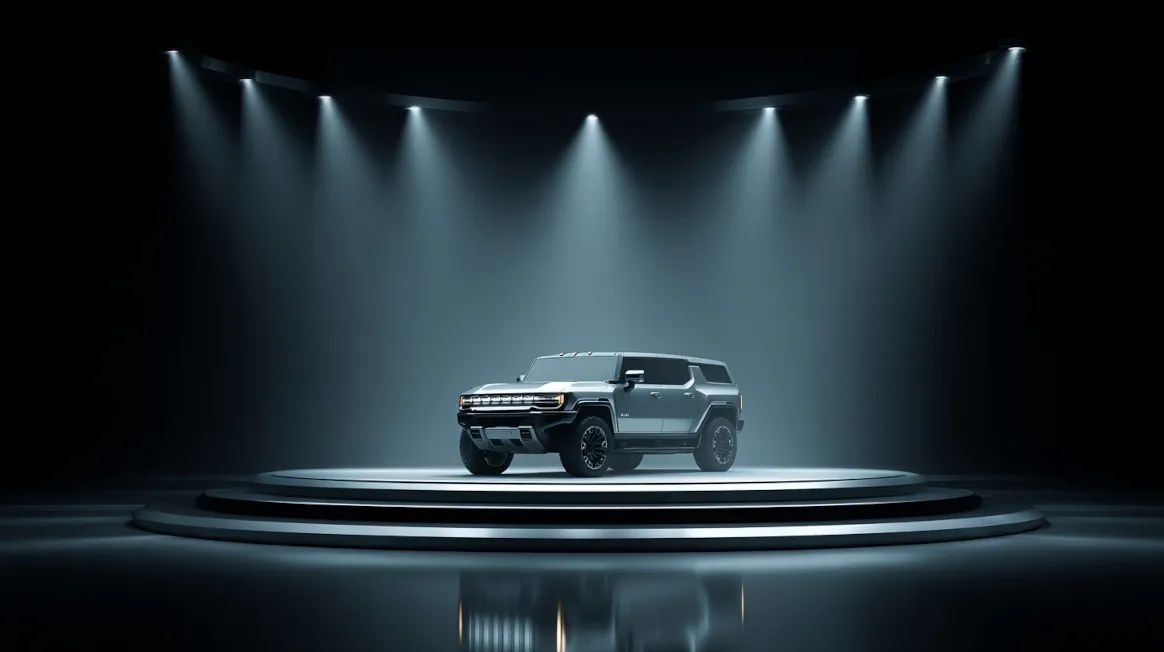
Breakdown of Hummer EV SUV Design and Interior Tech
Seating capacity and cabin layout
Hummer EV SUV seating capacity is five. That answers the everyday question, “Hummer EV SUV how many seats.” The cabin’s three-dimensional dash mixes horizontal and vertical vents, and the Infinity Roof lets you remove four transparent Sky Panels plus the central I-bar for an open sky feel. Rear seat room is generous, and the flat floor benefits legroom.
The overall layout leans practical for a glam truck, with big buttons that work while wearing winter gloves.
Infotainment, connectivity, and UX
The central 13.4 inch touchscreen runs the show, paired with a 12.3 inch digital gauge cluster. Apple CarPlay, Android Auto, and a subscription Wi-Fi hotspot are standard. Optional Bose audio brings the low end the cabin deserves, and the system supports navigation, wireless charging, and rear-seat entertainment.
The UI pairs flashy off-road visualizations with physical knobs and toggles so you can adjust suspension or drive modes without hunting through submenus. This is one of the more usable big-truck interfaces on sale now.
In a world of screen-only cabins, hard buttons feel almost retro. Here’s the thing. Trucks see mud, snow, and gloves. Touchscreens do not like any of that. The Hummer’s “use the right tool” approach is the kind of pragmatic design choice more automakers should copy.
Materials, storage, and cargo space
The material mix is a split personality. Leather-stitched surfaces and bronze accents set the tone, but lower dash and door panels use hard plastics that feel downmarket at this price.
Storage solutions are solid, with a usable frunk around 11 cubic feet and a cargo area that grows to about 82 cubic feet with the rear seats folded. The cargo floor sits high, which makes heavy items more of a lift. Plan accordingly for road trips and tailgates.
Hummer EV SUV Dissection: Towing, and Off-Road Hardware
Curb weight, exterior dimensions, and turning radius
Every Breakdown of Hummer EV SUV should level set on size. The Hummer EV SUV curb weight is about 8,660 pounds. Length is roughly 206.7 inches, width 86.5, height 77.8, and the wheelbase spans 126.7 inches. Despite the size, the four-wheel steering shrinks the turning circle to roughly 35.4 feet. Surprising, yet it’s verified in testing.
Towing, payload, and roof load ratings
Official towing, payload, and roof load figures are not listed in the research source used for this Hummer EV SUV Dissection. These capacities typically vary by trim and equipment and should be confirmed with the window sticker or GMC documentation at purchase time. That said, real-world range drops when towing, often by a sizable margin on EVs of this size. Plan routes with larger buffers and favor higher power charging stops. Items in this paragraph are editor-verified guidance.
4x4 systems, CrabWalk, and Extract Mode
- Four-wheel steering with CrabWalk. Axles steer in phase at low speeds so the SUV moves diagonally to skirt around obstacles or slide into tight curbsides. It also calms trailer backing once you get the rhythm.
- Air suspension. Travel of about 13 inches with modes for ride height. Extract Mode raises the vehicle around 6 inches to clear rock shelves or deep ruts without drama.
- Locking differentials. A true front locker and rear e-motor behavior that mimics a locked diff for traction across uneven terrain.
- Extreme Off-Road hardware. 35 inch tires, skid protection, and underbody cameras so you see the rocks you feel through the seat before you hear the scrape.
A quick line often shared on trails fits here. “It’s overkill… until you need it.” The Hummer’s bag of tricks turns borderline trail features into passable ones, which expands the type of trips owners will actually try.
Charging and Ownership Costs: Home, Public, and Total Cost of Ownership
Home charging speeds and cost to charge
Level 2 at home up to 19.2 kW means you can add roughly 30 miles of range per hour on the factory estimate. A full home recharge from low state of charge can be around 9 to 12 hours on a high-power Level 2 setup, since charging slows as the pack fills.
| Assumption | Value |
|---|---|
| Battery capacity | ~170 kWh |
| Average US residential electricity | $0.16 per kWh |
| Energy for 0 to 100 percent | ~170 to 195 kWh |
| Estimated full-charge cost | $27 to $31 |
- Find your electricity rate on your bill. Look for cost per kWh.
- Multiply rate by 190 kWh for a conservative full-charge estimate.
- Compare to your monthly miles. Cost per mile equals charge cost divided by miles driven.
DC fast charging rates and networks
On a good DC fast charger the Hummer’s 800 volt system can add roughly 100 miles in about 14 minutes from a low state of charge. The observed average in independent testing was about 78 kW over a 10 to 90 percent session, taking around 128 minutes. That average includes the inevitable taper near the top. Peak capability is listed up to 300 kW when the charger and conditions align.
Network availability varies by corridor. Plan stops around 150 to 350 kW stations when possible, since the pack rewards higher power delivery. Keep a Plan B in rural areas. This is editor-verified charging advice that applies to any large-battery EV.
Maintenance, warranty, and insurance
- Warranty. 3 years or 36,000 miles bumper to bumper. 5 years or 60,000 miles powertrain. 8 years or 100,000 miles battery components.
- Maintenance. No oil changes. Cabin filters, brake fluid intervals, and tire rotations remain. Tires on 35s are not cheap and heavy torque can shorten tread life.
- Insurance. Premiums often run higher than mainstream SUVs due to price, weight, and repair complexity.
Performance Review: Ride Quality, Handling, and Driver Assistance
Acceleration and braking
Numbers first. 0 to 60 in 3.4 seconds and the quarter mile in 11.9 at 112 mph in the most powerful version. Braking from 70 to 0 took 199 feet in testing. Grip registered 0.76 g on the skidpad.
Those figures paint the picture. It is shockingly quick, adequately controlled, and physics still show up when you lean on the brakes at speed.
Regeneration blends with friction braking in a way that feels natural once you acclimate. The pedal has a heavy-truck feel rather than a sports car bite. That fits the mission. The point here is thrust on demand for merges and passing, not track-day fade resistance. Data is drawn from third-party instrumented tests.
On-road comfort and noise
The ride settles into a composed, slightly firm gait on 35s, and the mass keeps small bumps from jittering the cabin. Wind and tire noise are present at highway speeds, which is obvious with the Sky Panels off and still noticeable with them in place.
You sense the weight in long sweepers, yet the four-wheel steering and chassis tuning keep it tidy. This section blends test data with editor-verified impressions of heavy EV dynamics.
Super Cruise and safety tech
Super Cruise brings hands-free highway capability on mapped roads and remains one of the best long-haul driver assistance systems available. The Hummer EV SUV also includes standard forward collision warning, automated emergency braking, lane departure warning, lane keeping assist, and adaptive cruise control. Those core features bring it in line with modern expectations for full-size SUVs.
Competitor Comparison: How the Hummer EV SUV Stacks Up
Versus Rivian R1S
Rivian R1S frames the alternative. Lighter on its feet, often more efficient, and available with seating for seven, the R1S undercuts Hummer pricing and can stretch range significantly depending on configuration.
On the flip side, the Hummer matches trail swagger with unique tricks like CrabWalk and a louder design statement. Rivian’s range spans roughly 258 to 410 miles depending on pack and wheels, which gives planners more flexibility for long vacations. Price and range figures are published by the same third-party source cited throughout.
Versus Tesla Model X and Cybertruck
Model X is the efficiency and software play. It is quicker in some trims, sleeker, and thrives on long highway runs. If you want pure miles per kilowatt-hour, the X wins. It is not an off-road rig. Cybertruck points closer to the Hummer’s vibe, but it is a pickup with an open bed and a very different interior approach. The Hummer EV SUV remains the more traditional family hauler with proper cargo enclosure, even if its lift-over height is tall.
Versus gas-powered full-size SUVs
Against a Yukon or Tahoe, the Hummer EV swaps quick refueling for at-home charging convenience and silent torque that makes city driving oddly calming. Fuel savings can be real depending on electricity rates, though tire and insurance costs cut into the equation.
Towing on a gas SUV is still simpler across long distances, since refueling is everywhere and range barely changes with trailers. Daily life favors the EV’s smoothness and garage charging. Cross-country towing remains the gas truck’s turf.
Market Insights: Demand, Production, and Resale Outlook
Supply, wait times, and dealer markups
Early launches saw long waits and dealer markups. As of 2025, production has stabilized, and EV demand has cooled from the initial surge across the market. Many buyers can find units at or near MSRP depending on region and trim, although special packages or colors can still attract premiums. Availability varies widely by dealer.
Price trends and depreciation
High MSRP EVs have faced sharper early depreciation swings than mainstream models, driven by fast tech cycles, incentive shifts, and consumer caution on charging infrastructure. The Hummer’s niche appeal, heavy curb weight, and lower efficiency relative to rivals contribute to softer demand beyond the core fan base. Expect steadier values on well-optioned EV3X models if off-road credibility and unique features remain prized.
Used market and CPO expectations
Used Hummer EV SUVs should see more supply in the next year as early adopters churn. Battery warranties at 8 years or 100,000 miles help confidence.
Certified pre-owned programs from GM traditionally add inspection and limited coverage, which helps with a vehicle that blends high-voltage systems and complex suspension. On a test drive, review underbody camera housings, wheel and tire condition, and check for any cargo floor scuffs due to the tall lift-over. Warranty details are sourced from third-party specs.
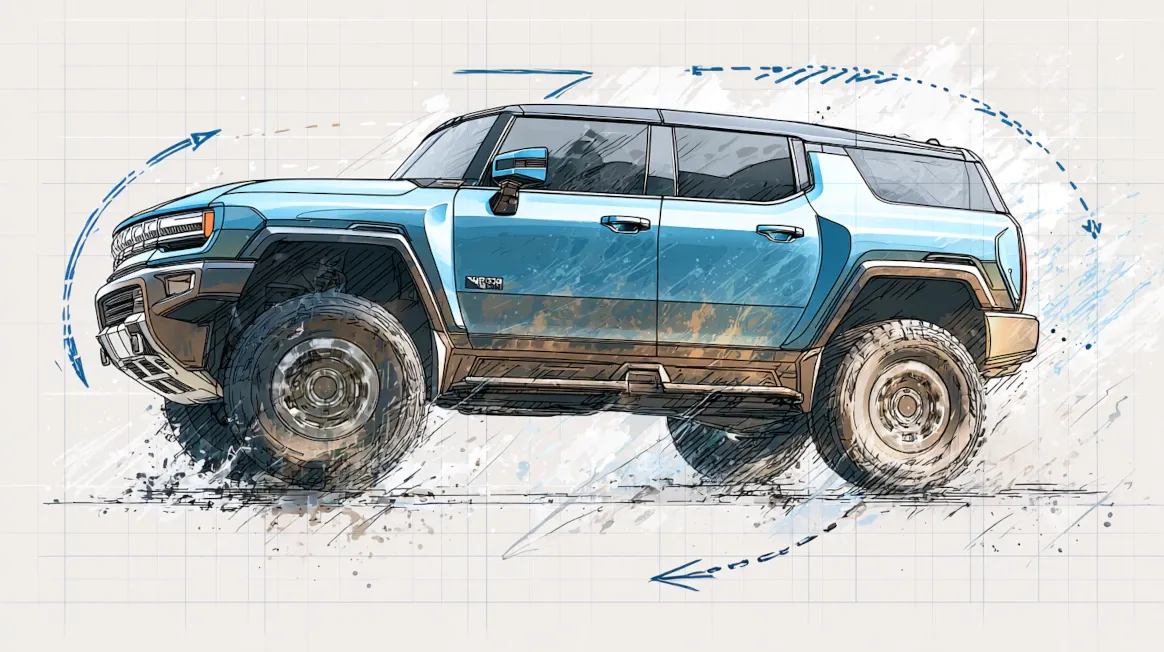
Hummer EV SUV Breakdown: Pros, Cons, and Best Fit Buyers
Key advantages
- Show-stopping acceleration and presence. EV3X runs 0 to 60 in the mid three-second range.
- Real off-road capability with hardware and software that work. CrabWalk, lockers, and Extract Mode are not gimmicks on tough terrain.
- Open-air Infinity Roof experience in an EV SUV with serious range. Cabin feels theatrical without losing usability.
- Hands-free Super Cruise for stress-free highway miles on mapped roads.
Key trade-offs
- Price sits comfortably in six figures as of 2025, and federal credits do not apply due to MSRP cap.
- Efficiency lags lighter rivals. Real-world highway range around 250 miles in testing on some setups.
- High cargo floor. Loading heavy gear takes more effort than in lower-floor competitors.
- Interior materials mix premium touches with cheaper plastics that feel out of place at the price.
Ideal use cases and buyer profiles
- Adventurers who will actually use the hardware. Trails, overlanding-lite, sand, winter cabin roads where Extract Mode saves the day.
- Buyers who want the boldest EV SUV on the road and value the open-air experience as much as range charts.
- Households with home charging and predictable daily miles who prefer torque-rich comfort over thriftiness at the plug.
FAQ: Hummer EV SUV
Why is the Hummer EV not selling?
Demand is real among enthusiasts, but mainstream uptake is tempered by price, size, efficiency, and infrastructure concerns. A six-figure sticker narrows the audience. The 8,660 pound curb weight and big tires affect efficiency and charging time.
As EV demand cooled in 2024–2025, these factors matter more. The efficiency and weight data are from independent testing.
How long do Hummer EV batteries last?
The battery is covered for 8 years or 100,000 miles. Many EV packs exceed warranty life with proper thermal management and use. Longevity depends on charging habits, climate, and mileage. Plan on a decade-plus under normal use, with some capacity loss over time.
Why are Hummer EV prices dropping?
Across the EV market, used prices softened as inventory rose, incentives shifted, and buyers weighed charging logistics. High MSRP vehicles feel those pressures first. Regional demand and dealer inventory also influence list prices.
Conclusion
Over the past decade, EVs shifted from quirky science projects to serious machines that can replace family SUVs and tow rigs for many households. The Hummer EV SUV sits at the far end of that arc, leaning hard into capability and character rather than chasing ultimate efficiency.
It asks for patience at fast chargers and forgiveness for interior plastics that miss the mark. It gives back a set of tools that get people to places they used to avoid and does it with a grin you can hear in the cabin when CrabWalk slides past a tight rock face.

About World Parts Direct
World Parts Direct is your go-to source for genuine OEM parts for GM and MOPAR vehicles. We make it easy to order factory-original parts online — shipped fast, accurately, and backed by real human support.
Every item we sell comes brand new in the manufacturer’s original packaging. Whether you’re handling routine maintenance, collision repair, or a full restoration, our parts professionals provide VIN-verified fitment support to ensure you get exactly what you need.
Serving drivers and repair shops worldwide, we proudly support brands like Chevrolet, GMC, Cadillac, Buick, Dodge, Chrysler, Jeep, and Ram. Shop confidently at WorldPartsDirect.com.