
Ram SRT Trucks: How a Viper Engine Created a Muscle Truck Legend
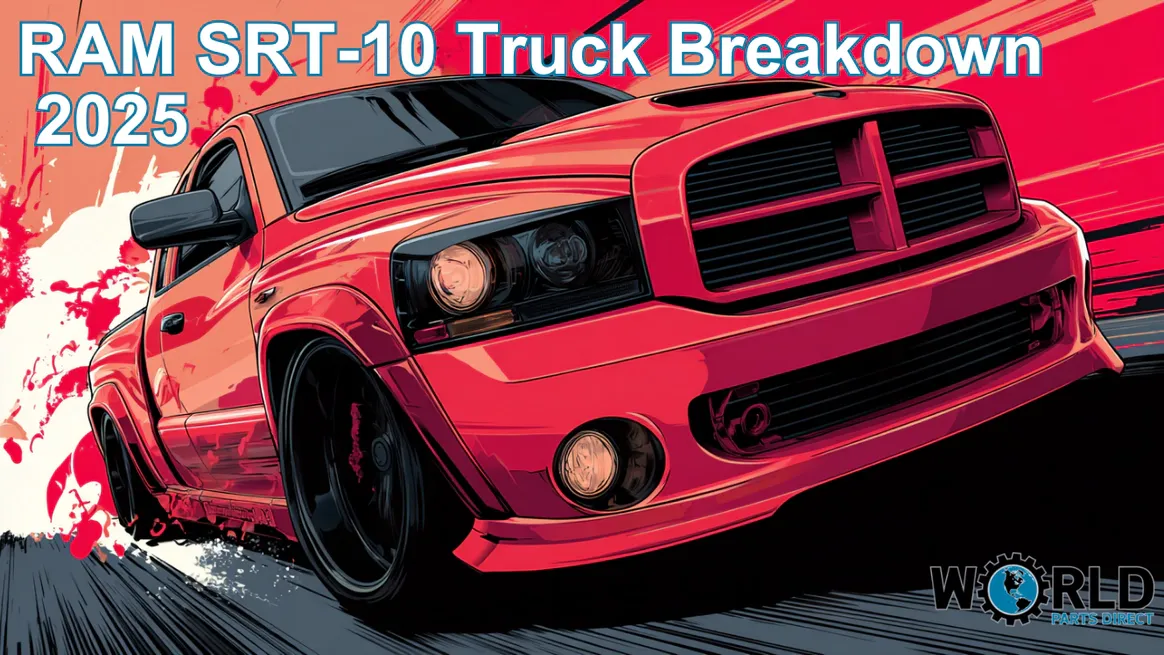
Ram SRT Trucks
The Evolution of American Muscle from Viper Power to Modern Performance
Ram SRT trucks took the wildest idea in Detroit and made it street legal. Bolt a Viper V10 into a Ram 1500, give it brakes and aero that can cope, then let it set a production-truck speed record. What started as a skunkworks concept became a short-lived legend that still feels larger than life.
Ram SRT trucks are Viper-powered Dodge Ram SRT-10 pickups built for 2004 to 2006 that delivered 500 horsepower, manual or automatic drivetrains, lowered suspension, big brakes, and limited-edition trims. They set a 154.587 mph production-truck record, created a devoted community, and influenced Ram performance that followed.
From Viper DNA to street legend: how the SRT vision reshaped Ram
Street and Racing Technology set out to distill supercar drama into a usable pickup. The recipe leaned on third generation Viper hardware, a truck frame stout enough for big brakes and big tires, and aerodynamic tweaks proven in the wind tunnel.
The result was simple to say and staggering to experience. A 500 horsepower aluminum V10 in a full-size pickup with a six speed manual or heavy duty automatic, massive 22 inch rolling stock, and a stance that said this Ram had a different mission.
What makes this moment resonate is how cleanly it bridged two American car cultures. Muscle car straight-line punch met pickup practicality. Daily drivers discovered a cab with three seats and a bed, then a red start button and Hurst shifter.
The first start sounded like a muscle boat idling at the dock. Owners remember the shiver through the steering rim, the faint rasp from the hood scoop as the big V10 took a breath, and the way the rear tires talked if you got greedy with throttle on cold pavement. The truck looked factory because it was. The experience felt anything but.
That contrast, raw and useful in the same package, is why enthusiasts still call the SRT-10 a street legend. It wasn’t just fast for a truck. It was fast, period. Then it backed up the bravado with a certified world record.
SRT Ram trucks origin story: performance skunkworks meets pickup culture
The idea didn’t appear overnight. Dodge’s Performance Vehicle Operations, the forerunner to SRT, had flirted with the concept before. A Viper powered Ram concept called the Ram VTS showed up in the mid 1990s with an 8.0 liter V10 and a six speed manual, but the timing wasn’t right for production.
The spark reignited after Ford’s SVT Lightning found buyers for a factory hot rod pickup. Dodge’s answer drew directly from the brand’s crown jewel.
The production bound concept bowed at the 2002 North American International Auto Show. It wore a billet grille, a bulged, vented hood, and brakes that filled the wheels. Beneath the body sat a hydroformed Ram frame SRT engineers would lower and recalibrate.
The team mixed Viper and Prowler engineering talent with Ram’s truck specialists. They spent time in the wind tunnel and on the Chelsea, Michigan proving grounds to make sure the aero and cooling delivered at speed. These weren’t cosmetic tweaks. They were tools for a truck aiming for triple digit stability, repeatable braking, and predictable chassis balance.
Production began late in 2003 for the 2004 model year at Saltillo Truck Assembly in Mexico. Only a few years later, the run would end, cementing the SRT-10’s status as a rare high water mark for the street truck era.
Building the Ram SRT-10: concept, engineering team, and launch
The team’s mission sat on a whiteboard. Keep the Viper’s character intact. Make it live in a pickup. The third generation Viper V10 remained largely unchanged in architecture. The block was aluminum with iron liners and cross bolted main caps.
Displacement grew compared to earlier Vipers. Output hit an even 500 horsepower and 525 pound feet of torque. Crucially, the torque plateau spanned from low revs to near redline, exactly what a heavy rear drive truck needed to feel alert without boost or drama.
Cooling received attention. The oil pan and cooling system were adapted for truck duty and airflow management. SRT added a functional hood scoop that fed and vented the engine bay. The front fascia integrated brake cooling ducts.
Underneath, Bilstein dampers, shorter springs, and a rear axle fifth shock aimed to control wheel hop under hard launches. Packaging the Tremec T-56 manual meant a unique long-throw Hurst shifter that met drivers’ hands with a familiar Viper shift knob.
Launch plans called for a regular cab, short bed, rear drive layout. The Quad Cab arrived a year later to broaden appeal, an acknowledgment that some buyers wanted two more doors and a transmission better suited to towing and daily commuting.
That second act didn’t blunt the first. It framed the SRT-10 as both an outlaw and a real truck.
What defined Ram SRT trucks: powertrain, chassis, and design
Even now, ask people what made the SRT-10 different and the answer snaps into focus.
- Viper based 8.3 liter V10 with 500 horsepower and a wide torque band.
- Manual six speed or heavy duty four speed automatic, both sending power to a Dana 60 rear axle.
- Lowered suspension, Bilstein shocks, and big rotors with dedicated cooling.
- Functional aero with hood venting and an available tonneau spoiler that reduced lift.
- 22 inch wheels wearing 305 section performance tires and a cabin with SRT specific cues, from the red start button to the suede seat inserts.
Viper V10 and drivetrains: 6-speed manual vs automatic
The engine set the tone. Rated at 500 horsepower at 5,600 rpm and 525 pound feet at 4,200 rpm, the aluminum 8.3 liter V10 delivered 90 percent of its torque across much of the rev range. That gave the truck the feel of a giant naturally aspirated muscle motor that didn’t need revs to wake up.
Regular cabs paired the V10 with a Tremec T-56 six speed manual and a 4.10 final drive in 2004. Later manuals moved to 4.56 for even sharper response. Quad Cabs used Ram heavy duty’s 48RE four speed automatic with a 4.56 final drive and a torque converter that softened launches and made traction easier to find on street tires.
On paper the manual truck was quicker and faster. In practice the automatic’s converter masked some of the drama and helped repeatability, especially on less than perfect surfaces.
Enthusiasts debate the purity of rowing a Viper powered pickup with a long armed Hurst lever. Families who actually towed with the Quad Cab appreciated the automatic’s calm character when the bed had bikes or the hitch had a small trailer.
Suspension, brakes, and frame tuning for street performance
Lowering a full-size pickup one inch in front and two and a half inches in the rear looks subtle on the spec sheet. On the road it changed the truck’s posture and center of gravity. The hydroformed Ram frame took well to Bilstein dampers and performance tuned springs, dialing out some of the high speed float that a standard half-ton exhibits.
Brakes were appropriately serious, with 15 inch front rotors and 14 inch rears. The earliest trucks used two piston calipers. Later models added larger four piston monoblock front calipers designed specifically for the SRT-10. The fascia’s ducts breathed on the rotors to manage heat during repeated stops. That detail mattered when a five thousand pound pickup started running quarter miles in the mid thirteens then had to turn off safely.
Out back, an extra shock absorber worked to keep the live axle from hopping under wheelspin. Anyone who has watched a hard launching, lightly loaded pickup knows that axle tramp isn’t just unpleasant. It costs time and can break parts. The fifth shock was a practical acknowledgment that SRT built a drag friendly truck for actual streets.
Aerodynamics, wheels, tires, and interior cues
The exterior told the story if you knew what to look for. The hood bulged and vented. The billet style grille sat above an integrated spoiler that directed air into brake inlets. Some trucks wore a hard tonneau with a raised rear wing, a piece designed to cut lift and drag at speed.
Not every unit left the factory with it due to supplier issues. Trucks that missed the tonneau received a credit and a smaller deck spoiler instead. The intention was the same. Keep the rear end planted as speeds climbed into triple digits.
Wheels were 22 inch ten spoke designs that echoed the Viper. Tires were P305/40R22 Pirelli Scorpions, huge by early 2000s standards and still muscular. Inside, SRT touches started with a red push start button.
The gauge cluster used a satin silver face and Viper style graphics. Seats were heavily bolstered and trimmed in charcoal leather with microsuede inserts and SRT-10 stitching. The manual’s Hurst lever rose from a metal bezel capped by a Viper knob. An Infinity system with multiple speaker options and a subwoofer filled the cabin with period correct sound when the V10 wasn’t doing the talking.
Trims and special editions of Ram SRT pickup trucks
SRT-10 buyers could choose two body styles and a handful of special appearance packages. The mix tells you exactly who Dodge had in mind. Drag strip diehards wanted the lighter, simpler regular cab. Daily drivers with a family or a tow plan gravitated to the Quad Cab with its automatic. Special editions added exclusivity and some fantastic paintwork.
Regular Cab vs Quad Cab differences
The standard cab truck arrived first with rear drive, a short bed, and the six speed manual. The Quad Cab became available for 2005 with four doors, the 48RE automatic, and a 4.56 axle. The Quad Cab also brought a factory tow rating near 7,500 pounds, which broadened its appeal beyond the street scene. In quickness, the regular cab carried an advantage thanks to lower curb weight and the manual’s gearing.
Expect around 4.9 seconds to 60 for the two door and mid five to low six second runs for the Quad. Quarter mile times clustered in the mid thirteens for the manual and low to mid fourteens for the automatic. Top speeds were quoted at roughly 153 to 154 mph for the regular cab and the high 140s for the automatic Quad Cab, both heady numbers for a full-size pickup of any era.
In the real world the Quad Cab’s converter helped manage traction. The regular cab rewarded a careful foot and a quick wrist. Both shared the same basic chassis tuning, the same big brakes, and the same giant lungs under the hood.
The trade was simple. Outright pace for the manual. Broader usefulness and easier repeatability for the automatic.
Night Runner and commemorative packages
Limited editions emphasized exclusivity and style. The 2004 VCA Edition, built for the Viper Club of America, wore Electric Blue with white stripes and carried unique badging. Around fifty were produced for public sale. Two more were converted for pace vehicle duty. The 2005 Yellow Fever edition layered Solar Yellow with a black “fang” hood graphic and matching yellow interior stitching.
The 2005 Commemorative Edition returned to Bright White with Electric Blue stripes and added brushed aluminum accents and a hard tonneau. The 2006 Night Runner went dark with Brilliant Black paint, Dark Nickel wheels, black chrome grille inserts, and serialized plaques.
These packages didn’t change the powertrain. They added scarcity and personality, which matters when a truck becomes collectible.
Colors, options, and production numbers
Core colors through the run included Black Clear Coat, Bright Silver Metallic, and Flame Red, then expanded in 2006 to Mineral Gray Metallic, Inferno Red Crystal, Brilliant Black Crystal, and others. Not every color was offered in every body style or year. The VCA, Commemorative, Yellow Fever, and Night Runner palettes stayed true to their themes, which helps authenticate survivors today.
Total production across 2004 to 2006 landed a touch above ten thousand units. A widely cited figure is 10,046 trucks, with a little over three thousand in 2004, just over five thousand in 2005 as the Quad Cab expanded the audience, and just under two thousand in 2006, the final year.
Color by year breakdowns show the expected dominance of black and red, then the smaller counts for limited editions. Registry and historical tallies may vary slightly due to recordkeeping and special purpose vehicles, but the point stands. This was never a mass market truck, which feeds values now.
Performance benchmarks and real-world tests
The data still turns heads. So does the context behind the numbers. A full-size pickup weighing over two and a half tons that could run with contemporary muscle cars, stop hard enough to repeat a day at the drag strip, and cruise to get groceries without steaming in traffic. It wasn’t subtle. It was effective.
0–60, quarter-mile, top speed, and braking
| Metric | Regular Cab 6MT | Quad Cab 4AT |
|---|---|---|
| Horsepower | 500 hp | 500 hp |
| 0–60 mph | ~4.9 s | ~5.3–5.6 s |
| Quarter mile | ~13.6 s @ ~106 mph | ~13.7–14.2 s |
| Top speed | ~153–154 mph | ~147–148 mph |
| Front brakes | 15 in rotors | 15 in rotors |
In February 2004, NASCAR driver Brendan Gaughan took a production SRT-10 to 154.587 mph for a two way average over a flying kilometer, certified by Guinness and the SCCA. It was the fastest production pickup, eclipsing the previous Lightning mark.
The record would later be topped by an Australian ute. Context aside, the image of a boxy American pickup brushing 155 mph is the kind of stat that cements legend status.
Track handling, towing trade-offs, and payload
SRT made the Ram better at turning and stopping, but it remained a truck in its fundamental physics. Owners and testers reported understeer at the limit and a tail ready to rotate if provoked by throttle. The steering felt light and precise enough for day to day use, less confidence inspiring at high lateral loads.
That’s not a flaw. It’s the honest result of a tall, heavy, live axle vehicle wearing huge but still street focused tires. Treated like a fast GT instead of a sports car, it shines. Pointed down a back road or staged under the Christmas tree at the strip, it feels right at home.
Towing and payload tell a similar story. The Quad Cab’s tow rating near 7,500 pounds gave it real utility. Payloads ran just under a half ton depending on configuration. Owners who stayed within those bounds reported few issues. Drive it like a heavy duty and you’ll find the limits. Use it like a quick half ton and you’ll wonder why more trucks haven’t chased this formula again.
Fuel economy and daily drivability
No one expected economy figures to stir smiles. Regular cab manuals were rated around 9 mpg city and 15 highway. Quad Cab automatics carried similar city ratings and lower highway numbers, around 12 mpg. Real-world averages depended heavily on driving style and how often the tach saw the raucous part of the dial. Despite the thirst, daily drivability earned praise.
The engine idled cleanly. The automatic shifted with decisive action. The manual’s clutch and throw were heavier than a sedan but workable. As a daily cruiser with occasional bursts of mischief, it worked surprisingly well for those who accepted fuel costs as part of the charm.
SRT trucks by Ram compared to rivals
To understand the SRT-10’s place, line it up against its period rivals and the trucks that followed. The matchups highlight how quickly the segment changed from street to dirt as buyers chased different experiences in the 2010s.
Against Ford SVT Lightning and modern Lightning EV
Against the supercharged SVT Lightning of the early 2000s, the SRT-10 brought more displacement and more power. The Lightning had a lighter chassis and useful forced induction thrust. Reports from the time noted the Ford could suffer heat soak when pushed hard, which dulled repeat runs. The naturally aspirated Ram avoided that particular complaint.
The manual’s engagement and the V10’s soundtrack put the Dodge in a different emotional zip code, even when real world traction made the numbers close. Compared to today’s all electric Lightning, the contrast is complete. Instant torque and whisper quiet speed versus old school combustion theater. Different audiences, different thrills. The SRT-10 still wins on noise and drama. Range and green credentials clearly belong to the EV.
Chevrolet Silverado SS and GMC Syclone/Typhoon lineage
Chevy’s Silverado SS leaned toward style with a torquey V8 and all wheel drive in some trims. It never chased the SRT-10’s outrageous power figure. Earlier GMCs like the Syclone and Typhoon proved the sport truck concept in the 1990s with turbo V6s and all wheel drive grip.
The Ram sat apart because it chose maximum displacement and rear drive with a manual in an era trending toward automatics. It felt more like a muscle coupe in truck clothing than a hot rod version of a working pickup. That purpose, so focused and unapologetic, is a big reason values have remained healthy for clean examples.
How the TRX and Raptor redefine the segment
As the market shifted, buyers asked for adventure and capability off pavement. The Ford Raptor popularized high speed desert running in a factory half ton. Ram answered with wide body, long travel packages and eventually a Hellcat powered TRX that became the halo for modern Ram performance.
The emphasis moved from quarter mile slips to whoops and dunes. It’s a different kind of fun that reflects how truck owners use their rigs now. The street truck never lost its charm. The market just moved under it, leaving the SRT-10 as a perfect time capsule of a wild chapter.
Pop culture footprint and community of Ram SRT pickup trucks
For a three year run truck, the SRT-10 left deep tracks in car culture. It showed up in tuner magazines, street meets, and late night cruise videos where the soundtrack mattered as much as the stopwatch. People still say, with a grin, “It’ll light the tires through third,” which tells you everything about its personality.
Media features, street scene, and celebrity ownership
Short runs and outsized stats make for sticky stories. Editors loved photographing burnouts through Pirelli smoke. Television segments marveled at a pickup with a red start button. A handful of celebrity garages housed SRT-10s for the same reason enthusiasts bought them.
They are equal parts toy and tool. The bed swallows gear. The exhaust barks. The badge reads Viper Powered. Subtle it is not, which is exactly the point.
Enthusiast clubs, forums, and meetups
Owners built a tight network. Clubs and registries track VINs, colors, and option combinations. Forums keep how-to guides, parts classifieds, and tuning recipes alive.
The Viper Truck Club of America and the Viper Truck Registry remain active touchpoints for anyone hunting a truck or keeping one healthy. Local meets prove there are few better icebreakers than a V10 under a pickup hood.
Popular aftermarket mods and tuning paths
Common upgrades start with the usual bolt-ons. Intakes, exhaust systems that free the V10’s voice, and ECU tunes sharpen response. Headers and freer flowing cats address the factory setup’s restriction and heat. Traction aids, from stickier tires to refined rear suspension components, help launches.
Brake pad and fluid upgrades handle track days. Some owners chase bigger power with camshaft changes or forced induction. Others keep them stock and focus on preservation. Both paths make sense. Clean, original examples are rare. Tasteful mods make the experience even spicier without losing the truck’s core character.
Buying and owning Ram trucks SRT today
The market treats low mileage, original trucks like modern collectibles. Driver quality examples remain attainable if you shop carefully. The right choice depends on how you’ll use it. Weekend toy. Cars and coffee star. Occasionally tow rig with attitude. Each role points you to a slightly different spec and condition sweet spot.
Price trends, mileage, and valuation factors
New, the SRT-10 stickered near the mid to high forties. Years later, values bifurcated. High mile trucks dipped, then stabilized. Clean, lower mile examples climbed as the supply of unmodified units tightened. As of 2025, ask prices for excellent, low mile regular cabs often sit well above what they did a few years ago, with special editions commanding premiums.
Recent listings show tidy manual trucks near fifty thousand dollars, with domestic and cross border variation. Quad Cabs with average miles tend to land lower. Color, documentation, provenance, and originality all move the needle. Expect to pay more for limited editions and for trucks with the factory tonneau and wing intact.
Pre-purchase inspection and common issues
Shopping smart starts underneath. Look for evidence of wheel hop abuse, axle seal leaks, and bushing wear. Check the manual’s clutch feel and shift quality, then inspect for fluid leaks around the Tremec. On automatics, watch for harsh or slipping shifts and deferred maintenance on the 48RE. Brakes deserve a close look. Rotor condition and caliper operation matter on a truck this heavy and fast. Upfront, confirm the hood vents and front brake ducts are intact.
Many trucks missed the factory tonneau and wing due to supply hiccups. Those that have it should be checked for seal integrity and mounting hardware condition. Inside, the Hurst shifter boot and seat bolsters wear.
Electronics age like any early 2000s vehicle and audio components may need refreshing. None of these are dealbreakers if priced accordingly. The V10 itself is robust in stock tune when serviced on time with quality fluids.
Parts availability, maintenance, and insurance
Mechanically, shared Ram components keep many maintenance items accessible. Unique SRT hardware, from calipers to aero pieces, can be harder to source new. The Viper engine is out of production. That makes prevention and documentation matter more.
Enthusiast communities and registries help track down rare parts and connect owners with knowledgeable shops. Insurance varies by carrier and usage. Stated value policies for collector use often make sense for low mileage trucks. Driven regularly, expect premiums similar to other high performance pickups once the vehicle is properly appraised.
From SRT-10 to modern performance: TRX, R/T, and the next chapter
Performance pick-ups didn’t disappear. They changed focus. Ram’s current halo truck leans into off-road speed and shock travel rather than street aero and slicks. Yet the thread is clear.
Brash power, purposeful suspension tuning, and unmistakable looks remain the calling cards. The SRT-10 proved there’s an audience for trucks that make a statement before they turn a wheel.
Ram 1500 TRX as the spiritual successor
Today’s off-road flagship carries the ethos forward in a different arena. Wide track, long travel suspension, and supercharged V8 thrust define the modern expression. The relationship is spiritual rather than literal. One aims at the drag strip and boulevard. The other charges desert trails and rutted two tracks. Both present the same core idea. Build a factory hot rod truck that needs no apology and no parts bin excuses.
Sport, R/T, and Rebel packages fill the gap
Below the halo, sport oriented trims keep some of the attitude alive. Appearance packages, shorter sidewalls, and firmer calibrations give buyers a taste of the old street truck vibe without the full commitment.
The strategy reflects broader buyer needs. A daily truck that looks and feels a bit sharper. A special edition that nods at heritage. The SRT-10’s influence lives there too, in the way Ram tunes steering heft, curates wheel designs, and treats aero as more than decoration.
Mopar performance parts and factory-backed upgrades
The factory backed ecosystem remains part of the appeal. Owners who want to keep modifications within the brand family can find accessories and parts that respect the original engineering. That path can preserve value while tailoring the experience.
It is a sensible middle road between bone stock preservation and full custom builds. The SRT community’s collective knowledge makes sorting the good from the gimmicks easier.
FAQ
What years were the Ram SRT-10 produced?
Model years 2004 through 2006. Production began in late 2003 and wrapped after 2006, with trucks assembled at Saltillo Truck Assembly.
How much horsepower does the Ram SRT-10 have?
Factory rating is 500 horsepower and 525 pound feet of torque from the 8.3 liter Viper based V10 across both body styles.
How fast is the Ram SRT-10, and is it the fastest truck ever?
Regular cabs run about 4.9 seconds to 60 and mid thirteens in the quarter. Top speed is around 154 mph. In 2004 it set a Guinness certified 154.587 mph production pickup record, later surpassed by another vehicle, which doesn’t diminish the achievement or its reputation.
Is the Ram TRX an SRT truck?
The TRX is Ram’s modern high performance halo. It isn’t branded SRT. It follows the same idea of an outrageous factory performance truck, focused on off-road speed rather than street performance.
Will Ram ever bring back SRT trucks?
No official confirmation exists. Market demand has favored off-road performance. That said, special editions and sport packages show Ram understands the appetite for bold, street oriented trucks. Enthusiasts would welcome a revival that honors the SRT-10’s spirit.
How many Ram SRT-10 trucks were made?
Published totals commonly cite 10,046 units across three model years, with year by year breakdowns tracked by registries. Some tallies vary slightly due to special purpose builds and recordkeeping differences.
Conclusion: the evolution of American muscle in Ram SRT trucks
The SRT-10 proved a simple proposition can be thrilling. Put a supercar heart into a half ton, sort the chassis and aero, and let it be loud about its intentions. It wasn’t the first performance pickup. It was the most audacious of its era, fast enough to set records, refined enough to commute, and rare enough to feel special every time it fired.
Key takeaways for enthusiasts and buyers
- Ram SRT pickup trucks pair Viper V10 power with real truck utility and set a 154.587 mph record that still sparks conversations.
- Regular cab manuals deliver the quickest runs. Quad Cab automatics add towing capacity and easier everyday traction.
- Limited production, special editions, and originality drive value. Documentation and condition matter as much as miles.
- Ownership is straightforward if maintenance is current. Community support and parts knowledge help keep them healthy.
What to watch next in Ram performance
Watch how Ram balances street attitude with off-road demand. Expect special trims that nod at SRT history, modern powertrains that mix torque and efficiency, and factory backed parts that let owners tune without losing the character.
For anyone shopping now, start with a clear plan for use, then find the cleanest truck you can afford. The V10 soundtrack does the rest. Ram SRT trucks were built to make noise. They still do.

About World Parts Direct
World Parts Direct is your go-to source for genuine OEM parts for GM and MOPAR vehicles. We make it easy to order factory-original parts online — shipped fast, accurately, and backed by real human support.
Every item we sell comes brand new in the manufacturer’s original packaging. Whether you’re handling routine maintenance, collision repair, or a full restoration, our parts professionals provide VIN-verified fitment support to ensure you get exactly what you need.
Serving drivers and repair shops worldwide, we proudly support brands like Chevrolet, GMC, Cadillac, Buick, Dodge, Chrysler, Jeep, and Ram. Shop confidently at WorldPartsDirect.com.